
How MUNA Turned Tension Into Pop Catharsis On ‘Dancing On The Wall’
In this exclusive interview with Billboard Philippines, the indie pop trio opens up about learning how to live inside the chaos of their latest record, and how they’ve turned the dance floor into a place for survival.




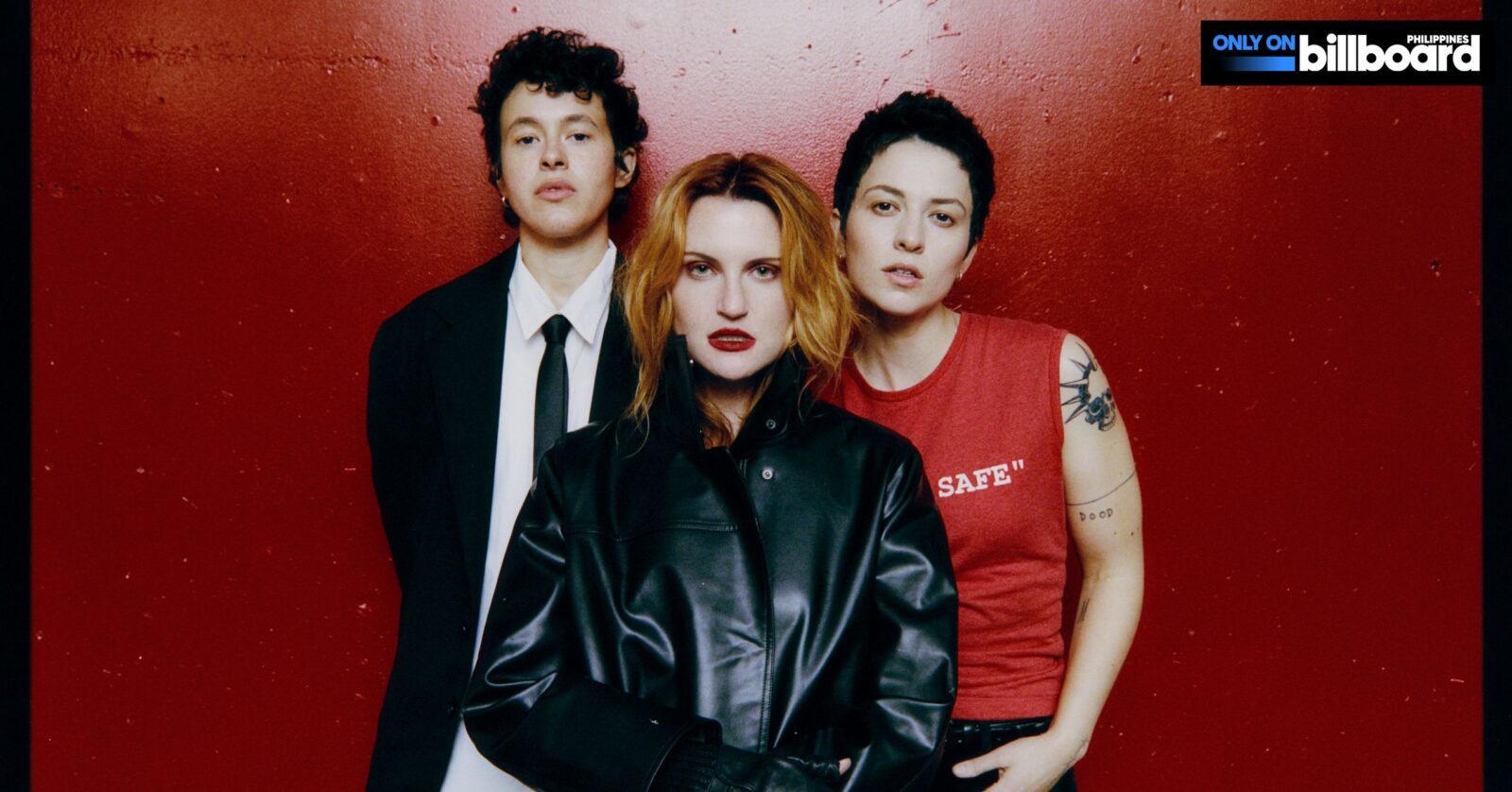
MUNA: Photographed by Dean Bradshaw. Courtesy of Secretly Distribution.
Whether or not you find yourself traversing the indie musicIndie MusicMusic produced independently of major labels, giving artists greater creative control and often a more personal sound. The Philippines has a vibrant indie scene, nurtured by small venues, online platforms,Go to Indie Music Glossary sphere, it’s undeniable that MUNA have become a force of their own.
Over the past decade, the indie pop band, comprised of Katie Gavin, Naomi McPherson, and Josette Maskin, has established itself as luminaries of sorts, becoming prolific figureheads within the ever-changing queer pop landscape. Their journey of self-expression has significantly progressed from their early days together at the University of Southern California, and has found itself translated across a myriad of genres and records throughout time — evolving from their ’80s new wave-inspired debut, About U, to the minimalist emotional excavation of Saves The World, and even the prismatic synth-pop sensibilities of their self-titled album.
Yet as their sound gradually evolved, so did their unapologetic nature. Now, with their latest record, Dancing On The Wall, MUNA seem less interested in achieving any semblance of perfection than they are in confrontation — with desire, fear, grief, with the disorienting emotional contradictions of what it means to exist in the modern world. And across the album’s post-punk abrasion and rave-indebted rhythms, the band leans into imperfection as both an aesthetic and philosophy.
At its core, one would note that this album stands a record that refuses escapism, even when at its most euphoric. Lust collides with political anxiety; vulnerability exists alongside defiance; and moments of beauty are deliberately interrupted by tension. In many ways, Dancing On The Wall feels like MUNA at their most exposed, their loudest, and undeniably their most horny — resulting in an album that feels startlingly alive: albeit messy in deliberate ways, emotionally immediate, yet still deeply physical.
Still, beneath all that chaos lies a sense of clarity. If you’d think that MUNA’s previous records documented the process of self-discovery, Dancing On The Wall documents the realizations that happens after — when identity is no longer the question, but aspects survival, pleasure, intimacy, and freedom become the focus instead.
In this exclusive conversation with Billboard Philippines, Gavin, McPherson, and Maskin open up about learning how to live inside the chaos of their latest record, sharing how vulnerability and queer nightlife inspired the album’s origins, and how their collaborative dynamic as a group continues to evolve over time.
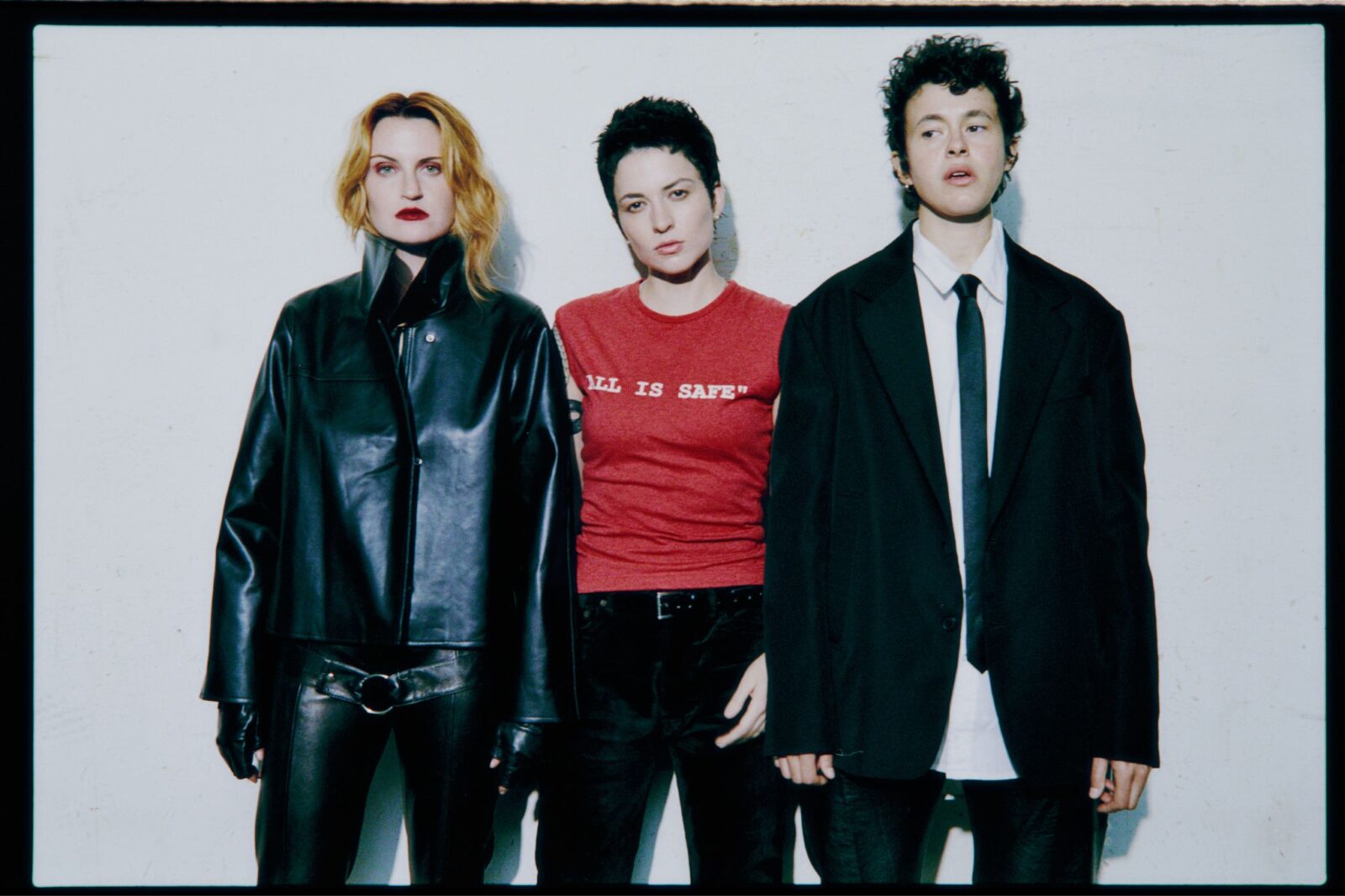
MUNA: Photographed by Dean Bradshaw. Courtesy of Secretly Distribution.
Billboard Philippines: In previous interviews, you’ve described Dancing On The Wall as your “most collaborative” record. How did that deeper internal collaboration actually reshape the sound, especially compared to the more polished, synth-pop clarity of your self-titled album?
Katie: I think all three of us are a little bit experimental in nature, and so working together in the room gave us permission to lean into that. Maybe when we were working in a more piece-meal way there was an effort to clean things up before presenting them to each other, and working more collaboratively showed us that we all actually appreciate those unexplored areas in our sound.
I’d say that your last record felt sleek, controlled, and emotionally precise. But on the other hand, this new one feels more volatile — more immediate, even messy in a deliberate way. What gave you permission to lean into that rawness?
Katie: I think you were onto it already, that it was probably the more collaborative nature of making this record.
You’ve talked about wanting to capture “conflicting feelings at the same time” — such as despair and lust, fear, and desire. Was there a specific moment in the writing process where you realized this album would live in that tension rather than resolve it?
Katie: I do think we had kind of conceptualized that early on, before we even had a lot of the songs. I think living in this political moment, even when you have resolution in your life, you still feel tension because of your awareness of all the struggles around you. We don’t want the record to be an escape from that, but rather we wanted it to be something that is trying to make beauty within that.
Sonically, there’s a clear pivot towards post-punk and ‘90s rave textures. What drew you away from the synth-pop sensibilities of MUNA (2022) and toward something more jagged, clubby, and even abrasive at times?
Naomi: I think we will forever remain faithful to the synthpop roots of the band, but I think at the time of making this album, we felt a draw toward making a record with some elements that ground it in a time, place, and space…and this involved leaning into some ephemera and imperfections that came with making the record in our studio.
A person we look up to very much, the producer Guy Sigsworth, described these moments across the record as “Audio vérite” (a derivative of course of the phrase Cinema vérite), which I really, really liked. These ‘imperfections’ or moments where reality comes bursting through the record in these small ways (re-amped guitars/drums/vocals) reflect, to some extent, the lack of sleekness that is present in everyday life. But we will never abandon synths!
There’s a fascinating contradiction in this record: it’s arguably your horniest album, but also one of your most politically anxious. How intentional was that collision between bodily desire and societal dread — themes that are very much prevalent for most people our age?
Naomi: I think it was exactly because they were prevalent for people currently, us included, that we wanted to capture that. We wanted to create an album that was not some sort of fantastical escapist narrative, but rather a record grounded in the here and now as we experience it.
I also heard that much of Dancing On The Wall was created in your own studio space. How did having that environment, one that is separate from the expectations of traditional studio settings, change the way you experimented, argued, or arrived at decisions?
Katie: I mean, the obvious answer is that we were very lucky not to be creating under the constraints of daily rental fees. (laughs) We had time to go down every different rabbit hole and wrestle with different ideas.
Jo: Having a space that was truly ours made us feel comfortable right away. We filled it with photos and notes to stay inspired and keep ourselves on track. It gave us the freedom to experiment with live equipment in a way that helped the record feel cohesive — like a real album. Creatively, it also helped to have a space that felt equally shared by all of us.
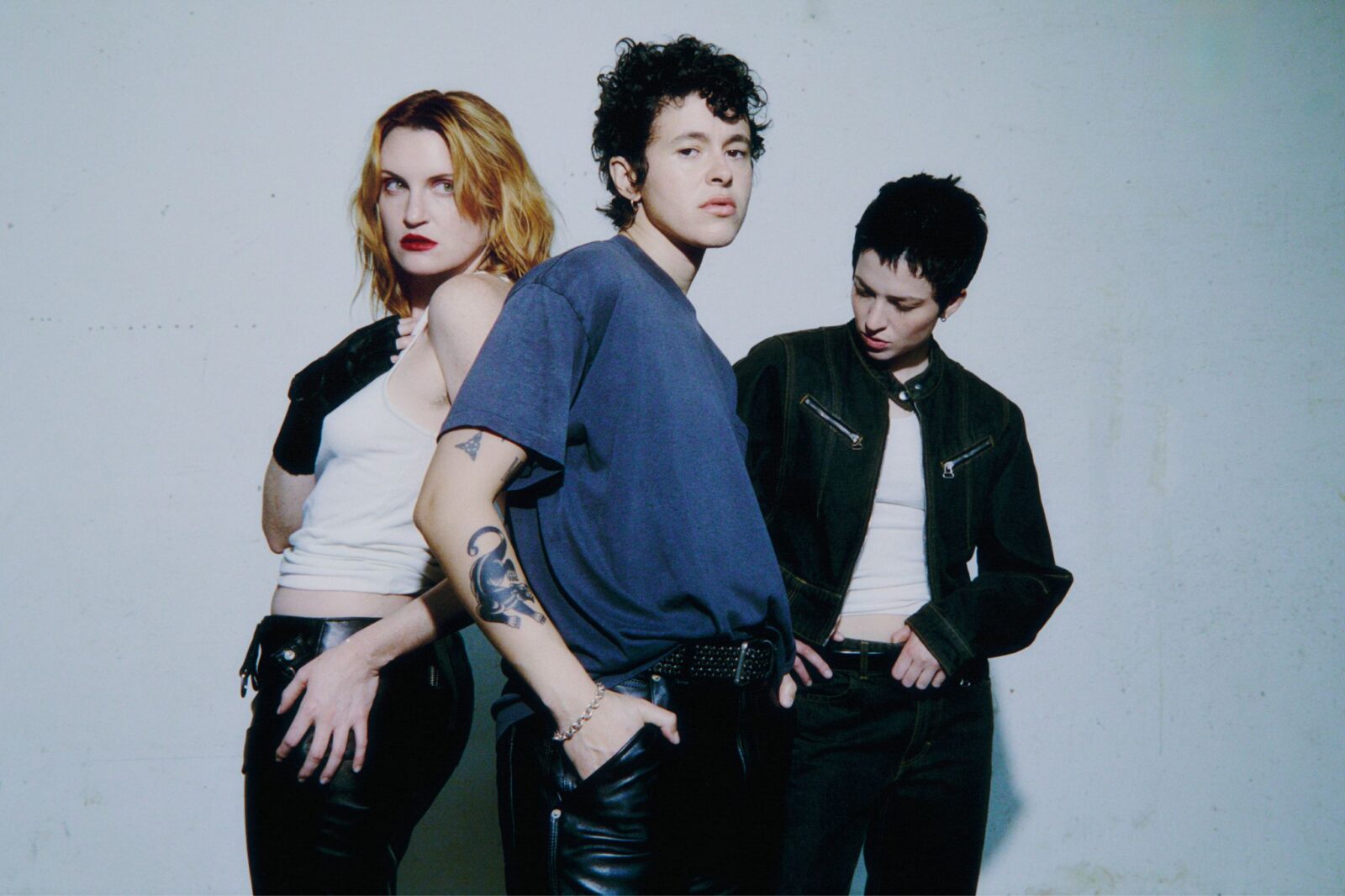
MUNA: Photographed by Dean Bradshaw. Courtesy of Secretly Distribution.
There’s a sense that this record is less about resolution and more about staying inside the feeling, almost as if one were resisting a sense of closure. Did you consciously move away from the kind of emotional “arc” that the majority of pop music often demands?
Naomi: I think there is a sort of theoretical and aesthetic framework here which you’ve picked up on. Maybe we weren’t exactly conscious of it, and it just attracts us for the very reason that it does indeed resist clean narrative arcs, which perhaps allows for a more interesting story to be told.
Life is, as always, ongoing, fragmented, and ambiguous, and accepting an existence which will always be lived in the tension of these realities is a way of coping with being in the world. I think our resistance toward the traditional emotional arc is what makes us want to make music with this band, and keep exploring. The story is never finished! It’s exciting in a way.
In a way, this album seems to reframe “power” not as a form of control, but as a means of expression — especially being fully in your desire, even when it’s messy or unreciprocated. How has your relationship to that sort of vulnerability evolved since your earlier records, such as your debut record, About U?
Naomi: I would argue and push back here a bit and say that while yes, you’re correct in the certain framing of power as expression present in the record…but at the same time, there’s the song Big Stick in which power is portrayed as this overwhelming force of control.
So I think there’s a bit of both going on! I think we will forever remain loyal to the idea of capturing vulnerability but not exploiting it for exploitation’s sake, or putting pain on display as a way of glorifying it. The biggest hope we have is that the songs feel reflective in certain ways of the experiences our listeners also have.
You’ve referenced queer nightlife, rave culture, and even films like 24 Hour Party People as touchstones for this new record. What does that lineage, whether it’s of dance floors as political and erotic spaces, unlock for you creatively on this record?
Katie: We actually talked about this with Zane Lowe on his show, and he referenced an interview he did with Honey Dijon, where she was talking about the historical importance for Black queer people to have rooms with no windows to be free and express themselves within.
I think we, as a band, are obviously indebted to the Black queer creatives who came before us and built a space for queers to thrive and experiment in. I think we owe that lineage the attitude on this record, the insistence that we are going to keep trying to live our best lives, say what we feel, and be free.
In some ways, this album feels like a return to your origins, but now with more skill, more resources, and more self-knowledge. How are you guys able to balance revisiting your early instincts without simply recreating them?
Katie: I honestly don’t know! Hopefully, we were able to. I think in the end, we are just different people now, so we couldn’t recreate it even if we tried.
Jo: I think we all feel a deep need to grow and change as artists — stagnation just isn’t fulfilling or true to who we are. That said, sometimes your first instinct is the right one. It becomes a negotiation between your ego and what’s best for the song. Hopefully, the song always wins
Finally, if your self-titled album was about refining who MUNA are, does Dancing On The Wall represent a disruption of that identity, or the clearest version of it yet?
Naomi: I think this album is actually more clarifying and less cheeky than our self-titled. I think (and hope) we’ve created a world that invites the listener in, and you can surrender to the journey knowing you’ll be held through it even in the moments where it gets chaotic. Those moments are balanced by moments of beauty, and the moments of calm are disrupted by provocations… so hopefully this has created an intriguing balance!
For my final question, what do you hope listeners, whether it be your most devout fans or casual audiences alike, can take away from a record such as this?
Jo: We hope listeners can feel their own life experiences reflected back at them. Making music always comes with the intention of saying something someone needs to hear. So we hope the feelings in these songs truly resonate with them.
Katie: You deserve love, you deserve to be heard and held, you are valid in your anger and pain, and you deserve to have pleasure and fun.
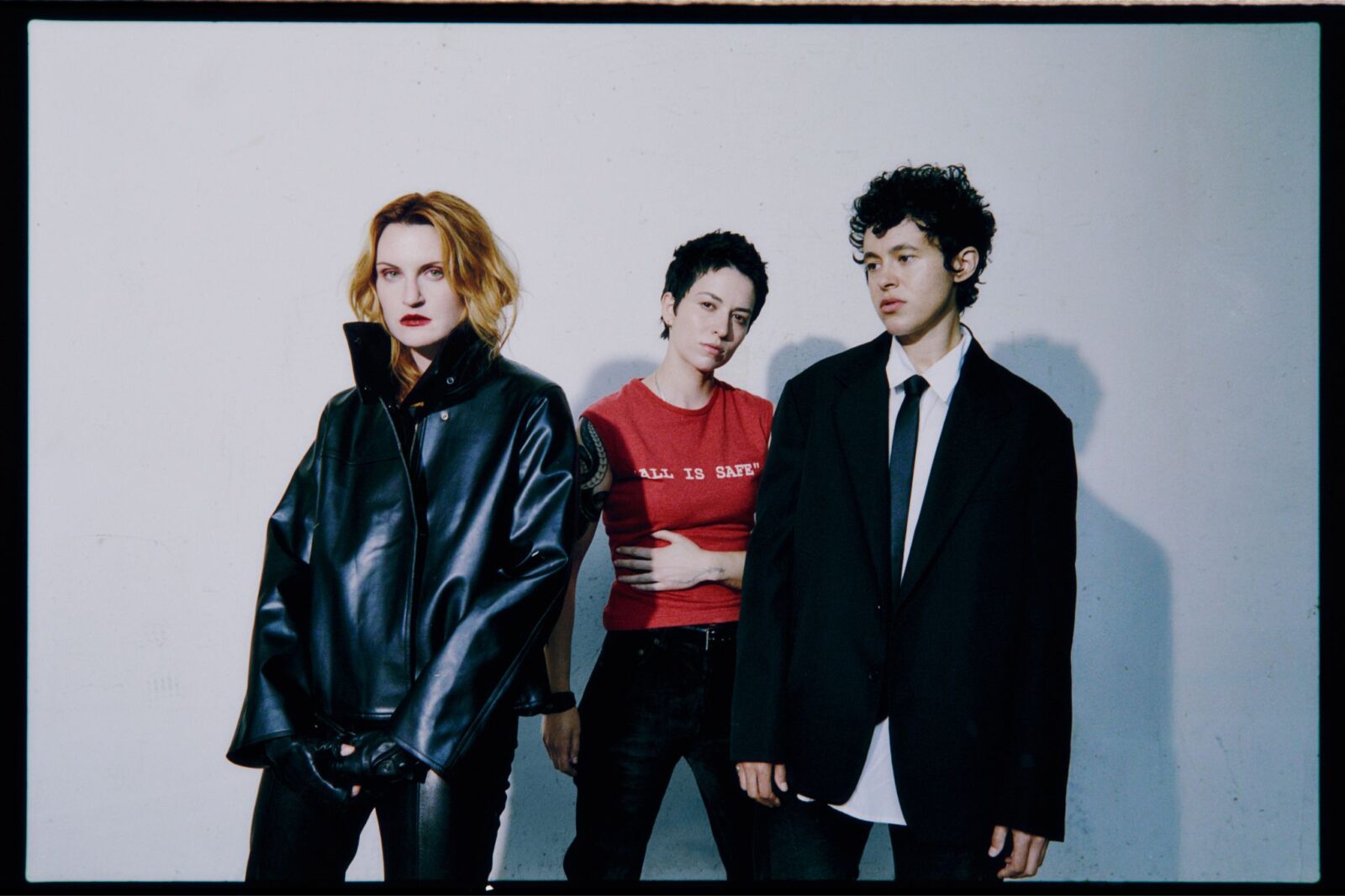
MUNA: Photographed by Dean Bradshaw. Courtesy of Secretly Distribution.
Check out MUNA’s latest album, Dancing On The Wall, in its entirety below:
Frequently Asked Questions
Dancing On The Wall is MUNA’s fourth studio album, exploring the tension between desire and political anxiety, recorded collaboratively in the trio’s own studio space.
MUNA is an indie pop trio of Katie Gavin, Naomi McPherson, and Josette Maskin, formed at the University of Southern California and known within the queer pop landscape.
The album blends post-punk abrasion with 90s rave textures, moving away from 2022’s polished synth-pop toward a rawer, collaborative sound producer Guy Sigsworth called audio verite.
Unlike prior piecemeal songwriting, Dancing On The Wall was built through deeper in-room collaboration, letting the trio lean into unpolished, experimental ideas together from the start.
The record explores queer nightlife and rave culture as spaces of political and erotic expression, balancing bodily desire with societal dread across its songs.