The Rolling Stones: Still Speaking Their Own Language
Ahead of the release of their 25th studio album Foreign Tongues, Mick Jagger reflects on six decades of songwriting with Keith Richards, the pursuit of great records without filler, and why the band continues to chase new music instead of nostalgia.




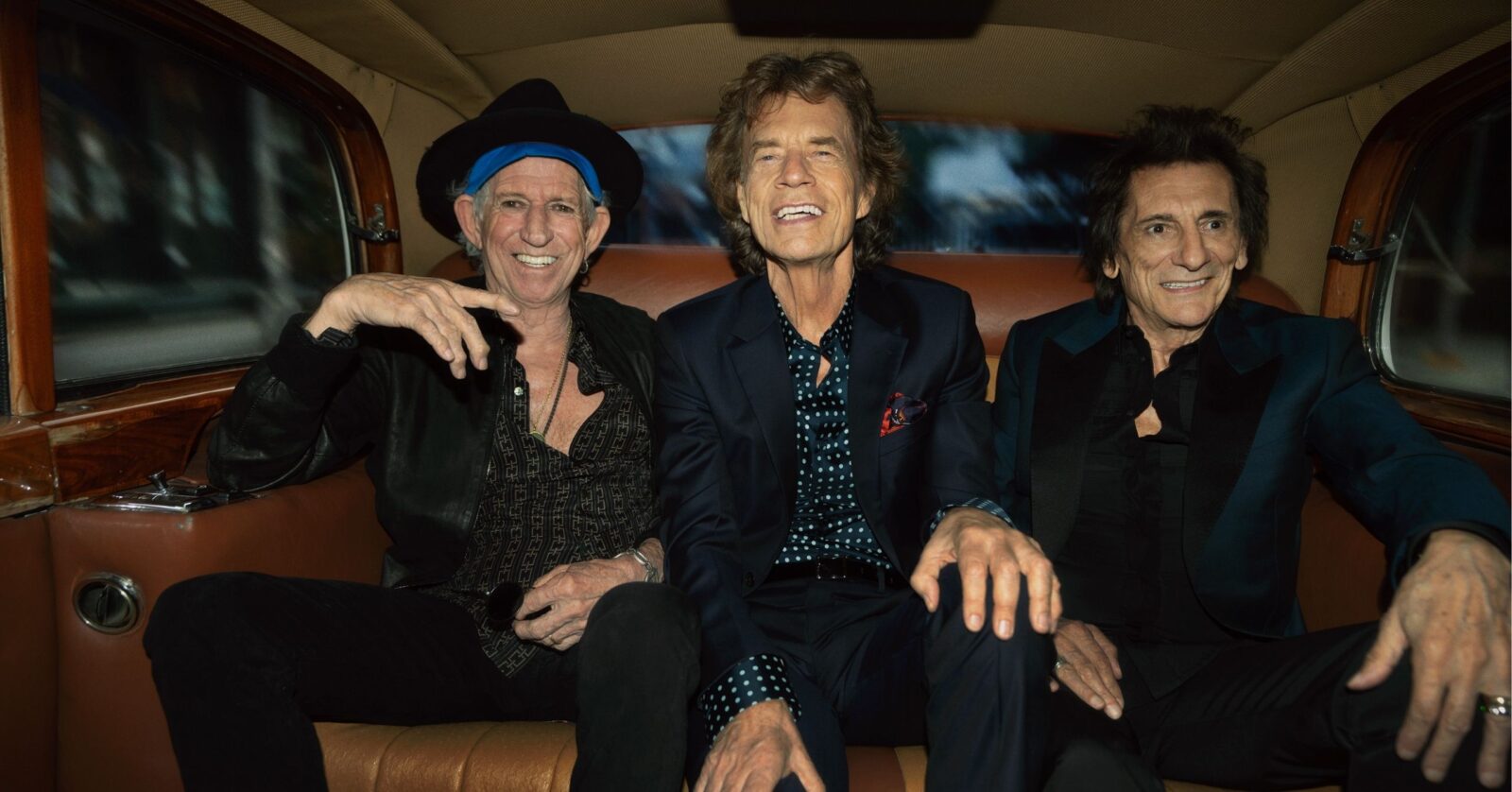
Keith Richards, Mick Jagger, and Ronnie Wood of the Rolling Stones: Photo by Mark Seliger.
Keith Richards, Mick Jagger, and Ronnie Wood of the Rolling Stones: Photo by Mark Seliger.
There comes a point in almost every legendary band’s career when nostalgia threatens to become the main event. Greatest-hits tours fill arenas, anniversary box sets keep the back catalog selling, and new music becomes secondary to the songs that built the legacy in the first place. For decades, the Rolling Stones have refused that script.
When Hackney Diamonds arrived in 2023, it reminded listeners that singer Mick Jagger, guitarist and songwriting partner Keith Richards, and guitarist Ronnie Wood still had something new to say. The band’s first collection of original material in 18 years earned rave reviews, made best-of-the-year lists, and won the Grammy for Best Rock Album the following year, raising expectations for whatever would come next. On July 10, the Stones return with Foreign Tongues, their 25th studio album — a record that carries the momentum of its predecessor while pushing the band’s songwriting forward with the same restless curiosity that has defined them for over six decades.
Jagger admits there was always an awareness of what Hackney Diamonds had accomplished. More than the awards, it was the long absence of new original material from the band that made its reception meaningful.
“Well, yeah, I was very pleased to be on those lists. It was very nice to win the Grammy,” the singer shares. “The thing was, we hadn’t made a record of original songs for such a long time. So that’s a double risk, really, in a way, because the longer you’re away, then when you come back to do something and [people] say, ‘Yeah, well, it’s nice they came back, but it wasn’t really very good.’ You know, it could be like that easily, ‘It’s very nice to have them back, but I wish they’d be better,’ you know?”
No Filler
That expectation shaped the band’s approach to Foreign Tongues from the outset. Working once again with producerProducerThe person who guides the creative and technical process of making a recording, shaping its sound, arrangement, and overall quality. Producers can write, compose, engineer, and direct performances, and aGo to Producer Glossary Andrew Watt, the Stones established a simple rule before recording had even begun.
“So, it has to be good,” Jagger explains. “And I mean, when Andy and I talked about it first, we said, ‘Look, we don’t want to have anything on it that’s below a certain level. If it’s not up to that level, it’s not going on the album.’ It’s either we make [the album with] less tracks or we do another [better] track. We’re doing different things. And we had the same approach with this record.”
That philosophy extended to every song on the album. “So we said, OK, no tracks that you wouldn’t love, and no filler,” he continues. “You know, we used to call them filler in the old days, because people… I mean, I bought a lot of records [by artists] I love, [and they would have] three songs you love, and the rest of it you don’t love.”
Sound and Style: Rock, Country, and Pop Across 14 Tracks
The result is a sprawling 14-song album that unfolds gradually rather than revealing everything at first listen.
“So there’s some songs, I think, that are more accessible [right away] when you hear these songs, and then you might find other things you haven’t discovered. So that’s kind of interesting. But then there’s other songs, I think, that will maybe creep up on you later.”
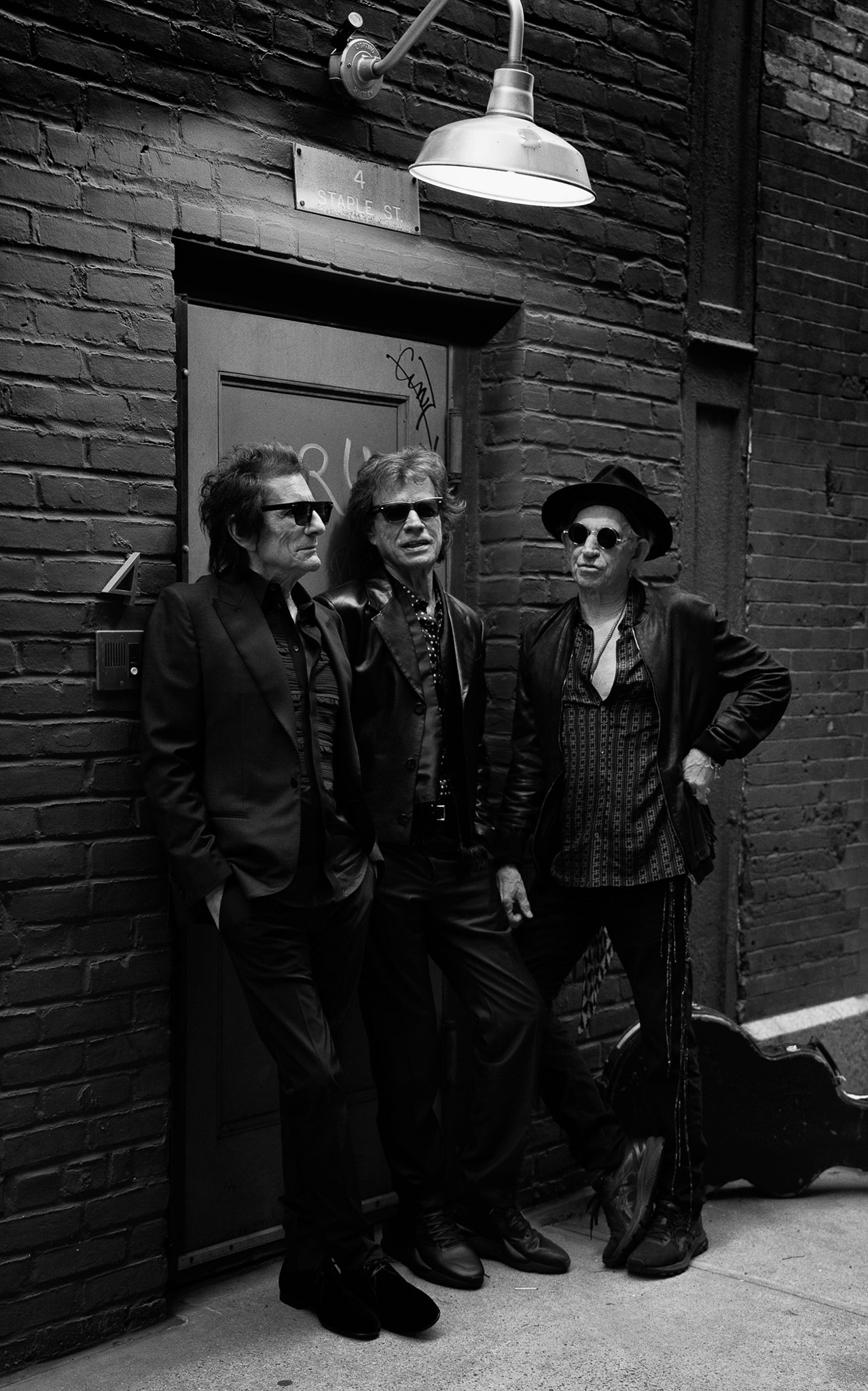
The Rolling Stones: Photo by Mark Seliger.
Sonically, Foreign Tongues often recalls the swagger of classic Stones records from the Let It Bleed through Exile on Main St. years. Jagger, however, is quick to point out that the resemblance lies more in spirit than in sound.
“It’s not my duty,” he laughs when asked whether he feels responsible for carrying the torch for rock and roll. “But I’m glad that people think of it like that, you know?”
He explains that modern recording technology has transformed the way the band wants their music to be heard.
“All these things that people loved on [how] Exile on Main St. sounds so great and muddy [aren’t heard on the new record]. OK, you want great and muddy — that’s great. But that’s not my taste at the moment. I want to hear what people are playing. I don’t want them to be buried in the back there.”
That clarity allows every instrument to occupy its own space while giving room for the band’s broader musical interests. “But I think as well as [there] being rock and roll on the album, there’s other styles that are valid,” he adds. “We like to do country music. I [also] like to do music [to] make people dance, and also some sort of pop hooks.”
In Jagger’s view, those distinctions matter less than they once did: “So I mean, essentially, whatever label you want to call it, it’s all just popular music, you know?”
Behind the Title
Even the album’s title reflects that openness. After weeks of unsuccessfully debating possible names, the answer arrived in one of Jagger’s own lyric sheets.
“I saw this (the words ‘foreign tongues’) in the lyrics of (album opening track) ‘Rough and Twisted,’ and I said, ‘OK, what about this?’ And everyone said, ‘Yeah,’ so I was just so pleased that everyone said, ‘Yeah.'”
The phrase eventually took on a broader meaning: “It sort of refers to, you know, the nature of music… I think music is one of those things that transcends national boundaries and passport controls.” It’s an idea that feels particularly fitting for a band whose songs have crossed generations, continents, and cultures since the 1960s.
The mechanics of songwriting have naturally evolved as well. Jagger and Richards no longer spend months sharing hotel rooms while on tour, developing ideas with guitars constantly within reach. Geography has changed the routine (“He lives in the United States, and I don’t live in the United States,” explains the singer), although the collaboration remains familiar.
“When I’ve written something, we get together and I play him all the stuff I’ve written and he plays me the stuff and he might make a suggestion and I say, ‘OK, yeah, but that’s great, Keith, but it needs another part,’ and then we have to write that part. So it’s a different dynamic than it was.”

The Rolling Stones: Photo by Mark Seliger.
For a band whose place in rock history has long been secure, continuing to make new music comes from a surprisingly practical motivation — having songs worth recording.
“I think if I hadn’t had so many songs, I wouldn’t have been able to do this,” Jagger says.
The material left over from Hackney Diamonds gave the Stones a head start, allowing Foreign Tongues to grow from a state of abundance instead of obligation. Creativity, he suggests, is much easier when you’re building from excitement rather than searching for inspiration.
“And I can’t wait to get back on to performing them personally,” he concludes, hinting at a tour.
For most artists that reach such a milestone (pun intended), a 25th studio album would serve as a victory lap. For the Rolling Stones, it feels like another chapter in a conversation that began over 60 years ago — one that continues to find new ways of speaking, even if the language has always sounded unmistakably their own.
Frequently Asked Questions
Foreign Tongues, the Rolling Stones’ 25th studio album, releases July 10 as a 14-song collection. It follows 2023’s Hackney Diamonds, which won the Grammy for Best Rock Album and marked the band’s first album of original material in 18 years.
Jagger says returning with an album of original music after an 18-year gap carried a “double risk” — fans could dismiss the record as being not very good or not living up to expectations. He and producer Andrew Watt set a strict quality bar, cutting any track that didn’t measure up.
Some tracks on Foreign Tongues echo the swagger of the Stones’ classic albums like Let It Bleed and Exile on Main St., but with a cleaner mix. Jagger says he wanted every instrument audible rather than “muddy,” while still including country, dance, and pop influences alongside rock and roll.
The phrase comes from the lyrics of opening track “Rough and Twisted.” After weeks of debating other names, Jagger spotted it and the band agreed. He says it reflects music’s ability to cross national boundaries and language barriers, tying the album’s sound to the Stones’ six-decade global reach.
Jagger and Richards no longer share hotel rooms on tour to co-write, since Richards lives in the United States and Jagger does not. Now they meet separately to trade finished material, with each suggesting additions to the other’s songs — a more structured process than their earlier songwriting dynamic.