
The Anatomy Of A P-Pop Hit – And Why It Matters
FlipMusic Productions’ very own powerhouse songwriter-producer Jumbo De Belen (Bojam) opens up to Billboard Philippines about what makes a P-pop hit in this day and age.




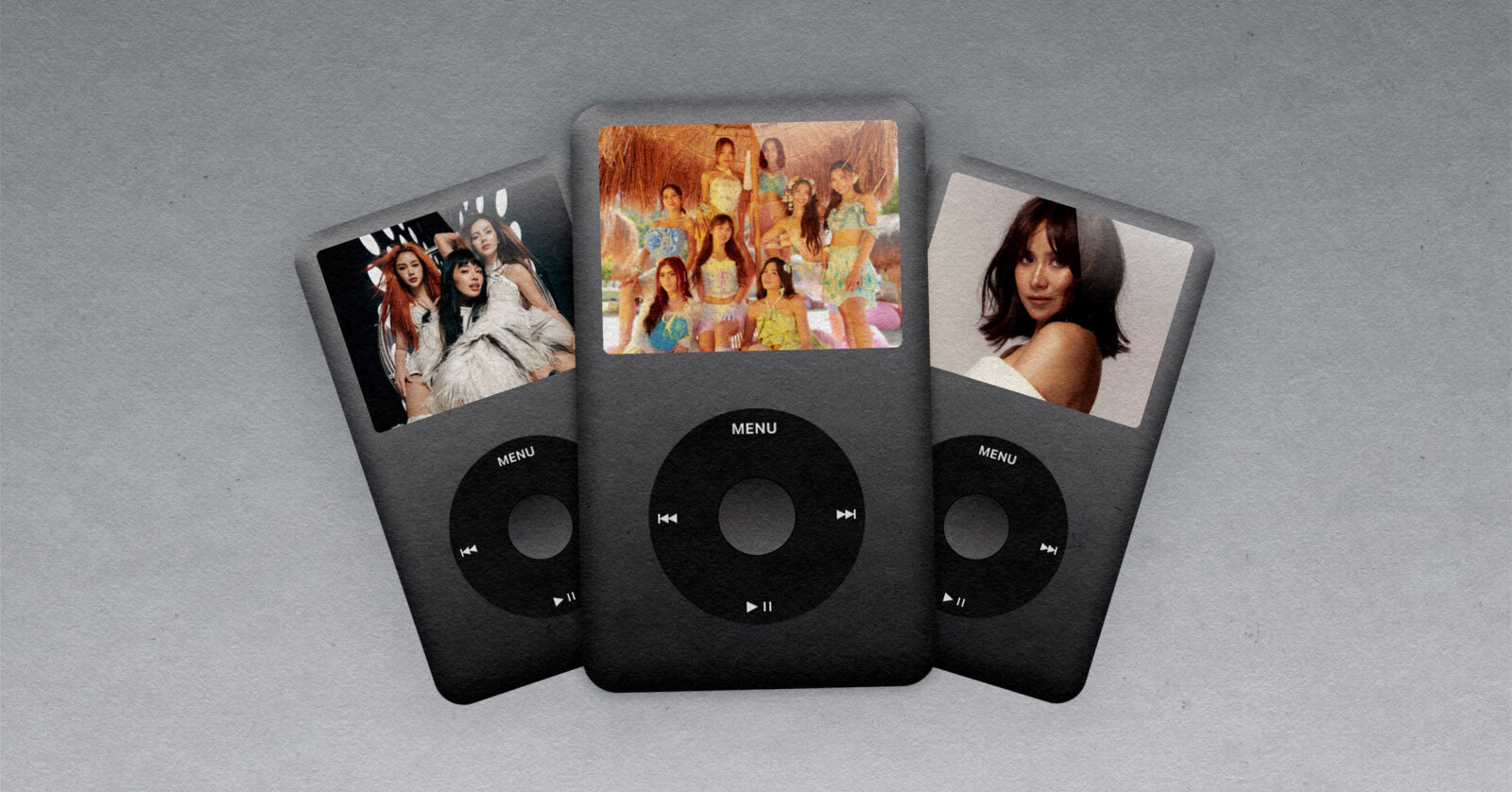
Art by Easel Manes.
Art by Easel Manes.
Unlike what most people think, there’s no secret ingredient to making a hit song, nor is there a specific formula.
It’s a decades-old question that many music scholars, fans, songwriters, producers, and even musicians themselves have already tried to answer, but there’s never been a clear response that could be utilized as a ‘one-size-fits-all’ approach in making a song dominate the charts. Over time, several possibilities that many have considered would be the use of certain musical hooks, harmonies, and melodies that have the possibility to lure listeners in by ear, while others have relied on constant radio push and heavy marketing efforts that eventually transform into a full campaign or pop culture moment — though not all efforts have even become successful, with others reaping little to no fruit.
Yet in the present-day musical landscape, the factors that often push any song to become a hit often rely on the digital algorithm perpetuated upon us by our own social media feeds, or the curated playlisting placements that digital and streaming platforms enact upon our devices. Given these changes in the industry, it has made it even more unpredictable to determine what elements and factors could comprise the makings of a hit song.
Here in the Philippines, a nation which has often been recognized as one of the world’s emerging ‘trigger markets,’ we’re seeing a new wave (and type) of hit songs emerge on the global stage, particularly within the fast-rising P-pop movement. These days, we’re seeing P-popP-PopShort for Pilipino pop, a movement of Filipino idol groups and solo acts who combine pop music, choreography, and polished production for local and international audiences. P-pop has grown quickly,Go to P-Pop Glossary songs make history by taking over a number of international music charts (e.g. SB19, Sarah Geronimo) and even being performed on some of the world’s biggest festival stages, just as what’s occurred with BINI’s historic set at Coachella. And upon looking closer at the common denominators behind some of the P-pop genre’s biggest, best, and most viral hit songs, anyone would notice that at the center of it all lies FlipMusic Productions’ very own powerhouse songwriter-producer, Jumbo De Belen (also known as Bojam).
With close to two decades’ worth of experience within the Philippine music industry, Bojam has undeniably crafted an enormous amount of P-popP-PopShort for Pilipino pop, a movement of Filipino idol groups and solo acts who combine pop music, choreography, and polished production for local and international audiences. P-pop has grown quickly,Go to P-Pop Glossary hits. Aside from working on the career-defining work of pop superstars such as Sarah Geronimo (“Tala,” “Ikot-Ikot”) and BINI (“Pantropiko,” “Salamin, Salamin”), he has also written and produced for some of the hottest rising acts on the scene, as seen with G22’s viral hit, “Pa-Pa-Pa-Palaban,” and with VVINK’s growing discography (“Tulala,” “Baduy,” It Starts With A VVINK).
So while there’s no such thing as a secret ingredient or special formula that can formulate a hit song, what ultimately matters is someone’s special touch and commitment to the work, just as what songwriters and producers like Bojam have inevitably done for the Philippines’ growing P-popP-PopShort for Pilipino pop, a movement of Filipino idol groups and solo acts who combine pop music, choreography, and polished production for local and international audiences. P-pop has grown quickly,Go to P-Pop Glossary scene.
In this exclusive interview with Billboard Philippines, Bojam breaks down what makes a P-popP-PopShort for Pilipino pop, a movement of Filipino idol groups and solo acts who combine pop music, choreography, and polished production for local and international audiences. P-pop has grown quickly,Go to P-Pop Glossary hit in this day and age, opening up about the unique approach to his songwriting and production process, and what it takes for a P-pop song to resonate with Filipino audiences.
Billboard Philippines: As both a songwriter and producerProducerThe person who guides the creative and technical process of making a recording, shaping its sound, arrangement, and overall quality. Producers can write, compose, engineer, and direct performances, and aGo to Producer Glossary, where does a P-pop hit usually begin for you — the concept, the lyrics, the melody, or the production — and how does that initial idea evolve into a finished track?
Jumbo De Belen (Bojam): For me, it all starts with the concept and the lyrics. P-popP-PopShort for Pilipino pop, a movement of Filipino idol groups and solo acts who combine pop music, choreography, and polished production for local and international audiences. P-pop has grown quickly,Go to P-Pop Glossary songs lean heavily on those two elements. The concept is what makes a group feel fresh and exciting, almost as if you’re seeing them for the first time. The lyrics then bring that concept to life and give the audience a story they can connect with.
Once those foundations are in place, everything else tends to fall into place naturally. The musical direction comes from constant research, listening, and immersing ourselves in emerging genres and trends. The goal isn’t to chase what’s popularv—vit’s to understand where music is headed and find ways to incorporate fresh ideas while staying true to the artist’s identity.
Mainstream music is constantly evolving. If you’re not paying attention to new sounds and shifts in audience taste, you risk missing opportunities to innovate and connect. Staying curious and adaptable is just as important as having a strong concept and message.
So when you’re writing and producing for a P-popP-PopShort for Pilipino pop, a movement of Filipino idol groups and solo acts who combine pop music, choreography, and polished production for local and international audiences. P-pop has grown quickly,Go to P-Pop Glossary act, how do you create a song that feels uniquely tailored to the artist while still having broad appeal to listeners?
Idol groupIdol GroupA multi-member act, typically trained for years by an agency, that combines singing, dancing, and a carefully crafted public image. Associated with K-pop and Japanese pop, the idol group modelGo to Idol Group Glossary songs are shaped by both the group’s dynamic and the individual strengths of each member. Every section of the song has to be engaging enough to give the group something compelling to perform. When you think about how audiences experience a great live performance, every measure should feel memorable and purposeful.
I learned this from producing for hip-hop artists over a decade ago. The most successful local rap songs are filled with quotable lines because rappers shine when their skills are showcased in their verses. With P-pop groups, the approach is similar, but instead of highlighting one artist, you’re balancing the strengths of multiple members across different parts of the song. The goal is to create moments where each member — and the group as a whole — can stand out while keeping the audience engaged from start to finish.
But that’s only one part of the equation. Those principles are already common in how many countries build songs for their audiences. In the Philippines, however, a song still has to be OPM at its core. It needs to connect with Filipino listeners on a deeper level. That connection can come from the song’s theme, the way the lyrics are written, or even from familiar musical elements that resonate with the Pinoy ear. No matter how global the production is, the song still needs something that feels authentically Filipino.
What songwriting and production choices do you believe have the biggest impact on turning a good song into a memorable P-popP-PopShort for Pilipino pop, a movement of Filipino idol groups and solo acts who combine pop music, choreography, and polished production for local and international audiences. P-pop has grown quickly,Go to P-Pop Glossary hit?
It’s still about figuring out the hook — but it’s no longer limited to the chorus. In today’s social media-driven landscape, any part of a song can become the hook. A verse, pre-chorus, ad-lib, dance break, or even a single line can take on a life of its own and go viral.
Sometimes all it takes is a compelling 10- to 15-second segment for people to connect with, share, and remember. That’s why every section of a song matters. You never know which moment the audience will latch onto and turn into the song’s defining feature.
Many successful P-pop songs balance global pop influences with local identity. How do you approach writing and producing music that feels contemporary while still reflecting a distinctly Filipino voice?
At its core, it’s all about relatability. A song has to connect with its local audience in a way that feels genuine and authentic.
I remember asking one of my Korean professors if I could produce and write for K-pop. His response was that K-pop, no matter how global it has become, is still primarily created for a Korean audience. It takes a deep understanding of the culture, language, and shared experiences to make that connection truly resonate. He pointed out that while we may share many of the same Western musical influences and production styles, authenticity comes from understanding the audience you’re speaking to. The same principle applies to P-pop.
As a Filipino, I naturally understand the nuances, emotions, and experiences that resonate with Filipino listeners. That cultural familiarity helps create a connection that feels more genuine — something that can’t always be replicated by simply adopting a sound or trend from another market.
Looking at your own established body of work, what does the anatomy of a P-pop hit look like — from the first lyric or melody you write to the final production decisions that listeners ultimately hear?
People often assume that FlipMusic is all about bubblegum pop, but I see it differently. If you look at the hit songs I’ve produced over the years, they actually span different genres. The common thread isn’t the genre — it’s the feeling.
My music has always leaned toward songs that are pleasant to listen to, uplifting, and sometimes bittersweet. I’ve always been drawn to melodies and emotions that make people feel good, even when there’s a touch of longing behind them.
One thing I’ve learned is that if a song can make a singer naturally project joy and smile while performing it, that’s a powerful indicator. Audiences respond to that energy. It’s a simple principle, but it’s one that’s been proven time and time again. For me, that’s always been one of the most reliable formulas for creating music that connects with people.
Frequently Asked Questions
Bojam, born Jumbo De Belen, is a Filipino songwriter-producer at FlipMusic Productions with close to two decades of industry experience. His credits include Sarah Geronimo’s “Tala” and “Ikot-Ikot,” BINI’s “Pantropiko” and “Salamin, Salamin,” G22’s “Pa-Pa-Pa-Palaban,” and multiple tracks for VVINK.
According to Bojam, every P-pop song begins with the concept and the lyrics. The concept establishes what makes a group feel fresh, while the lyrics bring that concept to life through a story Filipino audiences can connect with. Production and musical direction follow from those foundations.
Bojam argues that P-pop must remain OPM at its core regardless of how globally influenced its production is. Drawing on cultural familiarity, he builds Filipino authenticity through the song’s theme, lyrical approach, and musical references that resonate specifically with local listeners.
Bojam says the hook in P-pop is no longer confined to the chorus. Any 10–15 second segment — a verse, a pre-chorus, a dance break, or a single line — can go viral. Every section of a song must be crafted with the same intentionality as the main hook.
FlipMusic Productions is the Philippine music production outfit behind songwriter-producer Bojam, one of the genre’s most prolific hitmakers. The company’s output spans multiple P-pop acts including BINI and Sarah Geronimo, whose songs have reached international charts and major global festival stages.