




“There’s only so much you can say about P-pop” was admittedly my first thought coming into this story.
Over the past year alone, the buzz surrounding P-pop has been undeniable. From BINI’s rapid takeover to the accelerated growth of idol groups within Filipino music, P-pop has quickly become the biggest movement in the Philippines. It’s the topic of many conversations around music and the center of so many stories we’ve worked on at Billboard Philippines. And so, when it came to it, I thought: haven’t we told it all before?
But after going through the entire process of piecing together Billboard Philippines’ P-pop Rising Class, I realized there’s actually so much more beneath the surface.
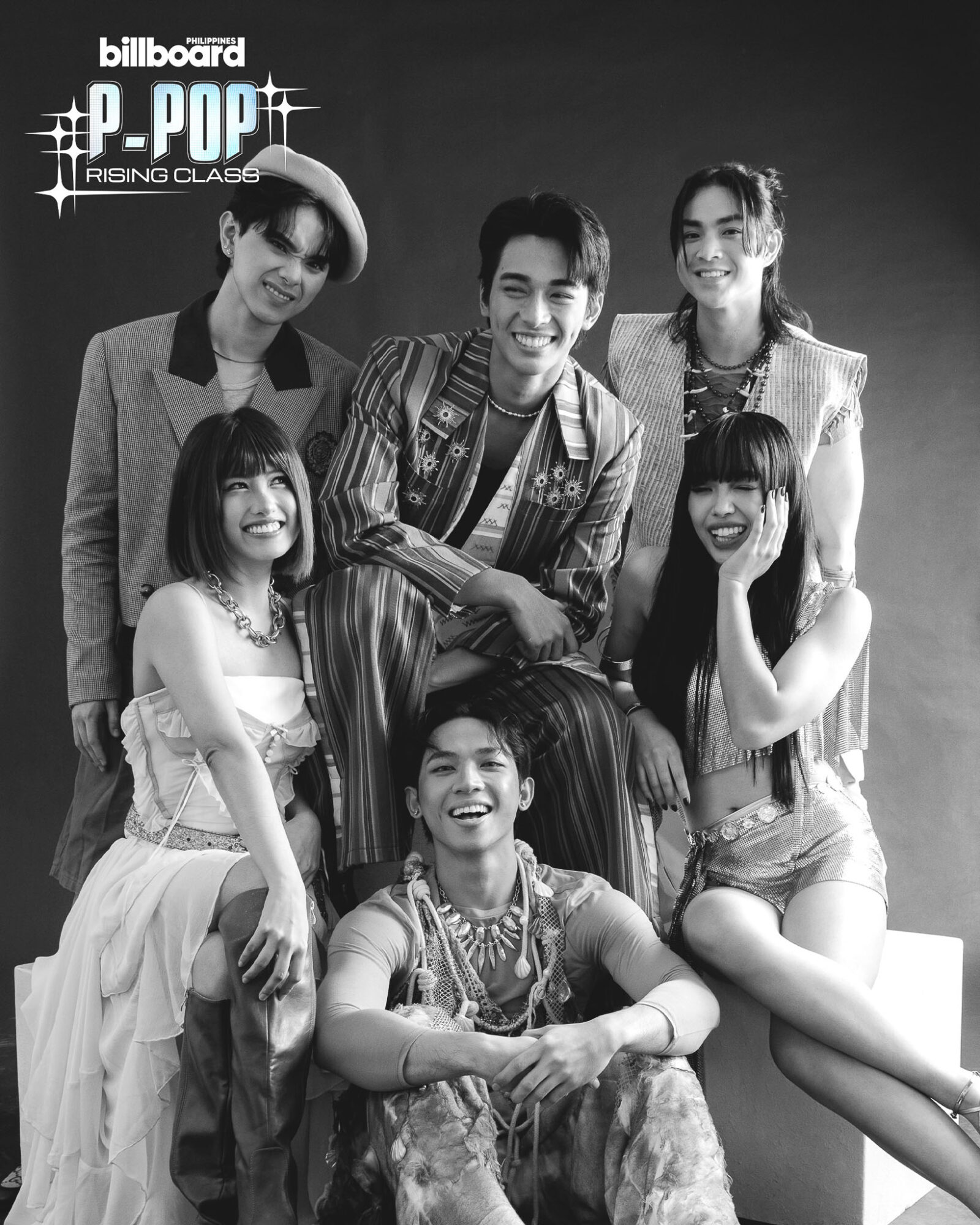
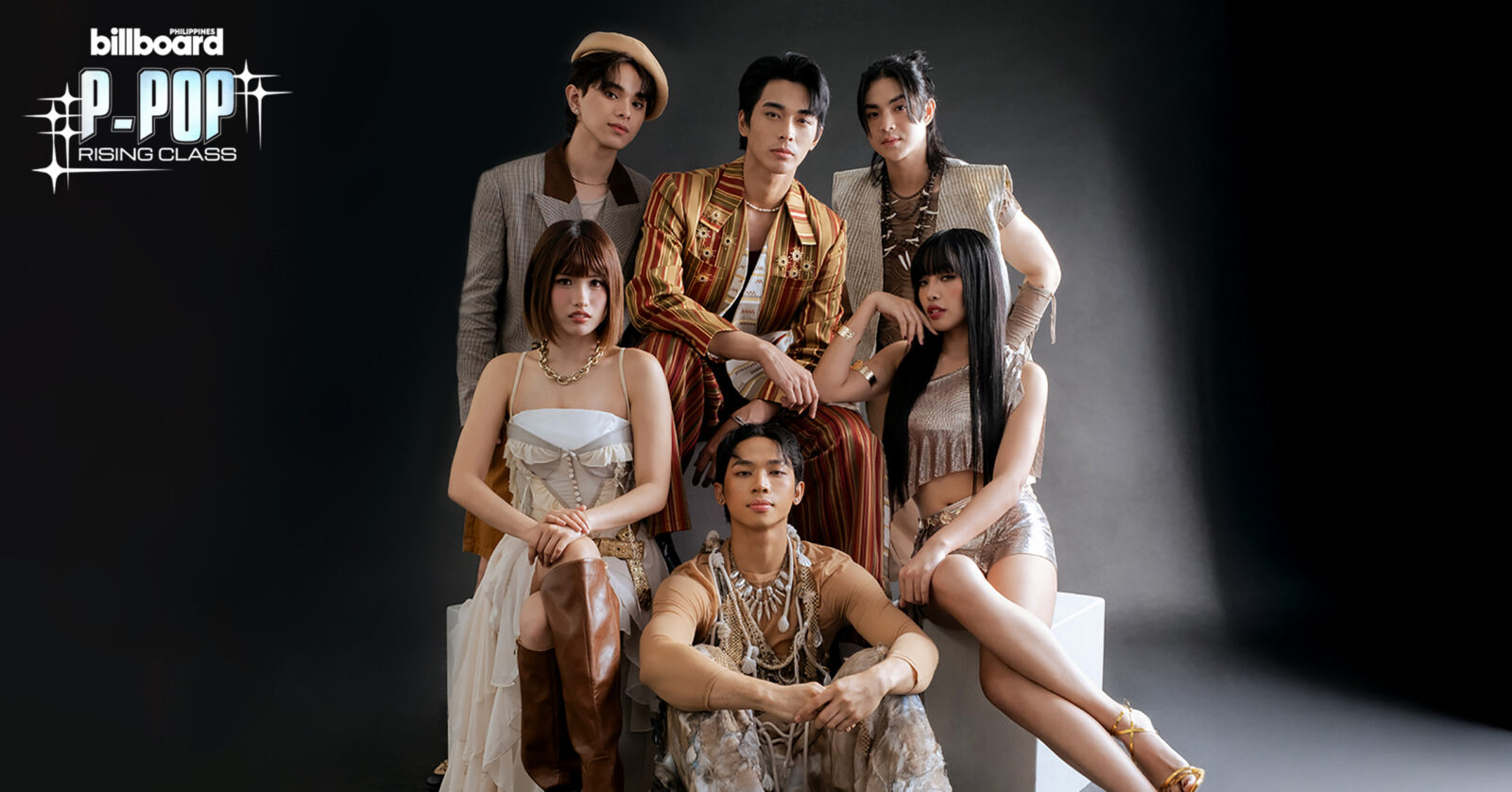
GAT’s Ethan, BGYO’s Gelo, VXON’s C13, KAIA’s APhotographed by Shaira Luna.
It’s easy to get swept up in the usual discussions of P-pop’s growth — how groups are breaking records, winning international awards, and making waves globally. These conversations are important, but they’ve also become familiar.
We’ve heard them time and time again. Yes, P-pop is booming. Yes, the talent is undeniable — and yes, the global stage is finally beginning to pay attention. But after all these years full of success stories, why are we still surprised that Filipinos are capable of creating something this big, and this impactful?
The truth is that the success of P-pop isn’t just about the music or the numbers they pull in, but also the culture and community that is shaping it.
As P-pop pioneers SB19 put it, “P-pop is more than a genre — it’s a movement.” P-pop has always been about bringing people together and proving that there’s pride in our own.
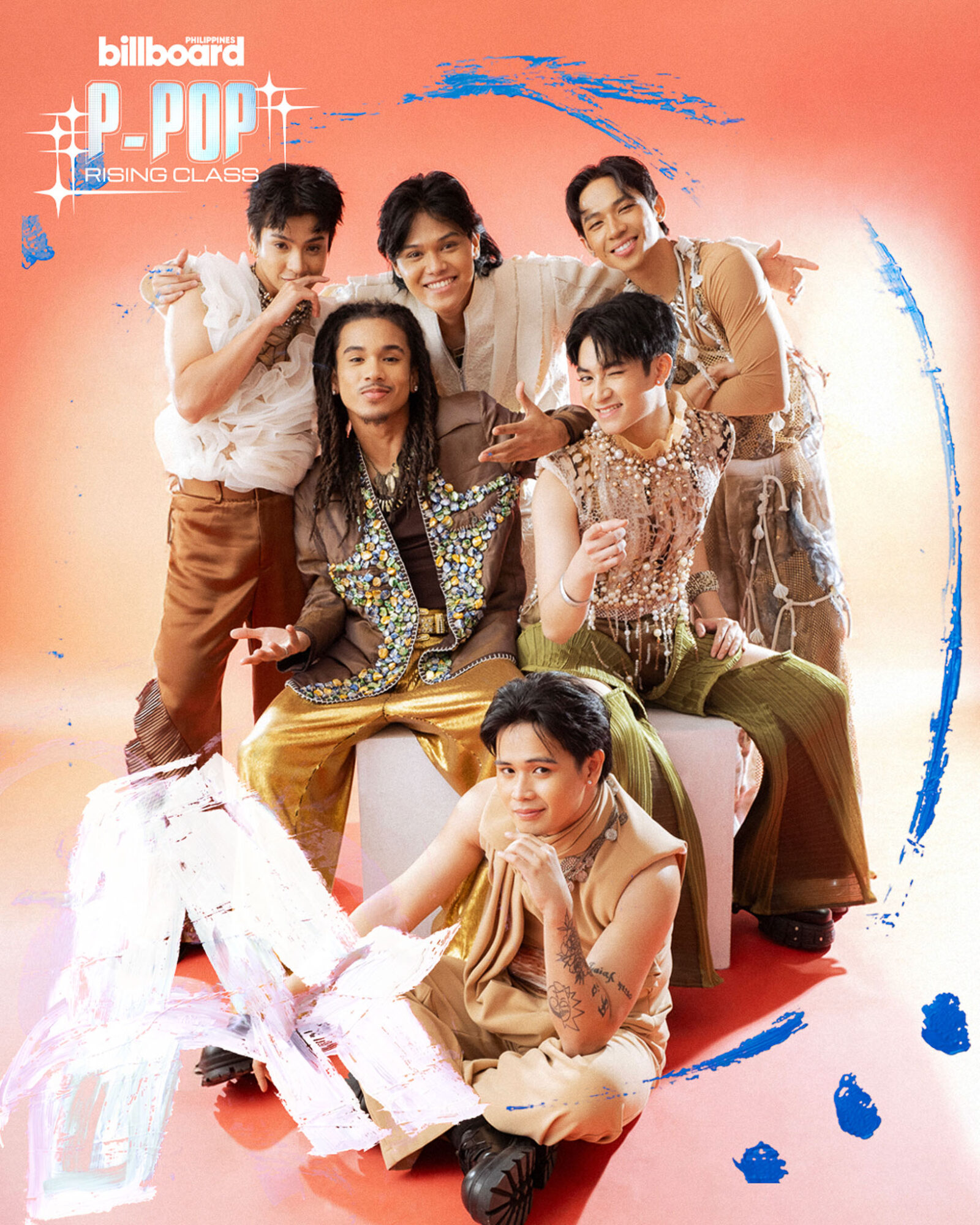
ALAMAT, photographed by Shaira Luna. Painting by ALAMAT.
“Mas marami na pong mga groups, mas marami nang music, mga songs that they can relate to. And I think, more than anything, nakikita nila na atin ‘to — meron na [tayong] sariling atin,” says KAIA’s Angela.
She continues, “Mas makikita ang buong mundo na Filipinos deserve to be on a bigger stage… being a Filipino is already a statement.”
(“There are more groups, more music, more songs they can relate to. And I think, more than anything, they can see that this is ours — we finally have something of our own. The whole world will see that Filipinos deserve to be on a bigger stage… being a Filipino is already a statement.”)
P-pop, The Filipino Way
In the beginning, P-pop was seen as a copy of K-pop, a local take on a global success. And while that was once true, it has evolved into something uniquely and unmistakably Filipino.
“Before, maybe we could say that we got inspired, and it’s okay to be inspired, it’s okay to do our rendition, and look up to different artists,” explains GAT’s Ethan. “But now, we finally came to a point where P-pop really sounds Filipino.”
You see this in tracks like ALAMAT’s “Maharani,” which integrates indigenous Filipino instruments and languages, and in VXON’s “SSP,” which takes inspiration from Filipino folklore. Even in remakes of classics like GAT’s “Daleng Dale,” Filipino culture is at the forefront of P-pop.
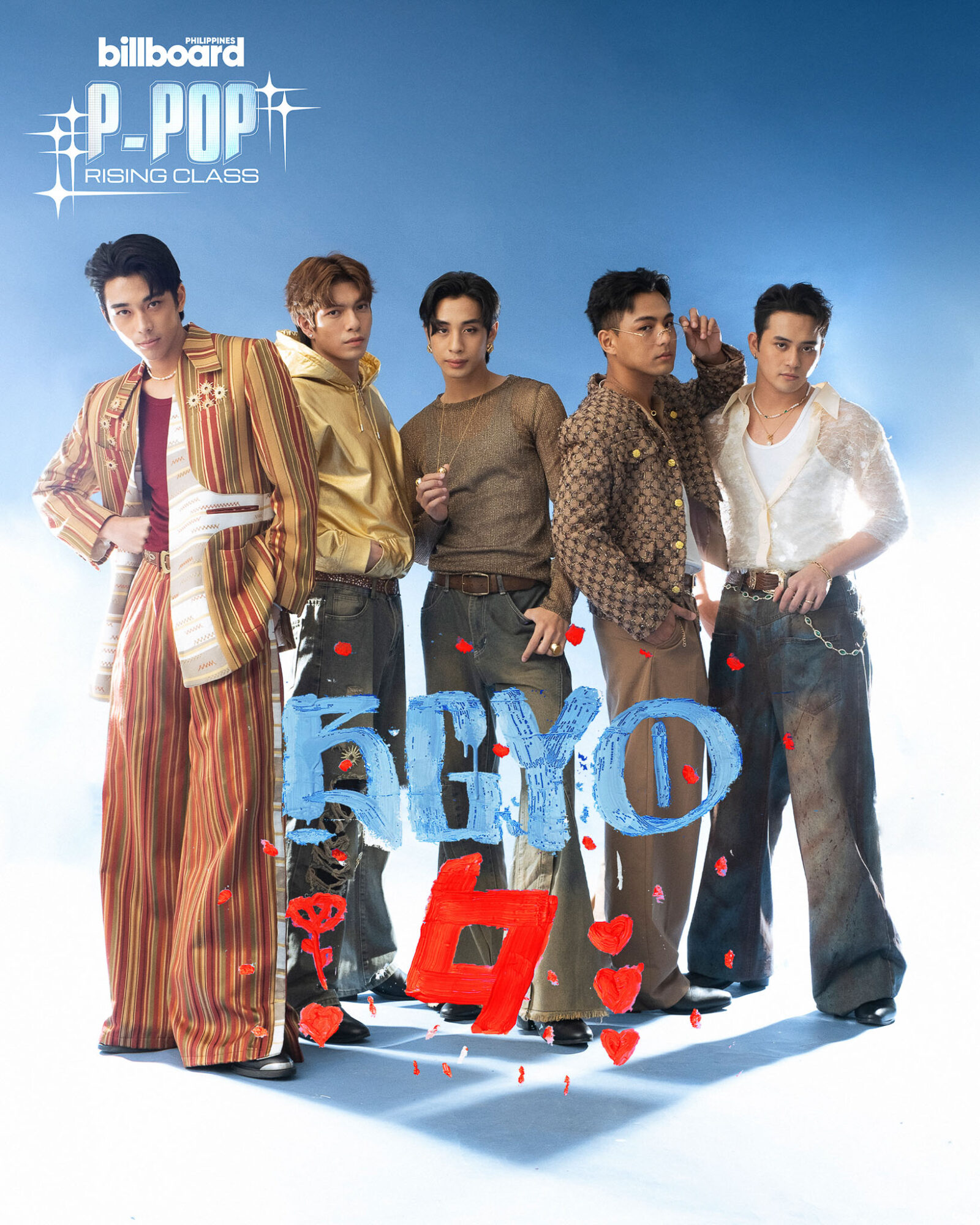
BGYO, photographed by Shaira Luna. Painting by BGYO.
“The music and the whole visual of it. P-pop kasi, it’s a whole package,” G22’s AJ explains.
“P-pop, K-pop — isa lang yun: pop. What differentiates Filipino pop, P-pop is ‘yung mismong language, the culture, visuals of it, the concept and everything that separates us from different countries. Kasi different countries, they offer us their culture as well, their music, so same as us, that’s what we offer as well through P-pop.”
(“The music and the whole visual of it, P-pop is a whole package. P-pop, K-pop —it’s all one thing: pop. What differentiates Filipino pop, P-pop is the language, the culture, visuals of it, the concept and everything that separates us from different countries. Because different countries, they offer us their culture as well, their music, so same as us, that’s what we offer as well through P-pop.”)
Whether it’s through multilingual lyrics, nods to mythology, or cultural references embedded in dance and visuals, the Filipino identity — from our history to our values to our innate fighting spirit — has always been the beating heart of P-pop.
“We really like to embrace our Filipino identity fully and bring it to the global stage or whatever stage it may be, because that’s part of our mission, to really carry our roots wherever we go,” states ALAMAT’s Taneo.
“It’s about making our people feel seen and acknowledged.”
A Community Of Support
But a movement isn’t built by artists alone.
There’s no denying the support of a Filipino fanbase, and when it comes to P-pop, that support has become an entire ecosystem. From sold-out arenas to meticulously coordinated streaming parties and voting campaigns, fans have become the backbone of every group’s success.
Still, with growth comes growing pains. As the community expands, so does the competition, sometimes even spilling over into fan wars and online toxicity. It’s a far cry from what P-pop was always intended for and what so many groups embody in their music.
“I think we should all practice the concept of bayanihan, kasi kung tayo lahat ay tulong-tulong suportahan at maging supportive sa isa’t isa, lahat tayo aangat,” says G22’s AJ.
(I I think we should all practice the concept of ‘bayanihan’, because if we all help support each other, we all will rise.”)

G22, photographed by Shaira Luna. Painting by G22.
“P-pop is fun as long as nagtutulungan tayo and we respect each other. ‘Yun ‘yung pinakagusto kong ipalabas out there, na respect is important kung gusto natin lahat ipalaki ang community nito,” says BGYO‘s Gelo.
(“P-pop is fun as long as we all help each other and we respect each other. That’s what I really want to put out there, that respect is important if we want to grow our community.”)
As the genre continues to grow, artists hope that the culture surrounding it also evolves into one where collaboration outweighs comparison, and unity wins over rivalry.
But for that to happen, P-pop also needs more spaces to flourish — not just within the confines of fan-led campaigns or viral moments, but on legitimate platforms that can champion and elevate its artistry on a national and global scale.
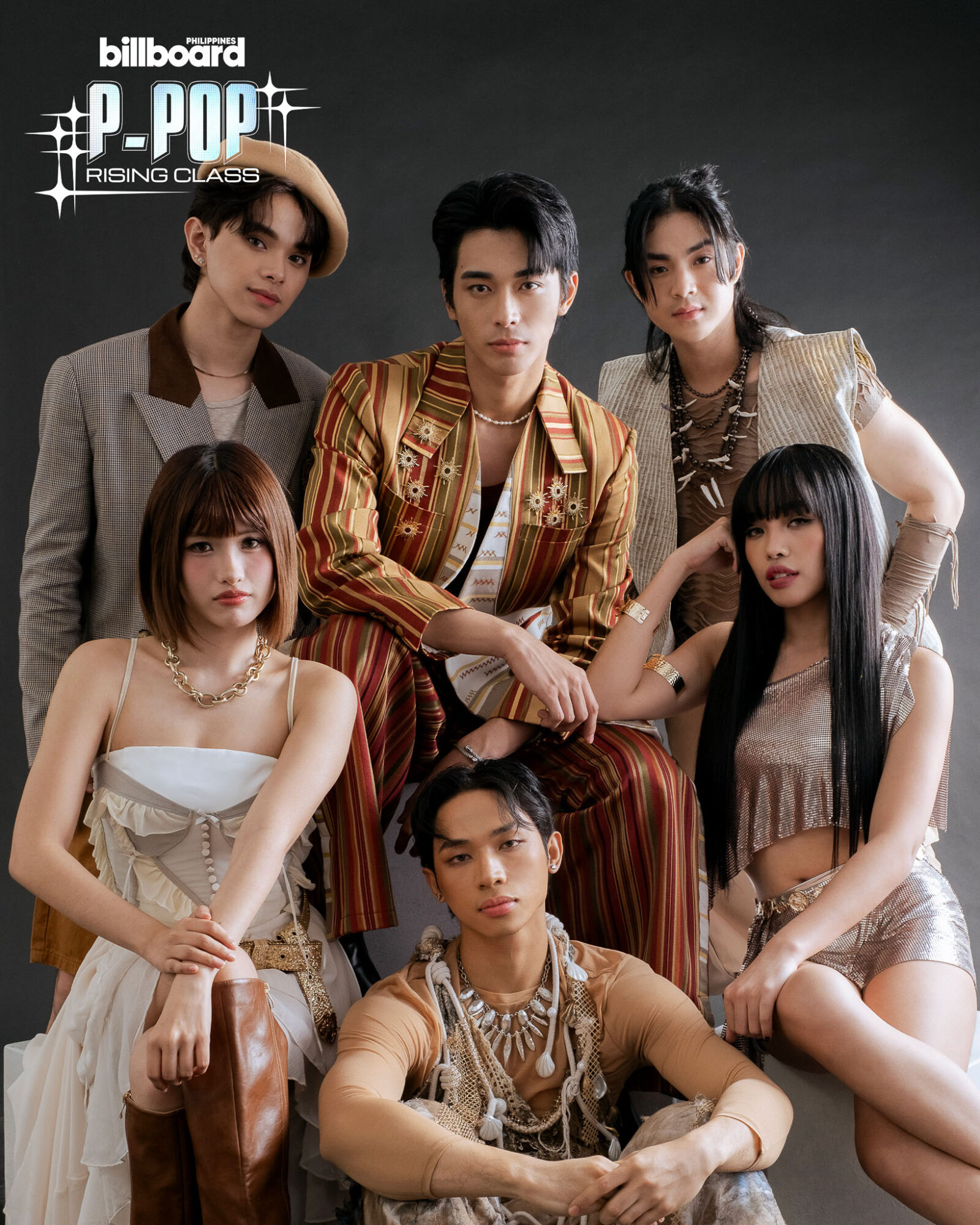
GAT’s Ethan, BGYO’s Gelo, VXON’s C13, KAIA’s Angela, ALAMAT’s Taneo, and G22’s AJ, photographed by Shaira Luna.
“There’s definitely a lot of talent [and] a lot of beautiful things within P-pop, so it’s just a matter of having a platform to be seen,” says ALAMAT’s Taneo. “Within the next five years, hopefully we get that, because the talent is already there.”
“Let’s continue supporting each other because we’re Filipinos. Mismong tayo kailangan natin iangat ang isa’t isa, kasi hindi aangat ang isang bagay kung hindi tayo magtutulungan. Magiging kilala ang P-pop sa buong mundo kung matutulungan tayo,” adds GAT’s Ethan.
“So I would like to say to all the fans, to all the P-pop leaders, P-pop members, that we should help each other — kasi success ng isang group, success na ng buong P-pop.”
(“Let’s continue supporting each other because we’re Filipinos. Only we can help each other rise, cause we won’t rise if we won’t help each other. P-pop will be known all over the world if we help each other. So I would like to say to all the fans, to all the P-pop leaders, P-pop members, that we should help each other — cause one group’s success is the success of the entire P-pop industry.”)

GAT, photographed by Shaira Luna. Painting by GAT.
What’s Next For P-pop
If there’s one thing the P-pop Rising Class makes clear, it’s this: we’re just getting started.
The genre is still carving out its space on a global scale, and while the road hasn’t always been easy — with limited mainstream chart representation and a long fight for industry recognition — the momentum is undeniable.
As VXON’s C13 reflects, “Three years ago, we got asked where we saw P-pop going, and we said we could see it thriving. Pero ngayon, less than five years later, we’re very proud na mabilis ‘yung progress ng P-pop. Very, very proud kami.
“We can see P-pop talagang going global and going big na talaga.”
(“Three years ago, we got asked where we saw P-pop going, and we said we could see it thriving. But now, less than five years later, we’re very proud of its fast growth and progress. We’re very very proud. We can see P-pop really going global and going big.”)
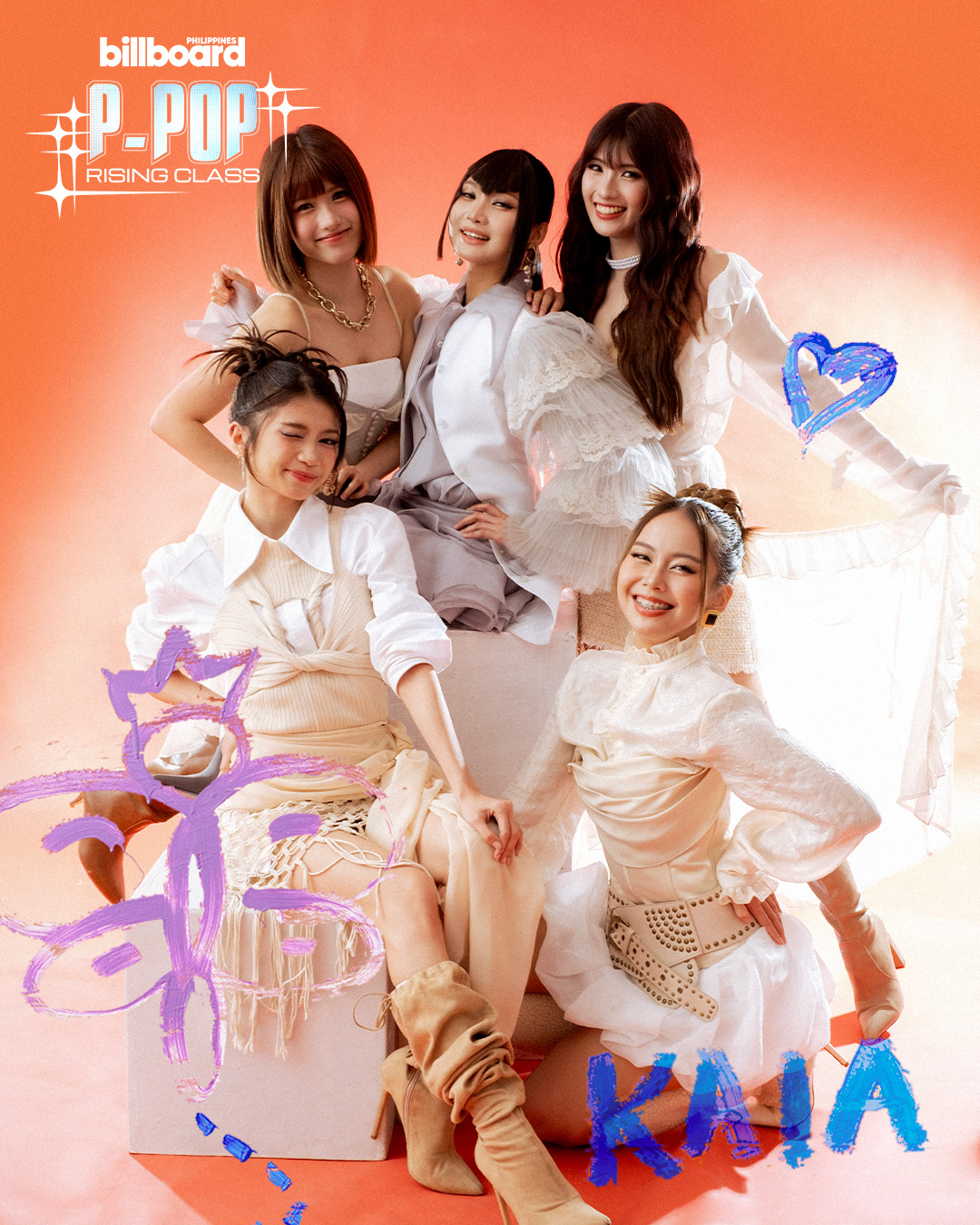
KAIA, photographed by Shaira Luna. Painting by KAIA.
With that momentum, though, comes pressure to not only keep up the pace but to continue raising the bar. And for this class of idols, following in the footsteps of acts like SB19 and BINI comes with both inspiration and responsibility.
“They inspire us so much, kasi before hindi naman siya possible — parang suntok siya sa buwan before — but they were able to [break] that mindset na ‘hindi kaya ng P-pop ‘yan’. We’re so inspired and we put pressure on ourselves since our seniors were able to do it, sila BINI, SB19, and now we know na kaya na din namin ‘yun,” says G22’s AJ.
(“They inspire us so much because before, it wasn’t possible. It was like trying to punch the moon, but they were able to break the mindset that P-pop can’t do it. We’re so inspired and we put pressure on ourselves since our seniors — BINI and SB19 — were able to do it and now, we know that we can do it too.”)
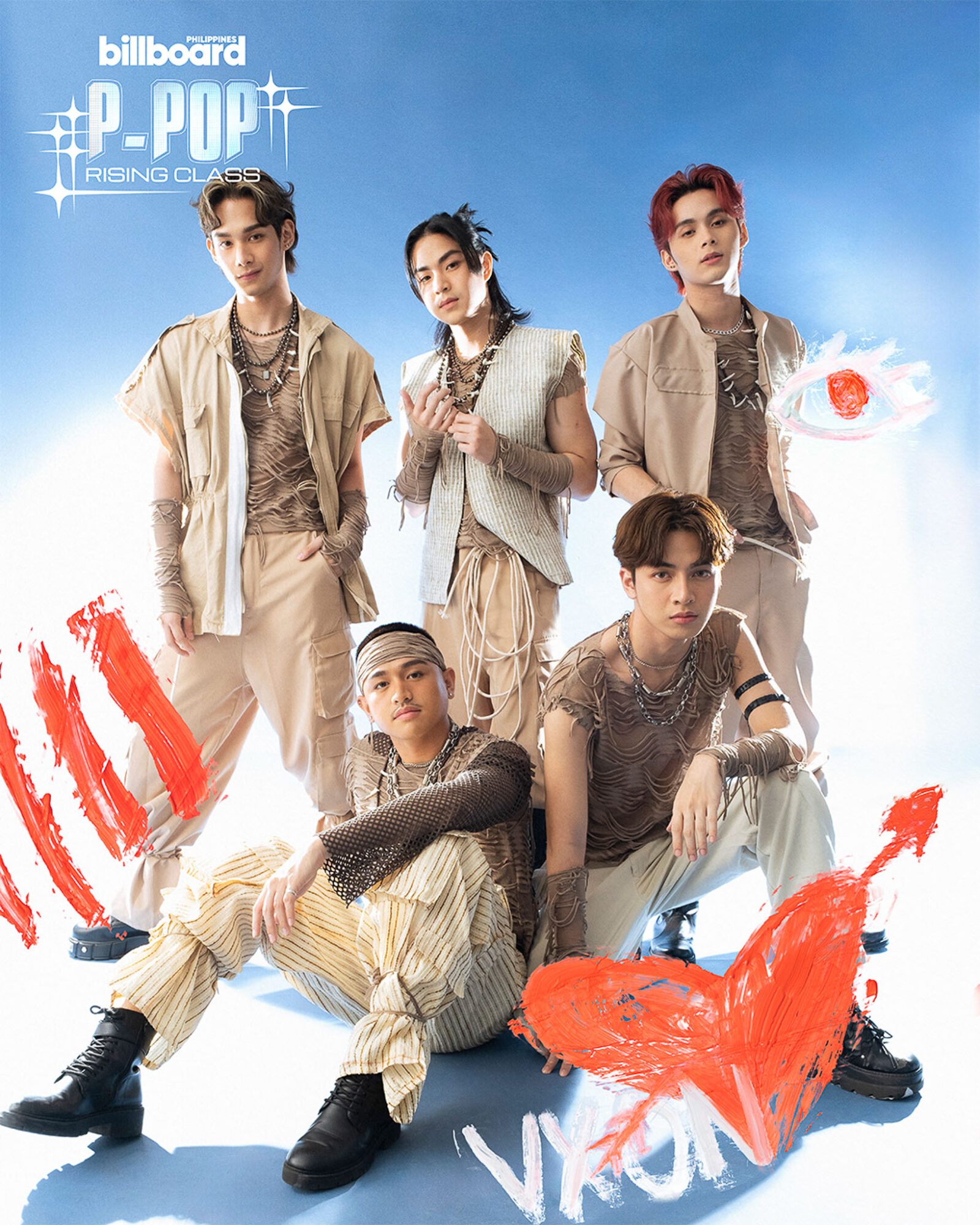
VXON, photographed by Shaira Luna. Painting by VXO.
But beyond viral moments and international stages, what many artists are striving for is something more lasting — the kind of legacy that cements P-pop not as a passing trend, but a permanent presence in Filipino music and beyond.
“For me, success is longevity. Lahat naman tayo may iba’t ibang [time] na pi-peak ‘yung career mo. Basta importante sa akin sa success is lahat kami happy kahit hindi kami nasa pinaka-spotlight all the time, but we’re still there, we still show up, and meron kahit isang taong sumusuporta sa amin, that’s success,” says BGYO’s Gelo.
(“For me, success is longevity. We all have different peaks in our career. But what’s important to me is that we’re happy even if we’re not always under the spotlight all the time, but we’re still there, we still show, and even if it’s just one fan supporting us, that’s success.”)
If P-pop has taught me anything, it’s that when Filipino music is given the space to thrive, it doesn’t just show up — it shows out.
This new generation of artists isn’t just looking to take over the stage. They’re rewriting what it means to represent Filipino culture, identity, and pride. And they’re doing it their way. Because in the end, there’s still so much more to say about P-pop — and it’s only getting louder.
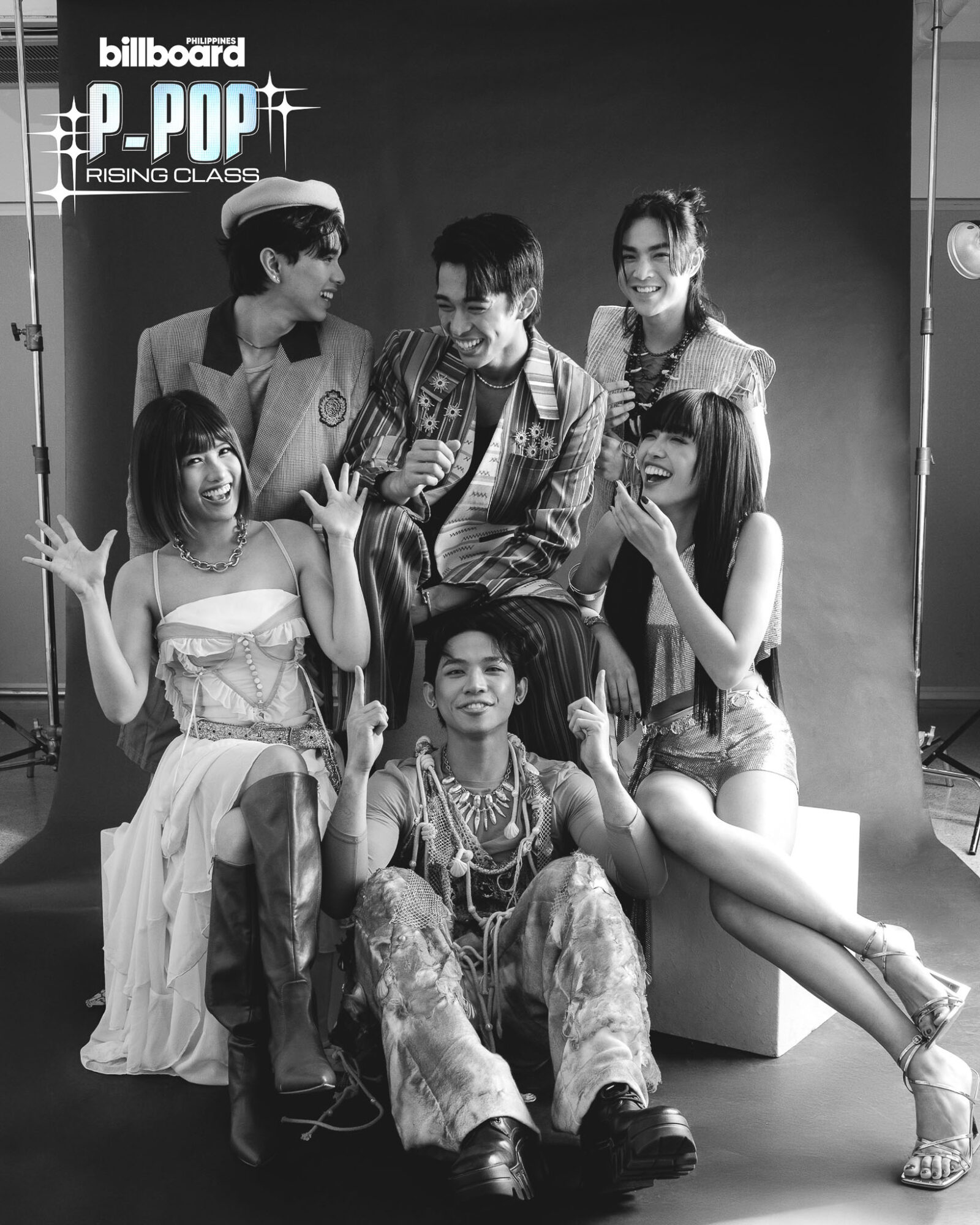
GAT’s Ethan, BGYO’s Gelo, VXON’s C13, KAIA’s Angela, ALAMAT’s Taneo, and G22’s AJ, photographed by Shaira Luna.
Photographed by Shaira Luna. Creative Direction by Nicole Almero. Fashion Direction by Kenn Dimaano. Edited by Easel Manes. Production Design by Arj Madz. Photography assisted by Emelito Lansangan.Produced by Mika Cruz. Story by Franchesca Judine Basbas.
ALAMAT: Styling by Mark Ranque assisted by Yuan Irish P. Torres & Ruzzian Escaros. Glam Team by Nix Institute of Beauty. Make-up by Nix Soriano (Jao, Taneo) assisted by Jamila San & Patricia Marcaida. Make-up by Leilani Bamba-Rizon (Mo). Make-up by Maribell Ramat (R-Ji) assisted by Lucille Plaza. Make-up by Crish Marfil (Alas) assisted by Lucille Plaza. Make-up by Red Pajarillo-Santiago (Tomas). Hair by WanWan Podadera Amarillo & Jessey Marie (Jao, Taneo, Mo). Hair by Hair by Jessey Marie (R-Ji, Alas, Tomas).
GAT: Styling by Carvey Sam. Glam Team by Nix Institute of Beauty. Make-up by Nix Soriano assisted by Lucille Plaza, Jamila San, & Patricia Marcaida (Charles). Make-up by Leilani Bamba-Rizon & Hair by WanWan Podadera Amarillo & Jessey Marie (Derick). Make-up by Maribell Ramat & Hair by Jessy Marie (MK). Make-up by Red Pajarillo-Santiago & Hair by WanWan Podadera Amarillo & Jessey Marie.