




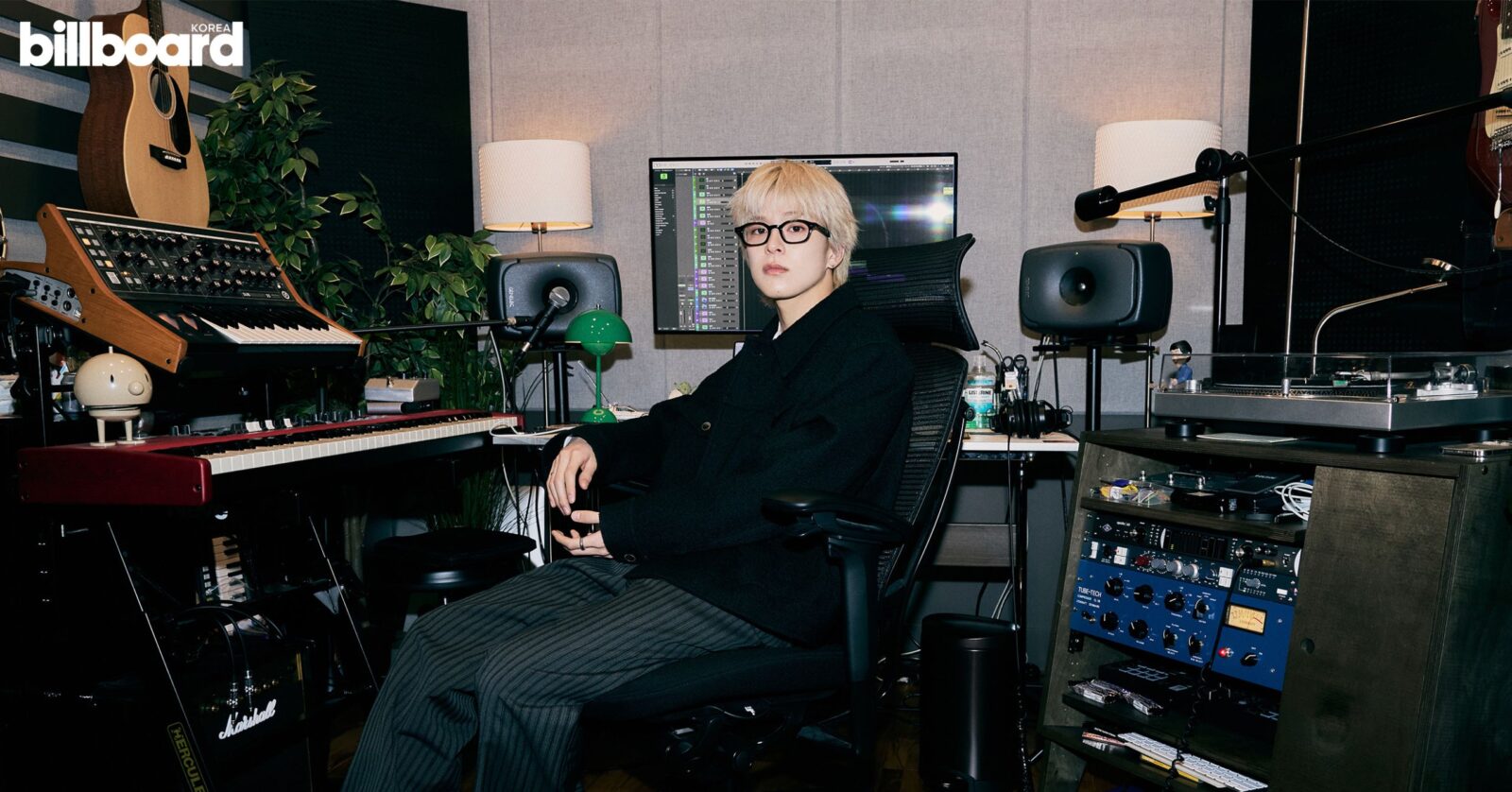
There are songs that somehow make you emotional the moment you hear them live, those unforgettable melodies that resonate with you on a deeper level. TREASURE’s ASAHI is someone who creates those kinds of songs. Known as the talented vocalist and musician of TREASURE, one of K-pop’s most exciting and dynamic groups, ASAHI’s musical journey has captured the hearts of fans worldwide.
We were invited into ASAHI’s studio — filled with all the things he loves. From the delicate inspiration that sparks his writing process to the intricate details of creating some of his most beloved tracks, we take a closer look at the mind and heart of one of K-pop’s most exciting young artists.
Billboard Korea: Your ‘PULSE ON’ tour, which kicked off in Seoul in October, is now in full swing. Among this tour’s stage elements, what did you particularly enjoy or pay attention to? The live band, the encore setlist—there were so many fun parts for the audience.
ASAHI: We wrapped up our fan concert tour in May, and since the album LOVE PULSE released in September was a mini album, there weren’t that many new songs. So we spent a lot of time discussing how to show something different compared to the previous tour—in the arrangements, the overall structure, everything. If the audience enjoyed it, then I’m happy.
Today we’re meeting not on stage but in your studio. Could you introduce this space?
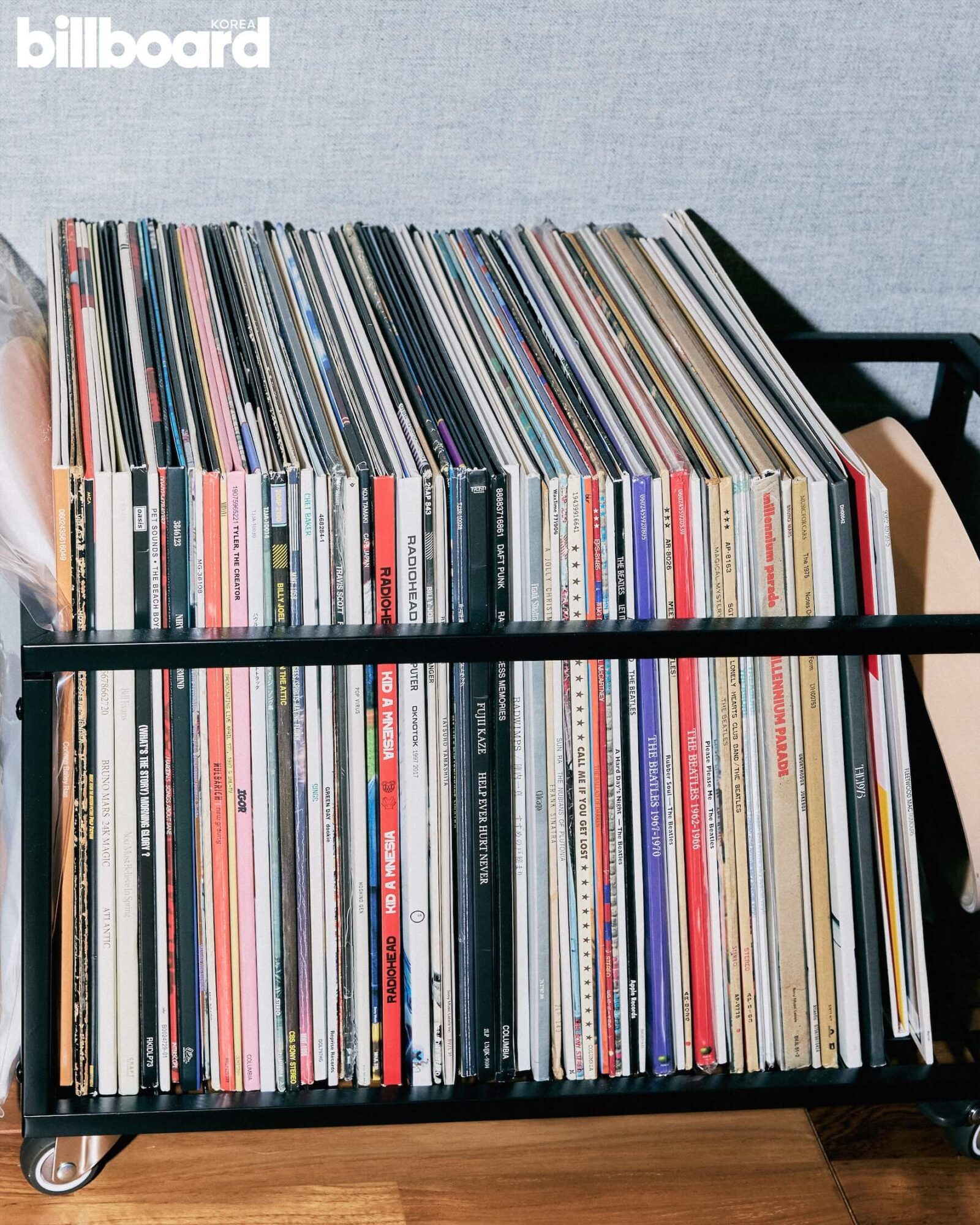
I’ve actually changed the interior several times. I used to have a huge monitor screen here so I could watch movies or play games with the members and even eat here, but I removed all of that. There’s a cabinet I built myself that I’m very fond of. This keyboard is something I use only as a MIDI keyboard, which feels a bit wasteful because it actually has a lot of features (laughs). Other than that, it’s probably similar to any other studio—preamps, compressors, equipment needed for recording. Guitar and piano help me when making music, so I’ve been studying them little by little.
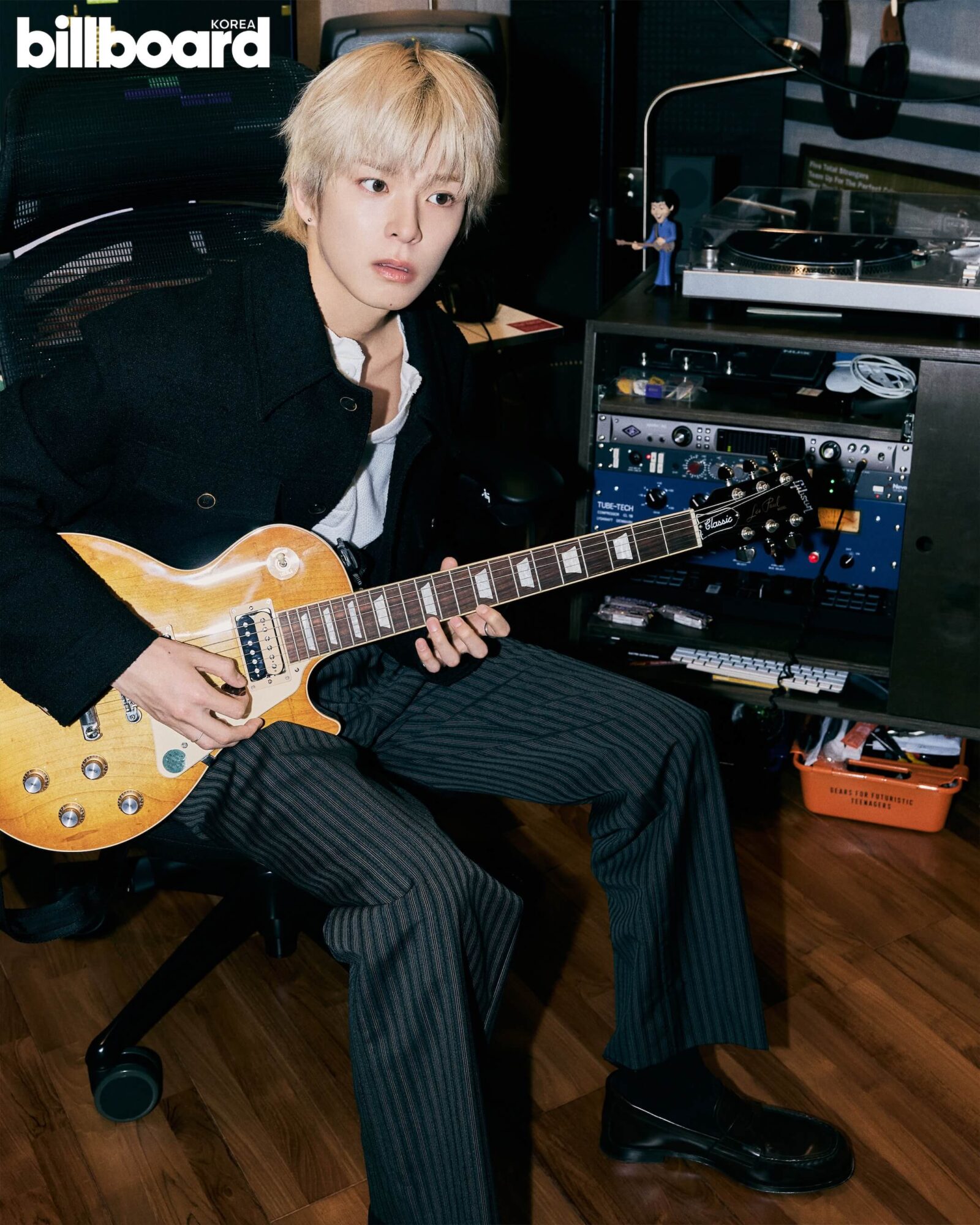
Photographed by KIM MIN SEOK
When did you first start making music?
I think it was around middle school. I started making beats on the iPhone app ‘GarageBand’. I liked hip-hop then, so most of what I made were hip-hop beats. There happened to be an electronic keyboard at home, so I practiced on that—learning things like, “Oh, so this is a C chord,” and gradually building ideas. That process was really fun.
When did you spend the longest stretch of time sitting in the chair you’re in now?
Probably when I was working on “YELLOW,” the title track of our special mini album released in March. It sounds like a very bright song, but making it wasn’t easy. I think it took two to three months. There were days I stayed up all night and sat here until morning.
Member SO JUNG HWAN once said he watched the entire process of “YELLOW” being created. SO JUNG HWAN lies on the sofa here and listens while I work, giving feedback like, “That part you just did was good.” HARUTO writes rap and records with me here, too. And YOON JAE HYUK often drops by to chat a lot before leaving (laughs).
You sometimes communicate with fans (Treasure Makers) live from this studio—playing your self-produced songs or sharing demos. What does that mean to you?
I think I once shared the demo version of “THANK YOU (ASAHI x HARUTO Unit).” I’m also curious about how my favorite artists create their songs. I want to know what the original versions were like. So I thought our fans would enjoy hearing things like that, too.
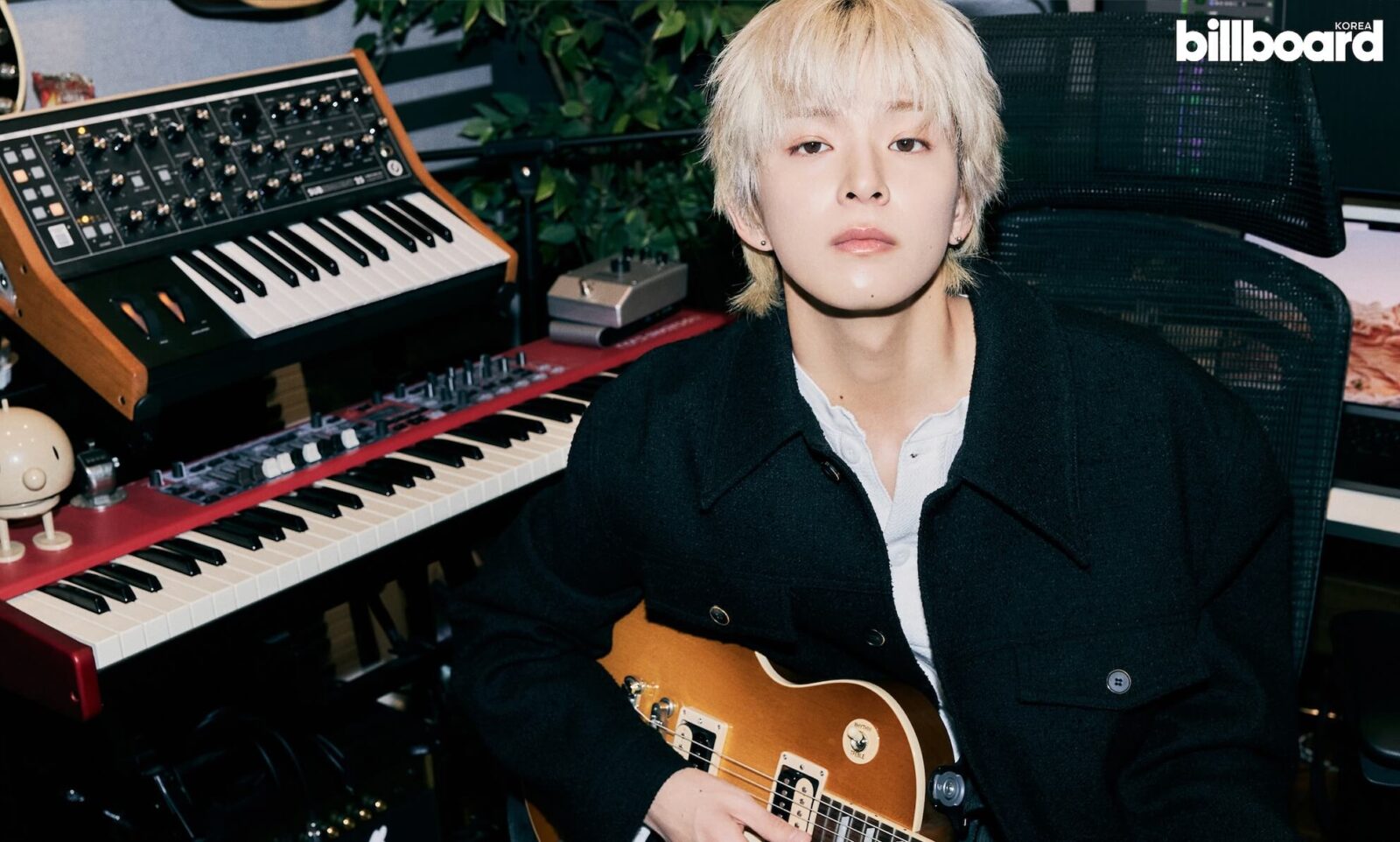
Photographed by KIM MIN SEOK
Are there artists whose behind-the-scenes videos you look up often?
A lot. For example, I learn about how projects came to life through Beatles documentaries. These days, there are many videos where producers or singers appear together, talk through the process, and explain instruments. I watch those often.
As a producer, is there any equipment or technique you absolutely want to master?
Of course technical skills, but also bass, guitar, piano—I’d like to master all those instruments too (laughs). But rather than adding more equipment, I’m trying to simplify. I want to be someone who can make music even with minimal gear, so I try to fully utilize what I already have. I think it reflects my personality. Whether it’s fashion items or equipment, if I feel like “Do I really need this? I can live without it,” I tend not to get it.
Your songs like “ORANGE,” “LOVESICK,” “THANK YOU(ASAHI x HARUTO Unit),” and “YELLOW” have this warm feeling with melodic choruses. Do you have any personal techniques or habits?
I don’t make songs thinking, “I hope people recognize this as an ASAHI song.” But creators naturally develop certain chord progressions or sounds they frequently use. So when listeners say, “This sounds like an ASAHI song,” it makes me happy. I used to avoid chords I thought I was using too often, but these days I just accept it. What matters more is trying—creating something first. If it becomes my sound eventually, great; if not, I can always change later.
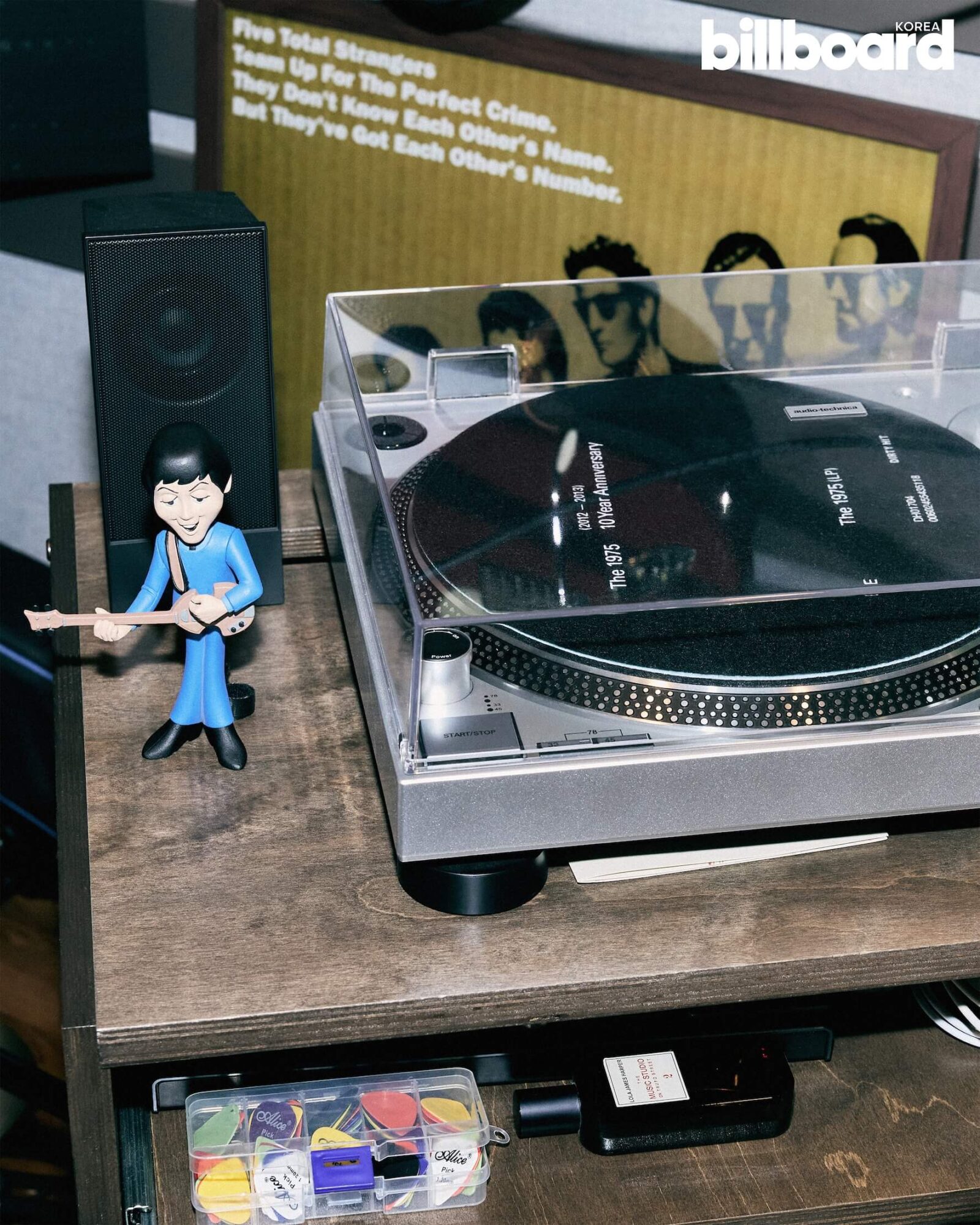
Photographed by KIM MIN SEOK
That mindset of ‘just try making it first’ is nice (laughs). Which of your songs are you most attached to?
I love all my songs, of course, but “ORANGE,” which was the first song released after our debut, holds a special place in my heart. It was the first time I felt, “Wow, my song is actually out in the world.” And I think the song is actually quite good, too (laughs).
I remember the moment that I heard the track at your ‘REBOOT’ concert in 2023, and thinking it was beautiful. But the creative process isn’t always smooth—like you mentioned, sometimes you lose sleep working on a song! What keeps bringing you back to this chair in your studio?
It’s fun—creating itself is fun. Even when it’s hard or things aren’t going well, there’s this happiness when the problem finally gets solved. The reactions when I share the finished song also motivate me. Honestly, making music only brings good things. I started because I liked it, because it was fun, and then people around me started to enjoy it too (laughs).
Your lyrics also show your unique metaphors and tone. “LOVESICK,” originally included in the Japanese mini album as “病” has lines like “a day when the park feels quiet and wide,” which feel poetic yet everyday. How do you write lyrics?
First, I decide on a theme. Then I fill it in little by little—adding bones and flesh. These days, since I think and speak in Korean more naturally, I don’t necessarily write everything in Japanese first, but for “LOVESICK,” I’m pretty sure I wrote the lyrics originally in Japanese. I like those lyrics a lot. Especially the final part—“No matter what I do, what I see, even if I laugh as much as I want, it’s an illness that will never let me forget you”—I think the melody, chords, and emotion all surge in that section.
Photographed by KIM MIN SEOK
Many idols, including several TREASURE members like CHOI HYUN SUK, KIM JUN KYU, YOSHI and HARUTO, are producing music these days. What do you think is the strength of idols participating directly in production?
Songs made by other producers are great, of course, but when a member creates a song themselves, fans feel a deeper sense of closeness to it—that’s definitely a strength. And having members who create music influences the group in ways that aren’t always visible—mindset, energy, synergy. Though maybe that’s just how I feel (laughs).
You’re as serious about vocals as you are about producing. You appear in live singing content with members like PARK JEONG WOO and YOSHI. As a producer, how do you view your own voice?
Honestly, I didn’t like my voice at first. But I kept going—thinking, “Let’s just try, let’s do as much as I can.” Now I think I’ve simply grown used to it. As we enter our sixth year since debut, I’ve found my own ways of using my voice and making it sound the best it can. And I’m still studying and practicing.
What’s your definition of “good music” right now?
There’s no right answer to what makes music “good.” But I think good music is something someone wants to listen to again. I keep thinking about that more these days—especially in a time when countless songs are released so quickly. The fact that someone wants to replay a song—that alone makes it good music to them.

Photographed by KIM MIN SEOK
Anything you’d like to promise people who are looking forward to your next song?
One thing’s for sure: I’ll keep making music. And I hope that when my next song comes out, people will feel it’s good music and enjoy it. And if they sing along with me, that would be even better.
What does this space mean to you?
My own atelier. It might sound a bit fancy, but having my own atelier has always been a dream, so I want to describe it that way (laughs).