




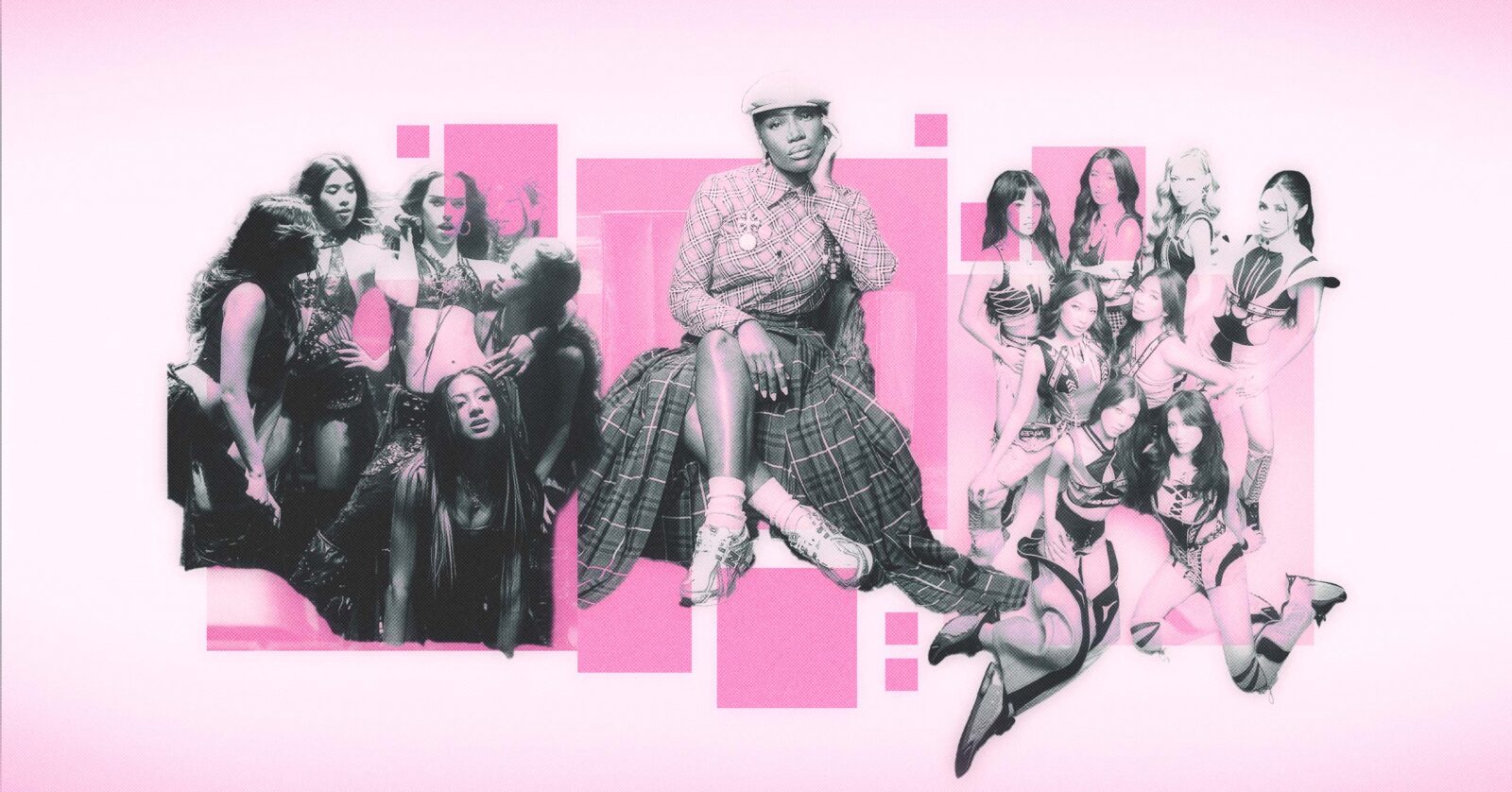
The music industry has never been a forgiving space for musicians who become subject to public scrutiny, but this rings especially true for female musicians and pop stars.
Cancel culture has made its impact on our cultural soundscape, dictating how we listen to artists and form our relationships with their music. Whether they’re right calls or wrong, we’ve seen how it can shift how we consume artists’ work time and time again. However, sometimes, cancel culture can become a double-edged sword that’s weaponized against women in the pop landscape.
We’ve seen it happen since the dawn of time, from Madonna’s big breakout til the scrutiny Sabrina Carpenter faced with the cover of her latest album, Man’s Best Friend. Still, we’ve made considerable progress with feminism, so you’d think that this phenomenon has at least been somewhat reduced — but ultimately, when you read between the lines, sexism in our media landscape is still very apparent.
When does feminism start and end for our pop stars? When do we draw the line between keeping celebrities accountable and plain sexism?
Before we delve into how we can observe this in modern-day pop culture, we can first look into theory. Social Cognitive Theory, as proposed by Albert Bandura in 1977, emphasizes that individuals learn behaviors, attitudes, and norms through observation, imitation, and reinforcement. In media-rich environments, audiences do not merely consume content passively; they internalize social scripts modeled by influencers, journalists, fandoms, and platforms themselves. In the context of pop culture, public reactions — be it praise, backlash, or cancellation — serve as behavioral cues that inform what is deemed acceptable or condemnable.
For starters, we can look into the recent happenings behind KATSEYE’s current grip over the media landscape. It’s no understatement that KATSEYE are among the biggest figures in the public eye right now. Still, it’s become increasingly apparent that this popularity comes at a price. The group’s music releases — especially tracks like “Gnarly” and “Internet Girl” — have been met with waves of backlash. Even beyond music, it almost seems like it happens every week that the members have had to push back criticism they receive on social media, and how netizens have been crossing boundaries and delving into their personal lives.
In a post on Weverse, Lara wrote, “Hi friends. I need to say that it is comical to me how some of you think you can get away with insulting or spreading harmful misinformation about people I love and care for on MY page.” She then ended the note, saying, “This is NOT what being an EYEKON should stand for, and it makes y’all look disrespectful. Let’s focus on what matters!”
On a similar note, while she may not be a pop star, it’s been made clear that Doechii is certainly no stranger to criticism that can sometimes tread the line from constructive to downright sexist. With her Grammy-winning album Alligator Bites Never Heal, the rapper had a legendary run as one of hip-hop’s most exciting fresh talents.
However, with the backlash she faced for her single “Anxiety,” she was quickly pushed back under the radar, and netizens rushed to say that she had “fallen off” and accused her of being an “industry plant.” The Internet was quick to switch up from the abundance of praise they’d given her for her creative performances, the production and writing on her album, and styling, to instead dogpiling on the artist to criticize the very same performances, writing, and styling.
In her latest single, Doechii teamed up with SZA to fend off the haters and unveil what life had been like after the immense backlash she experienced. “All that industry plant sh*t wack / I see it on the blogs, I see you in the chats / You suck every rap n*gga dick from the back / But what’s the agenda when the it girl Black?” Here, not only does she confront the sexism and misogyny behind the hate, but also addresses the blatant racism attached to it.
For the final case study, we’re taking it back to our local soundwaves as we inspect the seemingly never-ending criticism held against the Nation’s Girl Group, BINI. What initially appeared as a disconnect between the group and segments of their audience (particularly surrounding their pivot toward a more global-facing image through English-language releases and an international tour) quickly escalated into a sustained public lashing. What was once framed as “constructive criticism” of branding and musical direction gradually evolved into a full-blown witch hunt that extended far beyond the music, staking out the members’ personal lives, relationships, and perceived attitudes.
While the group does not shy away from addressing misinformation and refuting false claims online, each attempt at clarification paradoxically becomes further evidence used against them. In this feedback loop, silence is interpreted as guilt, while self-defense is framed as arrogance or ingratitude.
In all cases cited, we can see how small sparks can sometimes lead to massive controversy that can make or break an artist’s career. Cancel culture, when stripped of its original intent to challenge harm, becomes a socially learned outlet for collective frustration — one disproportionately aimed at women. It doesn’t help that the way we consume art has become structured around capitalism. When artists are presented as brands, rather than individuals, it creates a dynamic where listeners feel like they are buying into a product rather than a person’s art.
Through the lens of Social Cognitive Theory, this phenomenon illustrates how public behavior toward female pop stars is socially learned and reinforced. Cancel culture and social justice by means of holding celebrities accountable have evolved into a mask that hides netizens’ sexist agendas. Whether this is intentional or not is completely up to the user. With that, it’s time to break out of that habit of doomscrolling and letting other people’s opinions take over our own.
Being a responsible feminist doesn’t end at empathizing with women you know personally, especially when female public figures are subject to three times the blame. Media literacy and critical thinking are essential to engaging with the rhetoric we see online. If our feminism ends at the screen, then we were never holding power accountable – only repeating the same cycles of cruelty.