Son Lux On New Album, Creative Exploration, And Everything, Everywhere In Between
The post-rock trio has never been one to stay inside a creative box, continually discovering new ways to present their music across film, video games, and beyond. Now, their new era opens yet another avenue for exploration.




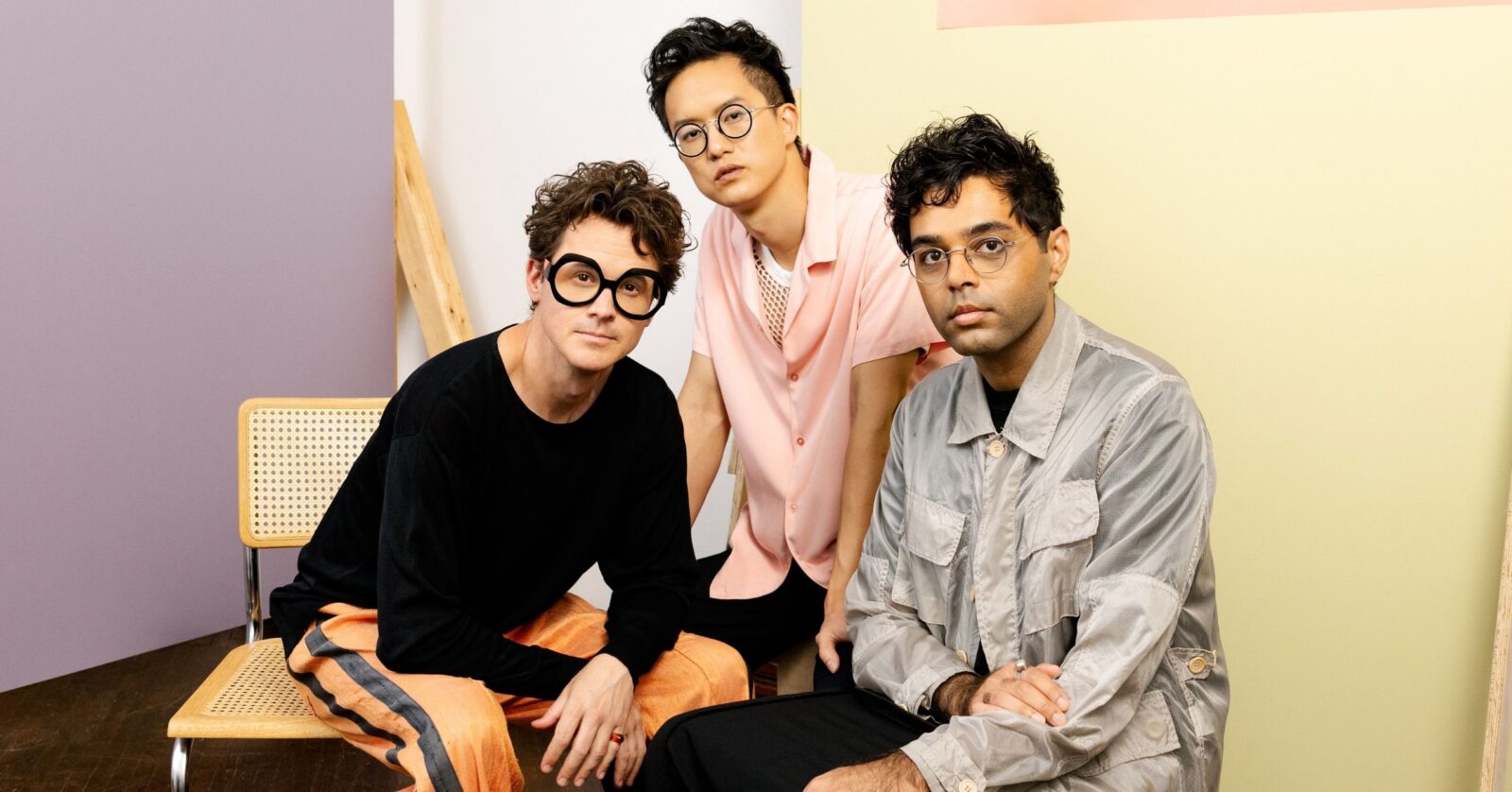
SON LUX: Photographed by Anna Powell Denton
SON LUX: Photographed by Anna Powell Denton
Son Lux have always been known to enter different artistic doors and come out of them with completely unexpected results.
From a solo project started by Ryan Lott, Son Lux eventually became a three-man unit with Ian Chang and Rafiq Bhatia in the mix. With three as the magic number, the band has constantly pushed themselves to create musical breakthroughs across various realms of music, from indie pop and electronic to alternative rock and film scoring.
With their ninth and most recent album, Out Into, out in the world for us to consume, it serves as a testament to the ever-evolving artistry that Son Lux continue to breathe life into their world.
Refusing to be confined to a box, the band has ventured into making records, scoring acclaimed films, setting foot in the world of video games, and other mediums that push them to explore how or what music should be.
As they continue to chart new creative horizons, Billboard Philippines talked to the band about where they are creatively now, how they continue to find new ways to present art through different mediums, and what sonic pathways they hope to discover next.
Billboard Philippines: Son Lux have worked through music, film, and sound design. What are you most curious about exploring creatively at this point in your career?
Ian Chang: I mean, I think within, you know, we’re all curious about many things. And I think we’re fortunate to be in a place where we are engaged directly in the things that we are curious about. You know, like we are currently working on an amazing film that I can’t talk about that’ll come out next year. We are about to go on tour, and it’s taking us to places we’ve never been to, you know, in Asia and also, like, Mexico and places that we’ve never played. So we’re really kind of in the thick of the process of exploring our curiosities in terms of like what else we’d be interested in.
One thing that we just kind of started for the first time to engage in is the world of installation art. And we just launched our first installation piece at a great museum in America called MASS MoCA. We did like a collaboration with filmmaker Alex Cook, who made a music video for us. And then we kind of adapted it to the format of an installation.
Rafiq Bhatia: There’s this experience that we can all sort of relate to in this day and age of, encountering new music and music videos and things that as, like, these kind of bite-sized fragment, you know, just traces of themselves basically as we’re like doom-scrolling through our feed. And we’ll see three seconds, or maybe, if we’re lucky, we’ll see 30 seconds of a music video, and we’ll hear the sound coming out of our iPhone speaker and see this tiny screen and be like, “Yes, we’ve experienced their new album. Cool. On to the next thing.” Like, and it’s really like, it’s such a, you know, and this is not, it’s not meant to be a criticism of others, because speaking personally, I do this all the time.
I’m really speaking for everyone. Without realizing it, we have just sort of degraded our relationship to what it should be: this vivid experience. And so the installation that we presented at MASS MoCA, and that’s also going up in other places in the United States over the next few months, is sort of a response to that tendency.
It’s like, what if we took a music video and instead of watching it in a really small sort of format for way too short of a time, what if we put it on a giant screen and a big sound system, and we made it 17 minutes long, and we slowed the whole experience down, and you have to be in real life to experience it. One of the things that someone told me that I think about all the time these days is that one of the jobs of an artist is to remember, and by extension, to remind. And I think this piece is just in that tradition; we’re trying to remember and remind ourselves and each other of what the full technical experience can be like, and then maybe, or hopefully once we re-experience that, we can think about more ways to have that be the norm rather than the exception.
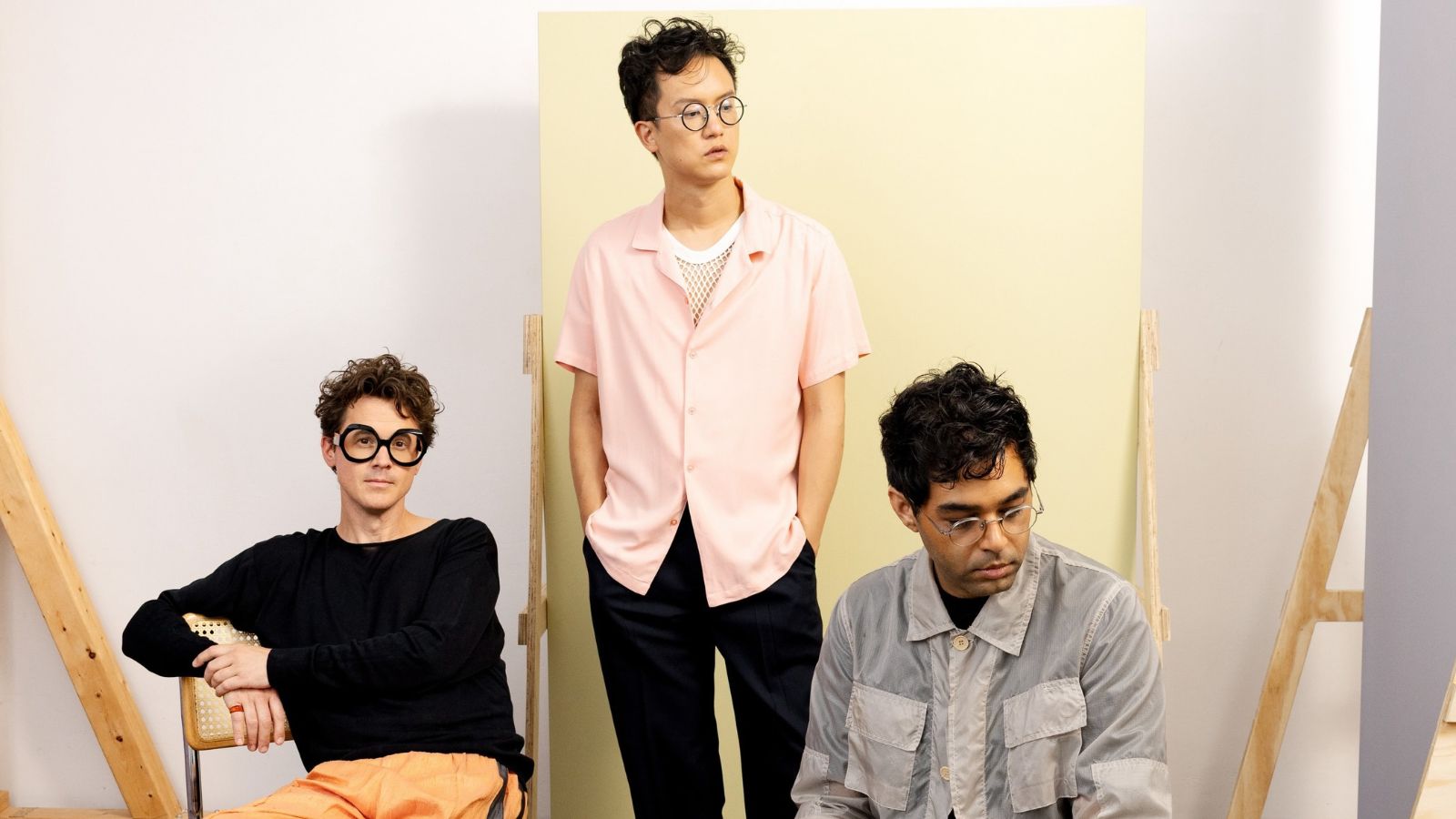
Photographed by Anna Powell Denton
After Everything Everywhere All at Once and Thunderbolts*, what have you learned about writing music for the screen that has changed the way you approach your own music?
Ryan Lott: Well, one of the things I personally really love about scoring is that it’s a constant source of prompts for ideas that you have to sort of cope with, that you have to deal with, that you have to, that you have to respond to. And sometimes, creative, creators can get in a, can get stuck because they run out of kind of the feeling inside of propulsion, of creative propulsion.
And what film has done for me, and also dance is another thing that I’ve written a lot of, I’ve written a lot of music for concert dance. What they share in common is that, like, that amazing gift to me of, like, “Here’s something that you have to work with.” And I always really appreciate having a prompt. Generally, if I get a challenge from outside my own brain, I take it as, “Okay, let’s go!” It’s just an encouragement to come up with a new idea, and it’s helped me expand my feeling of who I am creatively, because I’ve learned a lot of different things in the process.
I think that’s also true of us as a band, for sure. As we started to score together, we also started to learn the kind of things we were capable of, apart from making a record, as a creative family. It’s impossible to say exactly how much of what we’ve learned in composing for film that we are now taking forward with us into all sorts of things, from art installations to albums. But it has been a huge part of how and why we’ve grown as brothers, as we’ve shared life in so many ways over the last 12 years.
Do you have like any dream projects, or any filmmakers, or perhaps stories you’d like to work with next, apart from the film that you’ve teased earlier?
Ian: I think a director and filmmaker whose work we all really love his work and would love to work with is Jordan Peele. But honestly, there are a lot.
Ryan: What about outside of film?
Ian: Definitely within the world of video games, which is something that we’re definitely also interested in. And Ryan recently scored an amazing score for a game called Marathon. There’s this guy, Hideo Kojima; it would be super rad to work with him. I mean, he’s made some of the most incredibly immersive, interesting games. He’s definitely, I feel like, at the top of that craft. I know that he also really cares about music. He would be someone that would be really cool to work with, for sure.
Your new record, Out Into, feels like another evolution of the Son Lux sound. What felt different about making this album compared to your previous releases?
Rafiq: I think one thing that we did on this album that wasn’t really something that we set out to do, but it just kind of happened, was this is the first album I think we’ve ever made together where it truly is actually just the three of us without an extended family of collaborators, which is what we typically do, whether it’s making a record or making a film score or any of the other things that we’ve done together.
We love to collaborate, and there are so many musicians that we have at this point developed these longer-term kind of relationships with who really make us see different sides of what the music of Son Lux can be. But I think after being involved in so many scoring projects, especially, which are these big operations with so many moving parts and so many people involved, there was something really refreshing about just making a record that was the three of us.
When I hear the record, I get a big smile on my face because it feels I just hearing so many things that I love about my brothers. I remember this really beautiful time that we shared making this thing and kind of rediscovering what it meant to just be the three of us making songs. It was really special.
What was the transition like, going from working with a lot of different people before to now working on it with just the three of you?
Ryan: We didn’t stop scoring to work on the album. We worked on the album slowly over the course of two years, but we did it in spurts of just bursts of improvisation and ideas that we would work on mostly together. This album doesn’t represent a seasonal change, but it is the result of a sort of counterpoint that we’ve had recently between scoring and making a record. We would go out of scoring and into the album and out of the album and into scoring. And the energies are different; the process is different. In some ways, they were a relief from one another, and in other ways, they gave each other a type of energy, at least for me. Sometimes you just have to get out of your head on a project, and so we always had a place to go.
What continues to surprise you about making music after all these years?
Ian: I think that the fact that we’re sort of blessed enough to be working on such a range of different projects kind of keeps the surprises, they just keep coming, you know. For example, [the film] Your Mother, Your Mother, Your Mother that we scored together. I was surprised that all three of us, for the first time, all three of us.. I sang on the score, and Rafiq also did some vocal stuff. I also did some screaming on it. It’s just stuff that I would say we maybe would have never discovered if we were just in the band vacuum making albums over and over again. So having these kinds of projects that have a lot of external input pushes us to do different kinds of things.
And with Everything Everywhere All at Once, I don’t think we imagined that any of us would ever write a piece of music that Randy Newman would sing. But Ryan did that because that’s what the movie — one of the small things in the movie — was asking for. And that extends also into our album work as well, I would say. There were things we did on this album that definitely surprised us.
The three of us got together in a studio for a couple of weeks in LA, and we had less prepared material than we kind of ever have. And we don’t typically have that much to begin with. A lot of what happened in that time together was us just very quickly, sometimes within a minute or two, finding a song, and it just kind of flowing out of us playing our instruments together. And that surprised us. We also did some experiments where we recorded us playing stuff back, recording stuff too fast and then we slowed it down on tape, or we recorded it too slow and sped it up on tape. These are things we’ve never done before. So that was also surprising.
I feel we’re always constantly kind of surprising each other in small and big ways. And that’s in large part thanks to sort of the rich variety of things that we get to work on together.
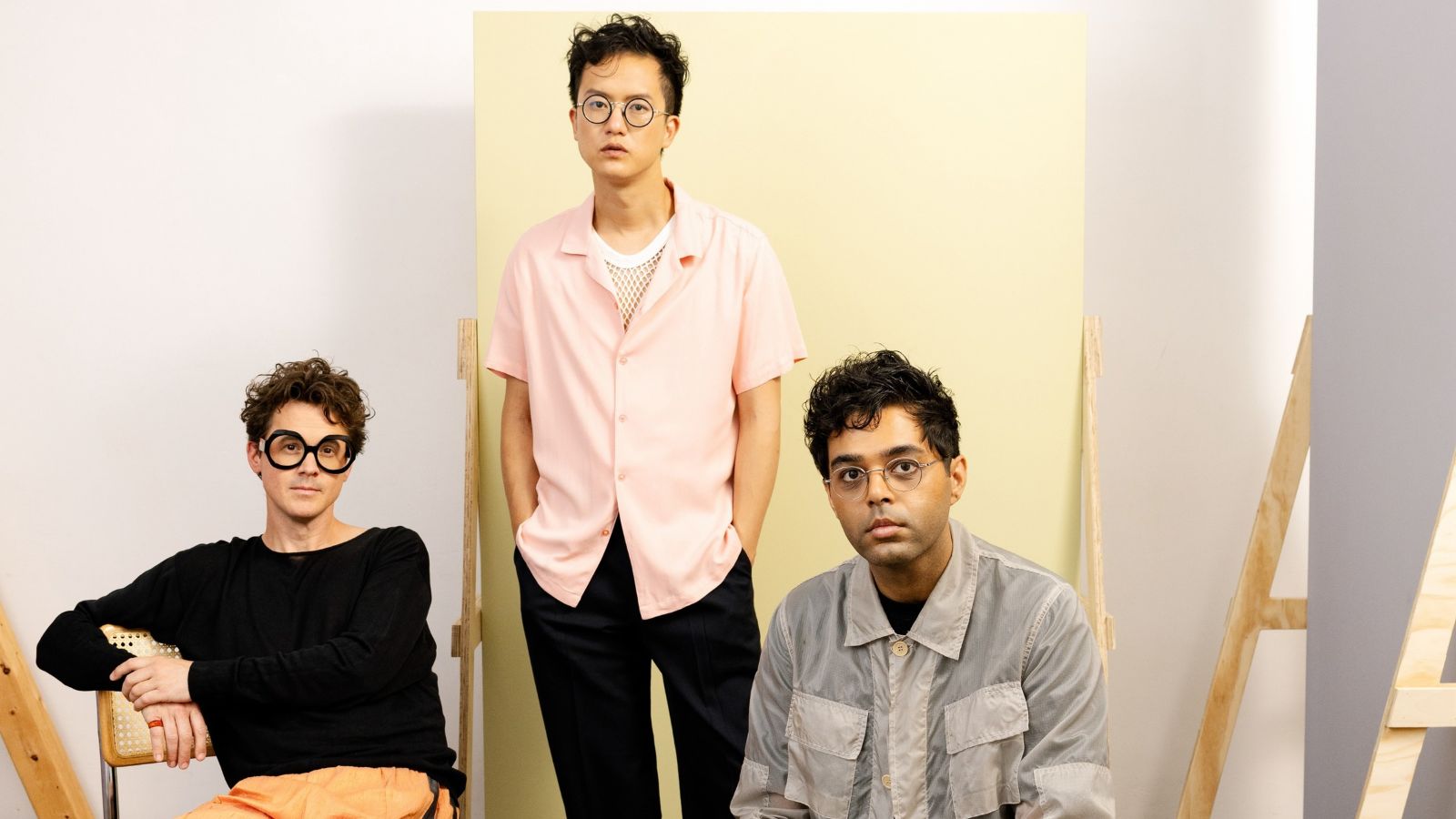
Photographed by Anna Powell Denton
With the new album and the Out Into World Tour, what are you most excited to bring to life for your listeners?
Ryan: I’m excited for every night to be different. As we become more comfortable with the songs. I think on the one hand, we have to be careful, because we don’t forget, in our thirst for trying new things, we don’t forget what makes the song great at its core. But we are an improvising band, and we love the energy of the stage.
It’s a unique human experience to make music together. But not only that, to share music that we’re making together in real time with an audience. And we’re naturally inclined to embrace risk to a certain degree in our music. And that makes for an exciting show that is unique from night to night.
After everything you’ve explored through Son Lux, film, and other creative projects, what are some things you feel you haven’t explored yet?
Rafiq: I mean, I feel like the longer that one spends trying to make music, the one the more I mean, at least speaking personally, it’s like constant discovery of all the things that I don’t know, and the many doors that I’ll probably never open. It’s so endless. There’s so much out there. And there are so many ways to think about the same thing, you know, and I think that’s one thing that, you know, the further you go in one direction, you’re deepening your own line of inquiry and your own thinking, and you know, you’re progressing down a path, but you’re also, moving in a direction away from other possibilities sometimes.
And it’s really one of the things that has been really exciting for me recently in New York is like, I’ve, since the time that I moved here, been really kind of in, you know, at least in dialogue with the jazz and improvised music and experimental scenes here in New York. When I first came here, I was interested in using all these electronic music processes and bringing a sampler on stage, and I would have polyphonic or polyrhythmic playback of crickets and stuff in my set.
Everyone just looked at me sideways. And they were like, “What are you doing?” It was fun to be doing something different than I was seeing elsewhere. But it also was lonely in certain ways. And in the intervening time, there’s a whole new generation of musicians that have moved here, who grew up with everyone around them having a computer in the same way that I would imagine, like, at one point in time, everyone had a piano in their house. [Nowadays,] the computer is like an instrument that everybody has access to, and so the younger generation of musicians that’s here now, they don’t think twice about making music using those tools.
It’s just fun, sometimes, when you feel like you’ve been kind of boring down a path, and you’re not sure if you’ll find anyone else in that direction. And then you realize that a certain point there’s like a whole world of people out there that share that interest, or, you know, have come to that interest and bring their own ideas and their own experiences and their own perspective to a thing. That’s a really beautiful feeling. And I hope that all of us, individually and in our work together, continue to find community in its many forms and find these kinds of influxes of new ideas and new ways of thinking, because there’s so much to learn.
Frequently Asked Questions
Out Into is Son Lux’s ninth album, and the first made by Ryan Lott, Ian Chang, and Rafiq Bhatia without an extended circle of collaborators. The trio recorded it over two years in improvisation bursts, alternating with film scoring, including a couple of weeks in a Los Angeles studio.
Son Lux began as a solo project by Ryan Lott and became a trio with Ian Chang and Rafiq Bhatia. The band works across indie pop, electronic, alternative rock, and film scoring, and its members describe themselves as a creative family after roughly 12 years together.
Son Lux scored Everything Everywhere All at Once, Thunderbolts*, and Your Mother, Your Mother, Your Mother, and are working on an unannounced film due next year. Ryan Lott also scored the video game Marathon, and the band names Jordan Peele and Hideo Kojima as dream collaborators.
Son Lux’s first installation piece, shown at MASS MoCA, adapts a music video by filmmaker Alex Cook into a 17-minute experience on a large screen with a big sound system. The band frames it as a response to bite-sized, scroll-driven music consumption and is taking it to other US venues.
The Out Into World Tour includes first-time stops in Asia and Mexico, according to the band. Son Lux describe themselves as an improvising band, and Ryan Lott says the goal is for every night to differ as the trio grows more comfortable with the new songs.