Swim Deep Are At Their Most Adventurous Yet With New Album
In this exclusive interview with Billboard Philippines, the English indie pop outfit talks about their recharged evolution, how they have embodied that growth through their music five records in, and what it means to perform in Asia for the first time.





SWIM DEEP: Photographed by Luca Bailey
SWIM DEEP: Photographed by Luca Bailey
English indie pop outfit Swim Deep ushers in a new era with its fifth studio album, Hum, released in June 2026.
Formed in Birmingham in 2011, the band currently consists of Austin Williams (vocals), Cavan McCarthy (bass), James Balmont (keyboards), Joshua Buchanan (guitar), and Thomas Fiquet (drums). Before Hum, the band released four studio albums: Where the Heaven Are We (2013), Mothers (2015), Emerald Classics (2019), and There’s a Big Star Outside (2024).
Their latest record continues the journey that began with its predecessor, the band’s fourth album, There’s a Big Star Outside, a period during which frontman Austin Williams prepared for the arrival of his first child while navigating personal loss. The result is an album that explores the aftermath of that experience, charting grief while reflecting on family, responsibility, and life with the people we love.
“I’ve now got someone to inspire,” Williams explains. “Your dad works at a bar to make rent, but this is what he actually does, this is what the dream is, and we’ll all live on it together. That’s the ethos on this album.”
Hum is what the band describes in a press release as its “heaviest, most adventurous, and most uplifting work in years.” It pays homage to ’90s grunge and alternative rock while staying true to the band’s indie roots. When creating the 10-track record, the band headed straight back into the studio after wrapping up the tour in support of their fourth album. “It was the first time that we weren’t having to reinvent ourselves,” Austin recalls.
The band also noticed a shift in its approach to songwriting, allowing ideas to flow more naturally. That creative momentum made Hum the quickest follow-up to a previous album in the band’s career so far. They also reunited with producerProducerThe person who guides the creative and technical process of making a recording, shaping its sound, arrangement, and overall quality. Producers can write, compose, engineer, and direct performances, and aGo to Producer Glossary Bill Ryder-Jones, who joined them as their touring guitarist in 2025.
All the while, the band also reached another milestone that coincided with its evolution. In December 2025, Swim Deep embarked on a sold-out tour across Asia, with notable stops in Thailand and China. “We have had so much Asian history as a band,” the group emphasizes. “Back home we play to crowds of hundreds across the UK — but in China, we play to tens of thousands. The energy there is unparalleled. Asia has been absolutely crucial to our journey.”
With Hum marking a new chapter for the band and their connection with Asian audiences stronger than ever, Billboard Philippines sits down with Swim Deep to discuss their fifth album, making music in the age of streaming and TikTok, and performing in Asia for the first time.
Billboard Philippines: Congratulations on your fifth studio album, Hum! With five albums under your belt and over a decade of playing and performing together as a band, how would you describe your evolution and growth leading up to this latest album?
James Balmont: One of the things that keeps this band interesting is the fact that it is constantly evolving and growing — and I think JJ joining on guitar towards the end of the campaign for our last album, There’s a Big Star Outside, was the latest evolution that laid down the path towards Hum.
As a guitarist, JJ’s probably got more musical personality and presence than any other guitarist we’ve had in the band before; being in a room working on music with JJ is almost like hearing a new instrument being brought into the fold, and that’s really exciting for us to hear and pretty much galvanises the band to move forwards… and with JJ also contributing his own songs to this record, it resulted in us having a really vibrant creative purple patch where new music was just pouring out of the band for weeks.
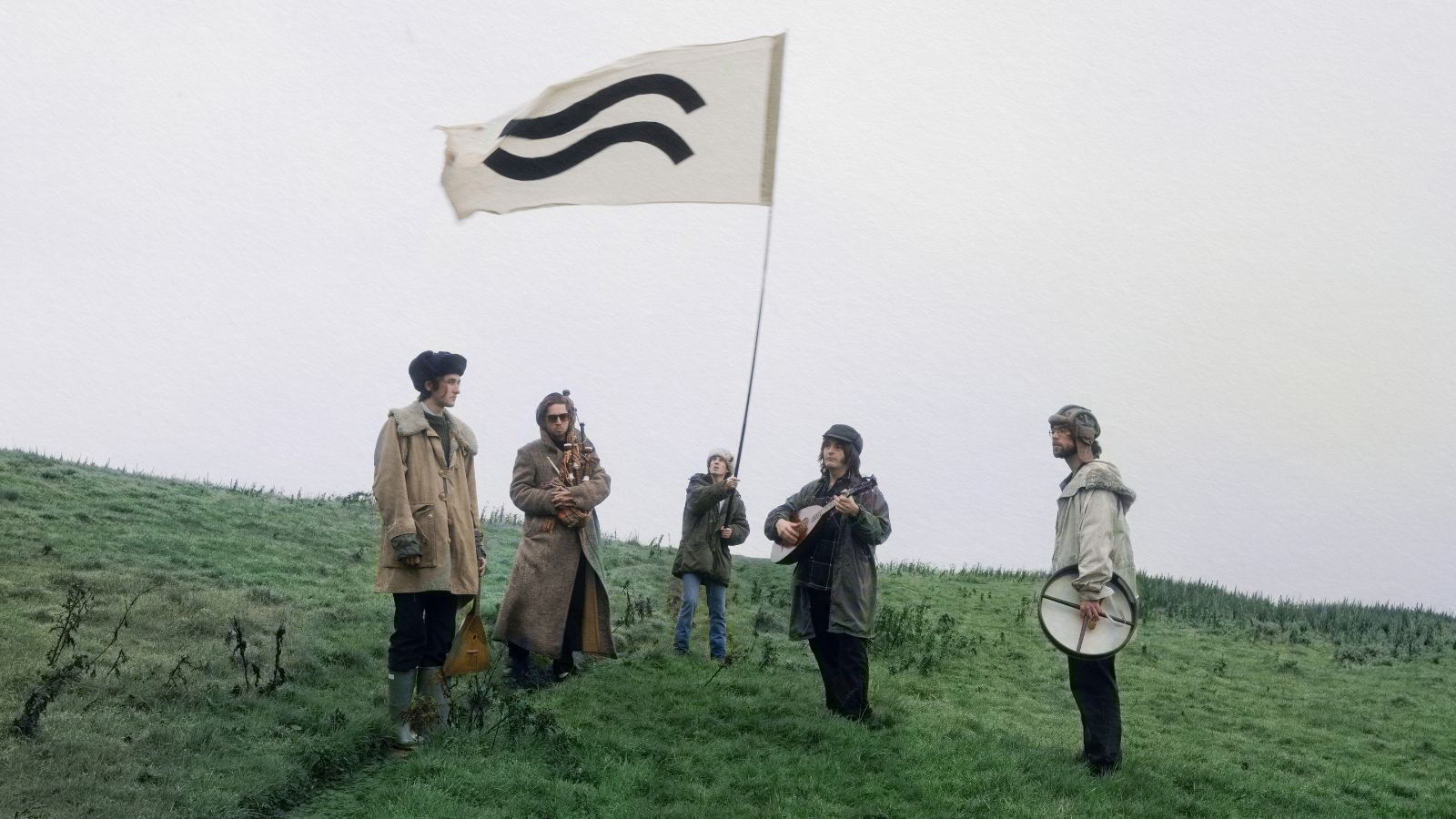
Photographed by Luca Bailey
Hum delves into themes of acceptance and gratitude. How do these themes reflect where you are now, both as artists and as individuals?
Austin Williams: This record reflects a more settled band, as individuals and a collective. Although we still exist in this very common limbo where we don’t make a living off making music, so in a way it’s also still very unsettled. However, this more than ever has cemented the ethos that making great music is the reason we do this, not for other people, not for money, but because it is in our nature to want to create and tell stories.
Can you tell us about the inspirations, artists, or experiences that motivated you while writing the songs and working in the studio?
Austin: Red House Painters, Low, Alice in Chains, The Brian Jonestown Massacre, the slowcore genre as a whole.
James: While I never actually saw them in the flesh, Placebo were remastering their debut album in the same studio as us in Brussels for the duration of our time recording Hum. Brian Molko’s bedroom was directly under Ozzy’s. I grew up with that band, and that very Sonic Youth-like debut album was one of my favourites as a teenager — so the very fact that we were living and working in the same space as a group I once idolised was incredibly motivating and gratifying. It was almost a little reminder every day that “hey, look, you achieved what you always dreamed of.”
Aside from that, the biggest inspiration from the studio in Brussels for me was probably the weather. We’ve now recorded four albums at ICP Studios, but every other album we did there was in the dead of winter, when it was cold and dark seemingly 24 hours a day. This time, the sun was blazing down every day, which meant we could clock off at 8:00 PM and go for a drink while it was still light; or zip around the city on mini-scooters if we needed to break out of the cabin fever. There was this beautiful, Twin Peaks-y park nearby that I used to go running to. And we’d occasionally pop down to this great pub near the ponds to watch the football. Combined, it all just made the recording process feel incredibly laid back and summery and uplifting, and I think you can really hear that positive energy in the music. We were all having a great time.
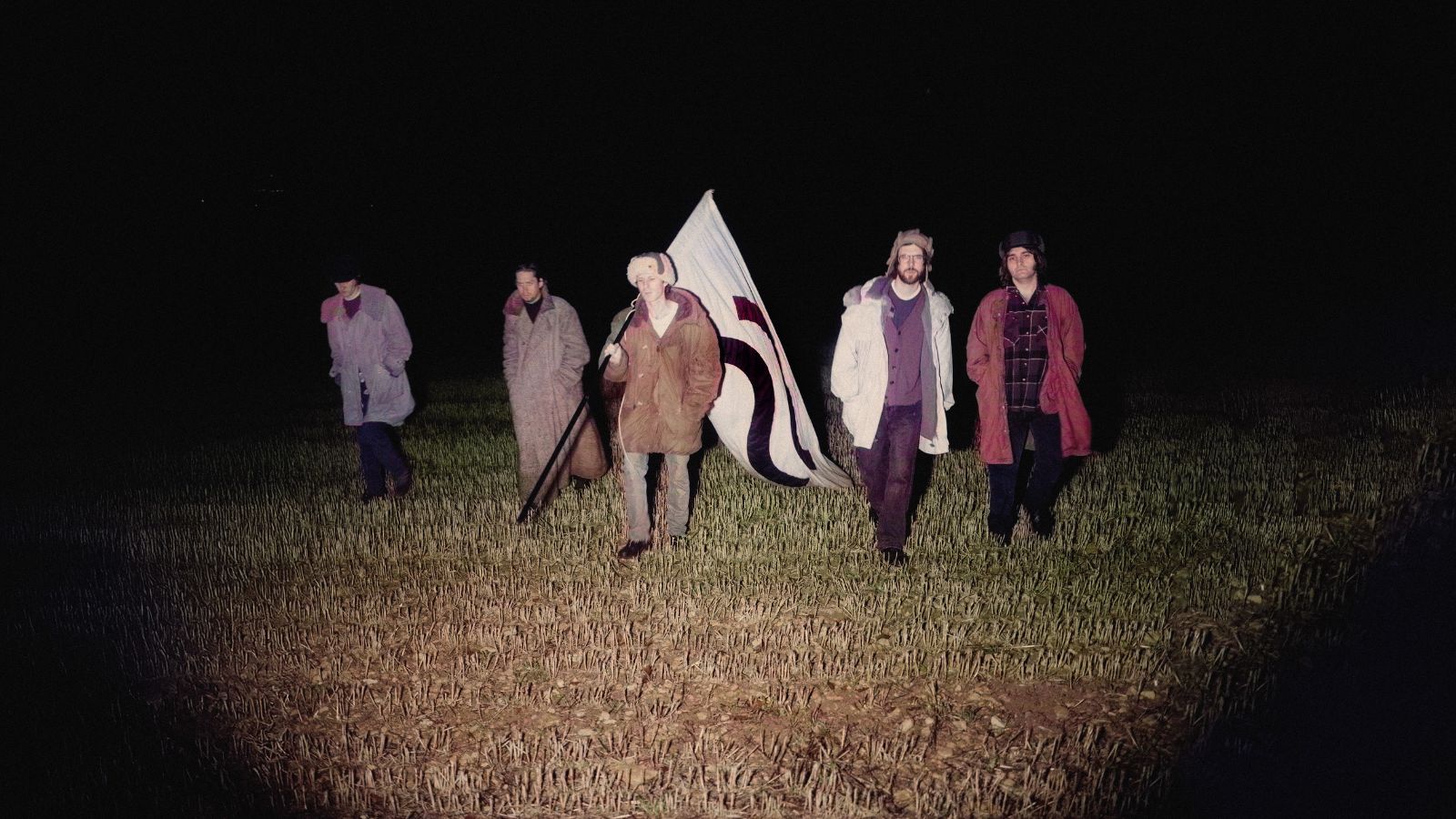
Photographed by Luca Bailey
How do each of your personal influences and musical tastes shape the final sound of a song when coming together as a unit?
Austin: It’s hard to pinpoint exactly, but that’s the beauty of collaboration — a meeting of minds creates something that no one person could. The support and camaraderie of a group of friends making music can elevate a song to heights it may not have gotten to on its own confidence alone.
What were some of the challenges or standout moments during the making of this record?
James: The first song we started recording at the studio was “Is There Something Going On?” — because we felt it was in great shape from rehearsals and demoing, with very few changes needed. We thought it would be a home run to get things rolling — sometimes you need that easy win at the start to get some air beneath your wings. But it just sounded so flat. Whatever magic we’d captured from the demo we were struggling to recreate. In short: we nearly abandoned it, even though we all loved the song, because we just couldn’t seem to get it right.
Towards the end of the sessions, I took it upon myself to wake up early one morning and have a fresh go at it with our sound engineer before everyone had come down for breakfast — and we managed to get it clicking enough for everyone to want to have another go at it. We ultimately salvaged the song from the brink in the last few days of recording, and it ended up making the album. And I think we’re all really happy about that, because it would be such a shame to not be able to overcome the hurdle for such a special little song.

Photographed by Luca Bailey
Looking back at your earlier works, what do you think has changed the most in how you approach making music today, particularly in the age of streaming and TikTok?
Austin: I think we’ve managed to escape most of those outside pressures and influences; perhaps if we were signed to a big label and had financial pressures to make a hit, then maybe we would; perhaps that would actually make it easier! But putting out music is harder than ever; it’s very hard to get people’s attention online without having to make some kind of clever or shocking content to go with your music. It’s kinda like being in advertising. You can’t just make great music and hope for the best anymore, but we are trying.
You concluded your sold-out Asia tour in December 2025. You’ve described performing in the region as “absolutely crucial to our journey.” How has that experience shaped your perspective on your global audience?
James: I do think the thrill and joy and stimulation you get from those performances in places far away from home is something that gives you the extra passion and motivation to persevere. We always come home completely inspired and rejuvenated from these tours in East Asia — there’s just something so fun about these rollercoaster rides through countries like China and Thailand, living on a diet of spicy food and seeing all the unique architecture every day while you’re completely jetlagged, and then to top it all off having fans that really, truly appreciate the music and the effort it takes to bring it over to that side of the world.
It’s tough being in a band in 2026, surviving on limited funding and having to support yourself and your families through working different jobs while also trying to find the time to keep the music alive — but when you get such memorable rewards like these kinds of shows, it puts the fire right back into the band. We honestly love coming out to Asia.
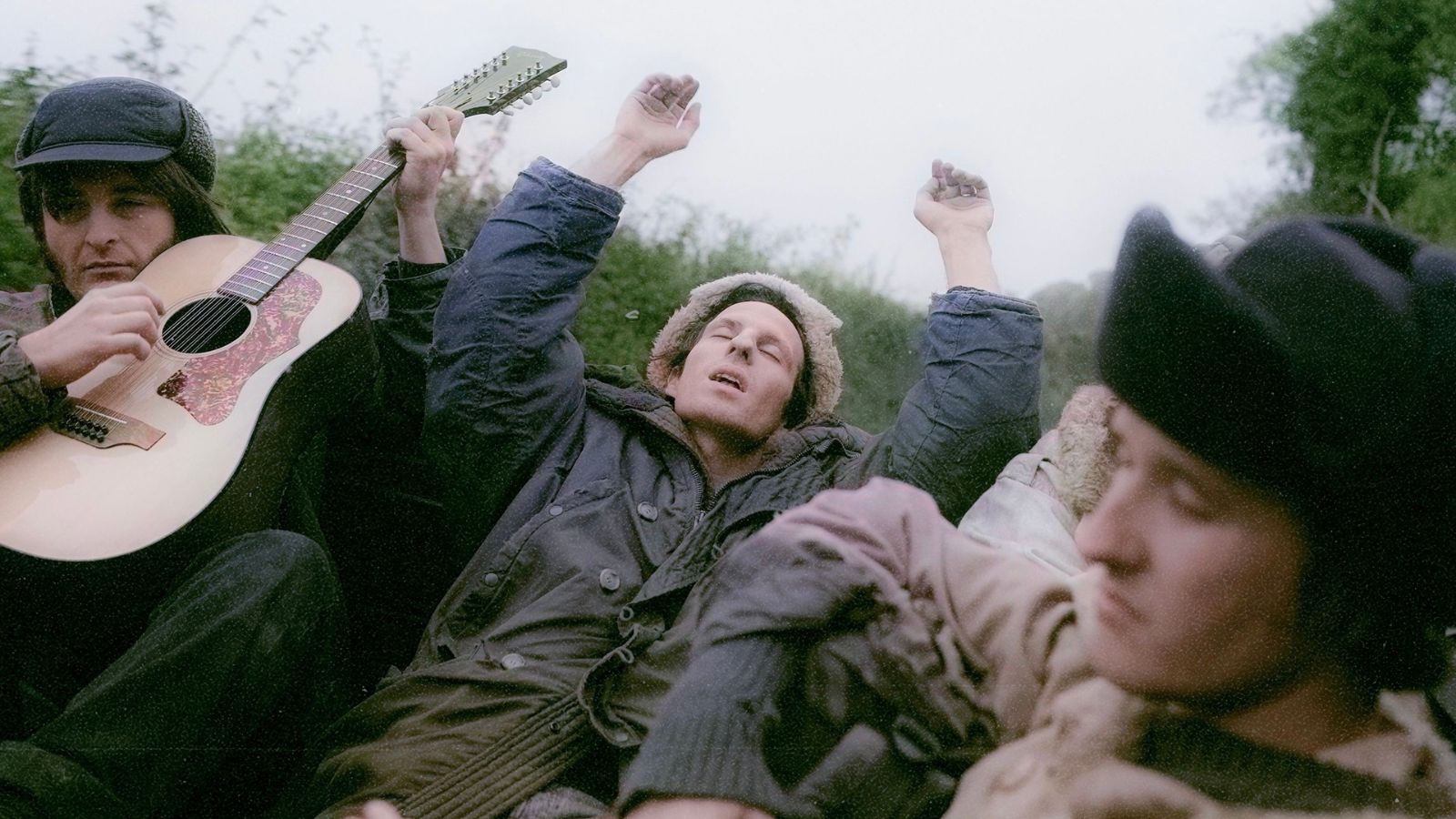
Photographed by Luca Bailey
Has your relationship with your audience and fans changed over the years?
Austin: It probably used to be a lot closer, as we toured more and had much more active fans on our socials, due to the age being younger, I guess. Although now we have a WeChat group, we are finding that spark again, as our fans in China feel very excited by our new music and we sometimes chat on that group, which is fun. It’s nice when it’s tangible, and you don’t just feel like you’re shooting music into space.
Any chance the Philippines might be on the list the next time you return to Asia?
James: We’d love to come; we’re just waiting for the invite!
This year, you teamed up with Asian acts like Helsinki Lambda Club and Dept. What did those collaborations teach you about working with artists from different cultures?
Austin: That there is always so much to learn from collaboration, and especially other cultures. It keeps things exciting.

Photographed by Luca Bailey
What message would you want new listeners, or longtime fans, to take away about who you are as a band at this point and what your artistry represents?
Austin: Well, I hope that we can inspire, in the same ways that I have been inspired by artists and songs and bands. You should never stop creating, no matter how much it feels like it’s not worth it. Because it is!
Frequently Asked Questions
Hum is Swim Deep’s fifth studio album, released in June 2026. The 10-track record explores acceptance, gratitude, grief, family, and responsibility, continuing themes from 2024’s There’s a Big Star Outside. The band describes it as its heaviest, most adventurous, and most uplifting work in years.
Swim Deep consists of Austin Williams (vocals), Cavan McCarthy (bass), James Balmont (keyboards), Joshua Buchanan (guitar), and Thomas Fiquet (drums). The English indie pop band formed in Birmingham in 2011 and has released five studio albums, beginning with Where the Heaven Are We in 2013.
Hum draws on ’90s grunge, alternative rock, and the slowcore genre, with the band citing Red House Painters, Low, Alice in Chains, and The Brian Jonestown Massacre. It was recorded at ICP Studios in Brussels with producer Bill Ryder-Jones, the band’s 2025 touring guitarist.
Swim Deep completed a sold-out Asia tour in December 2025, with notable stops in Thailand and China. The band says it plays to crowds of hundreds in the UK but tens of thousands in China, describing Asia as absolutely crucial to its journey.
No Philippine date has been announced, but Swim Deep has expressed clear interest in performing there. Asked by Billboard Philippines whether the country could be on a future Asia routing, keyboardist James Balmont said the band would love to come and is waiting for the invite.