
The Script’s Danny O’Donoghue: Telling Stories For The Ages
“I may be getting older, but I just feel like I’ve got even more to say now than I think I did when I was young,” the Irish pop-rock band’s frontman tells Billboard Philippines.




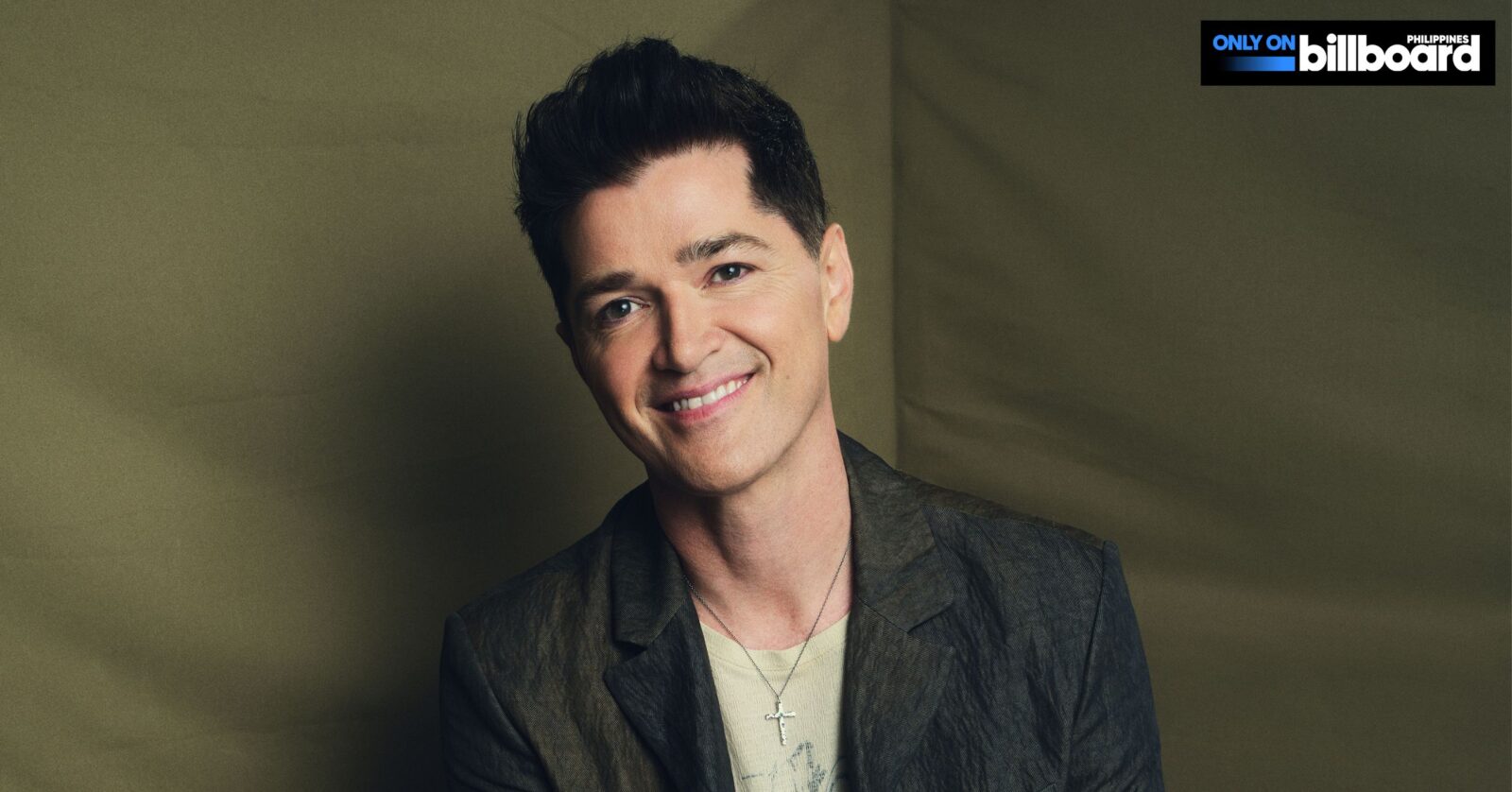
Courtesy of BMG and Wilbros Live.
Courtesy of BMG and Wilbros Live.
When Danny O’Donoghue first debuted with The Script, he had no idea that their music would become the soundtrack to the love stories of millions of people across the globe.
Though he and the band’s co-founder, Mark Sheehan, were no strangers to the music industry, their early years together on the scene weren’t exactly the smoothest of times, which saw their Irish boy band, Mytown, break up, and eventually get dropped by their label.
Yet following some time writing and producing for artists like Britney Spears, Boyz II Men and TLC, O’Donoghue and Sheehan found themselves back where they belonged: telling their own stories. Joined by drummer Glen Power, they formed The Script, whose 2008 self-titled debut album transformed the Dublin trio into one of the defining pop-rock acts of their generation. With emotionally charged anthems like “The Man Who Can’t Be Moved,” “Breakeven,” “For the First Time,” and “Hall of Fame,” the band gradually built a reputation for pairing arena-ready hooks with deeply personal songwriting, earning multi-platinum records, sold-out world tours, and a fiercely loyal fanbase that has only grown over the years.
Now, close to twenty years after the release of their first album, The Script continue to reach new career heights well into their 40s. Even as the band has navigated profound personal and professional changes — including the devastating loss of Mark Sheehan three years ago — O’Donoghue has remained steadfast in carrying forward the legacy they built together. Because for him him, The Script has never simply been about chart success or sold-out venues; rather it has always been about creating songs that offer comfort, connection, and hope during life’s defining moments.
As The Script prepares to welcome yet another new era, O’Donoghue opens up to Billboard Philippines, and reflects on nearly two decades of unforgettable music, what makes the Philippines feel like home after all this time, and why, after all these years, he still believes the best songs are the ones that make people feel less alone.
Billboard Philippines: So, Danny, how are you feeling today?
Danny O’Donoghue: I’m good, but I’m still a bit tired as we had one hell of a day yesterday. It was unbelievable. We started the promo tour at 5:30 AM, finished past 10 in the evening, and yet we still managed to cover everything.
We literally did, I think, every piece of promo you can do in this town. But it was brilliant, I really enjoyed doing Billboard X last night and having all those people in the room who loved the music. It was just a really nice family vibe there; everyone was singing and harmonizing, and it was a beautiful day. And then we got up early this morning, and then we just re-shot “The Man Who Can’t Be Moved” music video, but here in Manila.
Oh my god, that’s amazing.
It’s insane, it’s really good.
That’s exciting. What were the spots that you kind of hit up for the video?
We were going to do it in a lot of different places, but we ended up finding this perfect corner somewhere in Manila, which really looks like the Filipino version of the original video. We even got the tricycles to appear, then you have the sari-sari stores in the back, just so you know that it’s not in Ireland. (Laughs)
How were you dealing with the heat, especially while wearing your leather trench jacket? (Laughs)
I swear to God, I really had water just dripping down my back. I even thought I had little insects crawling all over me up there. But despite that, it was still so cool just to do it here in the Philippines. (Laughs)
I think what’s amazing about that is just seeing the impact of the song after nearly two decades. But even after that, The Script have really built such an impressive catalog of music — especially within the genre of modern pop rock. When you look back at songs like “The Man Who Can’t Be Moved,” “Breakeven,” “Nothing,” “Hall of Fame,” or even “Superheroes,” what do you think allows all these records to resonate this much with listeners after all this time?
I can only guess because I honestly don’t know. But I would think it’s because we wrote them and they’re true. They’re [based on] real experiences, and they’re real songs that were written to try and get pain out in some way or form. I think another reason [for why they resonate] is that they’re stories, you know?
In a way, I look back on some of my favorite songs and the impact that they have on regular people like myself. It’s those favorite songs of mine have a story that I can remember — because that’s how humans communicate with other humans, and that’s also how we navigate the world. That’s also why people love to watch soap operas, dramas, or even why we believe in religion. It’s all stories, and that’s how we pass information down for years.
For you, what would you say is the best structure for telling stories that eventually get to move and connect with all sorts of people?
I’m not really a fan of impressionism or fancy collages of words or anything like that. I actually like it when someone says, OK, there’s a guy, there’s a girl, and here’s the problem. Then this is the solution. This is what they did. And now they’re happy, or now they’re sad, or whatever. I really like the simplicity in that.
When looking at all of our biggest hit songs, one could see there’s an element of simplicity in it, which is executed through the storytelling. And some of them [were done] for different reasons.
I would go as far as to say that “The Man Who Can’t Be Moved” is this really simple story, because it’s technically the anti-get-back song. To try and get somebody back, you have to buy them things, buy them flowers, do big gestures, you know, do things. But to sit on the corner when you don’t have any money, just to sit there and wait and you don’t know why — there’s something beautiful in that. And it doesn’t cost you anything. It’s love in its purest form.
So I think that people long for that. People long for a day when social media doesn’t know all your problems or can’t attack you, especially if you make mistakes. It’s funny because it used to be that it was only when famous people made mistakes that everybody could see. But now, every person is a tiny bit famous, so we’re all living under a microscope. It’s a crazy world to be living in.
But I think that’s the reason why I literally poured a piece of myself into that song, and I think that’s what keeps people liking it.
I like what you said about the directness of it. There’s an authenticity to this form of storytelling. Because at this point, you’re just kind of letting your guard down.
And there’s no need for a facade, no grand gestures, nothing. It’s so simple, but then it’s still so universal. And there are many corners of the world that can still feel the very impact of that after all this time.
As it is, the global music landscape has also changed quite dramatically since you guys first debuted. From radio dominance to streaming culture, and now social media virality, it’s amazing to witness how your songs continue to find a new audience. Yesterday, I remember you mentioned to me that you have a new demographic of people under 25 who are discovering The Script for the first time. Yet what have you learned after all this time in an industry that just keeps changing?
You know, sometimes I remember that I wrote a lyric which says, “The thing that never changes is that things are going to change.” And I guess it applies to my experiences in this industry for that very same reason.
The second you think something should stay the same, you’re dead. I’ve grown up living my life and trying to make sense of the world. You think as soon as you get to a certain level, it’s like, “Oh, I know everything there is to know about this subject.” And then something else changes and comes in. Like, just when I feel like we figured out how to sell CDs, downloads came in. I was like, “Now we’ve got to figure out how to do downloads.” And as soon as we figured that out, social media and streaming came in. Now that we feel that we kind of know how to do social media, all of a sudden, AI is coming in.
It’s a constant evolution and a constant change. And life is really hard, whether or not you’re in music. if you sell fish, if you sell flowers, or if you’re a boxer, you’ll always have the up and down days. So, no matter what you do or where you come from, I think the really successful ones in life are the ones who put in all of the work. Because talent is only one thing.
You can be born with talent, but then a lot of times, hard work beats talent. And if talent doesn’t work hard, hard work beats talent. So yeah, that’s what I’ve learned from being here after all this time. All I’ve tried to do is just to try to work really hard, you know?
Some people would say that some bands have an expiration date after a certain amount of time on the scene. But for The Script, it’s impressive to note that what you guys have done is that you’ve maintained that relevance, and it has even grown organically, especially with how you guys have adapted to social media. It’s become evident that alone has even boosted your presence even further.
Yeah, honestly [quite] massively. It was maybe two years ago when I was like, “If we’re going to do social media, we have to go all in.” For a while, we tried to figure out what that meant for us. Does that mean that I have to dance and look stupid in videos? I think there are a lot of bands out there who have tried their hand at that as well, while still trying to retain the same level of credibility that doesn’t necessarily feel off-brand for them.
Though what I wanted to retain was the active effort in figuring out a way to connect with people. But being in our mid-40s as a band trying to get the hang of social media, I had questions that lingered about where exactly do we fit into this? So after some time, social media showed us that it was our lyrics that stood as the one thing that connected to our audience.
They don’t give a shit what I look like. They don’t care about how we play. They just love the lyrics of the song itself. So we decided to lean into that. We started to give stories of how we wrote the lyrics, and our social media campaign then started to become more about the art of songwriting than it is about me, the band, or than it is about anything else.
With that direction, what forms of execution would you guys gravitate towards?
Sometimes, it just so happens that I’m in the studio showing how I played something, or how a song came about, and I tell you the story behind it. And then another thing that we do is find ways to execute something new with our old videos. So, for example, with “The Man Who Can’t Be Moved,” okay, it’s a huge song right?
But if every young person wants to know, is there a video for this song? And then they look online, they find the video, but it’s 18 years old. So the challenge for us is to find new ways to keep these songs alive, whether it’s through TikTok or Instagram. Because you have to think of new colors to put them in, like a new way to package it. That’s what we try to do. But do we get it right? No, not all the time.
I think the truth of it is that you need a lot of content, just constantly doing things. We’ll have around 99 out of 100 posts that do just okay, and then all of a sudden, there’s one that does 10 million. You eventually realize that all you’ve got to do is keep going with it, and keep building and building. Which is why we decided to shoot “The Man Who Can’t Be Moved” here in Manila. (laughs)
It’s funny how you mentioned that you enjoy telling the stories behind your songs. Because last night, after your performance, I got to chat with a number of the musicians who were there. A lot of them actually said that their favorite part of the night wasn’t merely your performance, but listening to you talk about how the song came to life.
I believe it shows that hearing your intentions behind the music is what keeps people inspired, especially as a lot of younger artists cite your emotionally vulnerable songwriting as a major influence on their craft. Given how The Script had a hand in modernizing and normalizing that honesty in songwriting before it became the norm, do you think that you guys get enough recognition for your impact on the way that modern songwriting is?
I don’t look for recognition. Honestly, I don’t. It’s kind of irrelevant to me because that sort of songwriting was also not cool when we were doing it. So I didn’t feel like I was cool. I didn’t feel like I was fitting in. But I realized, we didn’t want to fit in, and we didn’t want to feel cool.
We just wanted to sing songs that were true and honest and things that resonated with us. When we first came out, we didn’t know how people would respond to us or our music because we would wear our hearts on our sleeve. And that was not a cool thing to do, especially back then. Now, the world has changed — but I always felt men not being able to talk about their feelings was a travesty. Suicide is a massive problem, with people not being able to share how they feel.
So if we were able to help people along the way, showing that you can be a man in a rock band, but you can also talk about your feelings and emotions in a capable way to be able to get what’s on the inside out. Because I think that we, as human beings, that’s all we’re trying to do. That’s all anybody’s trying to do. I actually wrote a song on our last album called “Inside Out,” because I’m just trying to get what I’m feeling inside out into the world. That’s it.
Well, speaking of albums, fans are already excited for your upcoming record, The User’s Guide To Being Human. What would you say inspired that title? It sounds like there’s a direct message there.
Yeah, of course. I’m super excited for everyone to hear it, because, again, I know how good it is. It remains to be seen whether everybody else likes it. (Laughs) But, again, I don’t care. At this point, we’re just proud that we’re able to release it, and if it’s a failure, so be it. But I’m over the moon with what the concept of it is.
It’s called The User’s Guide To Being Human, because I think that we, as a society, need one. If there were a pamphlet that we could open up to see, maybe that could make the world a better place. You know how, when you’re on an airplane, and it shows you to take the pamphlet where it tells you to put it in here, fasten this, or how to break the window. We were thinking something along the lines of that kind of imagery.
I think people need to be reminded of what it’s like to just sit with people and to look in their eyes, communicate, and feel like we’re in this together — now more so than ever, with AI and with all these crazy things happening around the world. Each song on the album portrays a feeling or an emotion.
There’s one about addiction. There’s one about thinking. There’s also a song called “I’m 100 Different People,” which kind of goes (singing) “I’m an asshole in the morning, I’m amazing at night, and I tell you all the small things that you couldn’t quite get right. I pick at you, I’m romantic, I’m all these things. But I’m 100 different people. Yeah, it’s true, but we all love you.”
It’s all about how we are all multifaceted individuals. Not saying that I’m saying it’s always a good thing, but there’s just a side of humanity that people don’t like to often admit, like there’s more than two of me in here. There’s a bad one, a good one, and one in the middle — because people are nuanced.
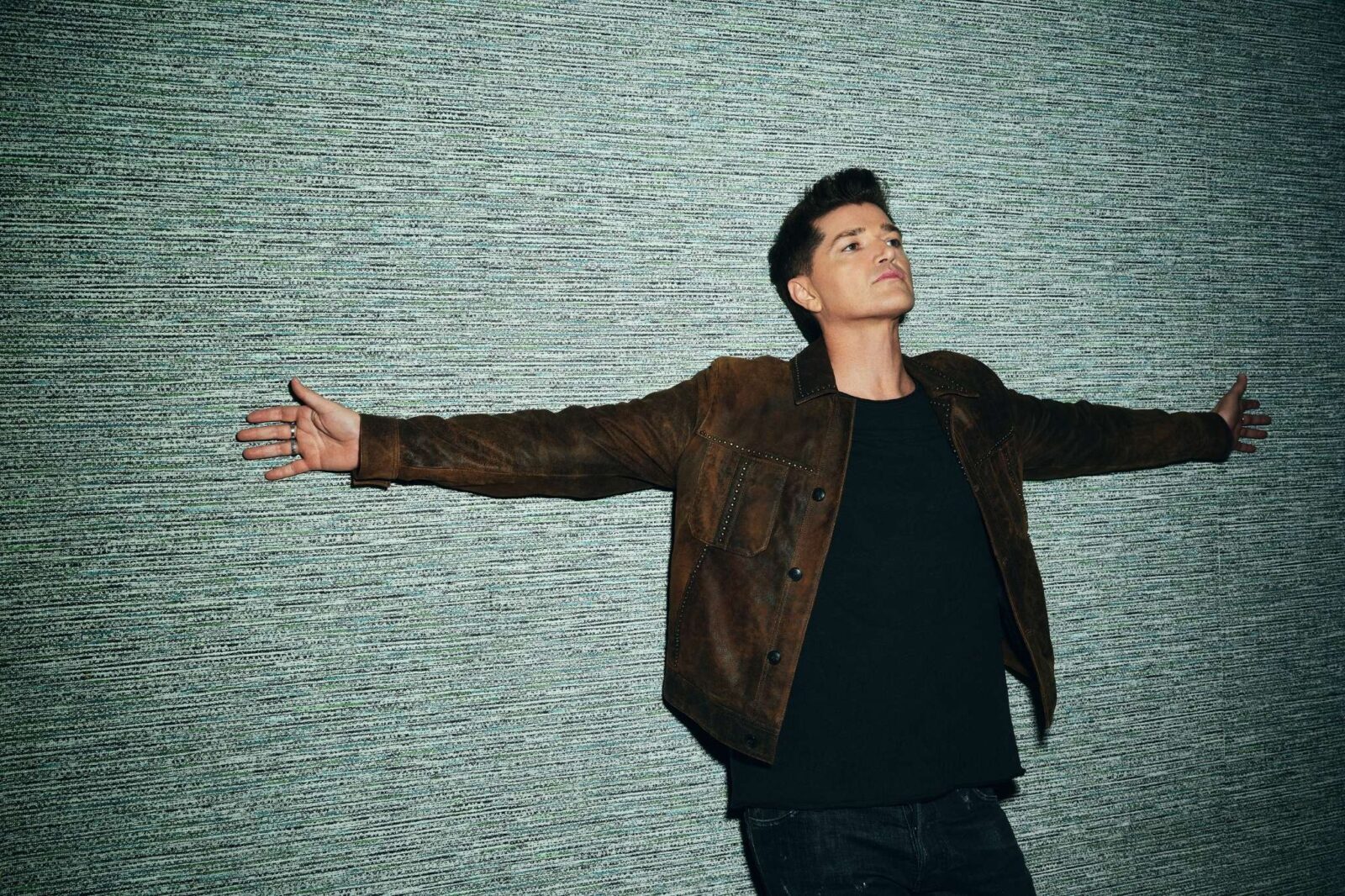
Courtesy of BMG and Wilbros Live.
After everything the band has experienced in recent years, does this upcoming material feel more reflective and introspective for you guys? Or are you guys approaching this new era with a renewed sense of energy and optimism?
Yeah, that’s the main reason why I wanted to get this record out so quickly. It’s because of the energy. We went out on tour, finished the tour, went to LA, and I just felt like I had a head full of ideas. There were so many ideas going around among the group, but I just feel a lot of energy these days.
I may be getting older, but I just feel like I’ve got even more to say now than I think I did when I was young. I’m enjoying this struggle and the task of realizing how much the landscape of life has completely changed for us over the years. So, figuring out what we need to do gets me going.
It’s not even about staying relevant, because I just feel like art and the act of expressing yourself — it’s what I was born to do. So, trying to get art out, trying to find a vehicle to put it out there, that’s what keeps me energized.
If I cared about being relevant, I would have sung cool songs when we first came out, not sucky, sad boy songs. (Laughs) Everybody was cool before when we came out, and we were like, I’m the guy crying in the corner over a girl. And then suddenly everybody moved over to the corner, and now they’re all crying in the corner. Though I’m glad it opened that door for so many people.
Speaking of energy, you announced your upcoming The Man In The Arena World TourWorld TourA series of concerts held across multiple countries and continents, usually to support a new album or career milestone. World tours demonstrate an artist's international reach, and Philippine stops haveGo to World Tour Glossary for next year. Is there anything that you could tease regarding what fans and Filipinos could expect from the tour?
Well, I’ll tell you one thing about it. I can tell you that there’s going to be a spaceman who’s going to fly around the arena. There’s a part of the show where this spaceman flies with a camera, and there’s no wires, nothing. But he’ll go near everybody and what’s on the camera will get shown on the screen.
Are you going to be the spaceman?
Can’t tell you. (Laughs)
Okay, that sounds very fun. I’m already looking forward to it. (Laughs) Though considering that you’re doing three shows in the Philippines alone, I want to ask what is it that makes Filipino audiences so special in your career? It’s almost as if Manila has become a second home for you guys here.
Speaking of second homes, I want to have a second home here.
Oh, really?
If anybody wants to offer me a house or something, or could offer me a discount on a house here, that would be amazing. (Laughs)
Given the welcoming spirit of Filipinos, I think we’d love to have you here.
Well, that’s the main reason why I love it here so much. You can be in a hotel, a farmer’s market like where we just were, or even anywhere, but Filipinos will always meet you with a smile. That’s so rare in today’s world.
I get to travel a lot, and you know, in a lot of European countries, you have to work for the smile, for them to trust you and stuff like that. And that’s just culture-wise. But I think there’s something special about how the Philippines is like my home of Ireland.
I think there’s something special about our people, and I don’t know what it is, but we’re very similar. Of course, we don’t look the same, but we are very similar in our customs and the fact that we love to drink. (Laughs)
That is true.
Yeah. Drinking, heartache, singing, all that stuff. I’m well aware karaokeKaraokeA form of entertainment in which people sing along to instrumental versions of popular songs, with lyrics displayed on a screen. Deeply loved in the Philippines, karaoke is a socialGo to Karaoke Glossary’s massive over here, just as karaoke’s huge in Ireland.
But for us, we all just like to go to our version of karaokeKaraokeA form of entertainment in which people sing along to instrumental versions of popular songs, with lyrics displayed on a screen. Deeply loved in the Philippines, karaoke is a socialGo to Karaoke Glossary in the pub with a guitar and fiddle or whatever. So seeing how a lot of Filipinos do it, the Philippines really does remind me of home, and has eventually become like another home for us after all this time.
Looking at The Script’s legacy now, what do you hope that people will ultimately say about the band’s contribution to music — whether it’s based on your commercial success, or even in terms of emotional and cultural impact?
I just want to be known as a songwriter.
In this day and age, where fame is so important to people, it’s funny how I don’t even classify myself as a singer. I only sing songs because I love the songs, and I think I do the best job possible for the songs. But first and foremost, I’m a songwriter. I’m not Danny from The Voice or the guy who’s on social media, or an influencer.
I really want to be remembered as a songwriter, because most of the most amazing people in my life have been songwriters. My dad was a songwriter, and my brothers were songwriters. My greatest inspirations in life were songwriters, such as Bob Dylan, people like that. If I had a dream where I’d like to land, it would be somewhere around Bob Dylan’s level of recognition.
There’s no way, though, because that’s like trying to be a lyrical god. (Laughs)
Yet just by looking at how your songs are so alive and integrated into the cultural lexicon after all this time, it’s just crazy to see how it takes on new forms and a new life of its own after all this time.
It’s insane. We’re at 33 million listeners on Spotify, which is insane. It was like five years ago when we were at 19 million.
I was like, how have we got an extra 10 million new fans, and they’re all under 25? It’s insane. It just means that the story these lyrics tell is what keeps people tuned in, even enticing new audiences in. And I’ll be wanting to play concerts for the next 30 or 40 years. Because, just looking at what’s happened over the past 20 years, what more could take place for the next 20, the next 30, the next 50?
I just want to write. I wanted to write then, I want to write tomorrow, and all the way up until I die. It doesn’t matter whether it’s relevant or not. It doesn’t matter if it’s a success or not. Some things will come and go as things do. Like, if you tell ten jokes in a night and you get one laugh or one of those jokes, that’s brilliant. And it’s the same thing with albums, you know?
Amidst everything, I just want to be remembered as a songwriter — one who was able to move people through my stories. And that’s it.
Listen to The Script’s latest single, “Man in the Arena,” below:
*This interview was edited for brevity and clarity.
Presented by Wilbros Live, The Script are set to return to the Philippines on March 18, 19, and 20, 2027, for the upcoming ‘Man in the Arena’ World Tour. Limited tickets are still available here.
Frequently Asked Questions
The Script’s upcoming album is titled “The User’s Guide To Being Human.” Frontman Danny O’Donoghue told Billboard Philippines the concept was inspired by airplane safety pamphlets, with each song portraying a different feeling or emotion tied to the human experience.
The Script return to the Philippines on March 18, 19, and 20, 2027 for “The Man in the Arena” World Tour, presented by Wilbros Live. The band previously shot a Manila-set music video for “The Man Who Can’t Be Moved” during their prior visit.
The Script has grown to 33 million monthly listeners on Spotify, up from 19 million roughly five years earlier. Danny O’Donoghue noted a significant portion of this growth comes from listeners under 25 discovering the band’s catalog for the first time.
The Script is an Irish pop-rock band formed by Danny O’Donoghue, co-founder Mark Sheehan, and drummer Glen Power, following the breakup of O’Donoghue and Sheehan’s earlier group, Mytown. Their 2008 self-titled debut album established them as a defining pop-rock act.
The Script’s latest single is “Man in the Arena,” released ahead of their 2027 world tour of the same name. The track continues the band’s tradition of emotionally driven songwriting that has defined hits like “Breakeven” and “Hall of Fame.”