
The Philippines’ Coldest City For Hot Tunes: Welcome To Baguio City
In this installment of Billboard Philippines’ Soundtrip, we delve into the chilly atmosphere of Baguio City that’s birthed some of the country’s hottest tunes.
By Rome Saenz




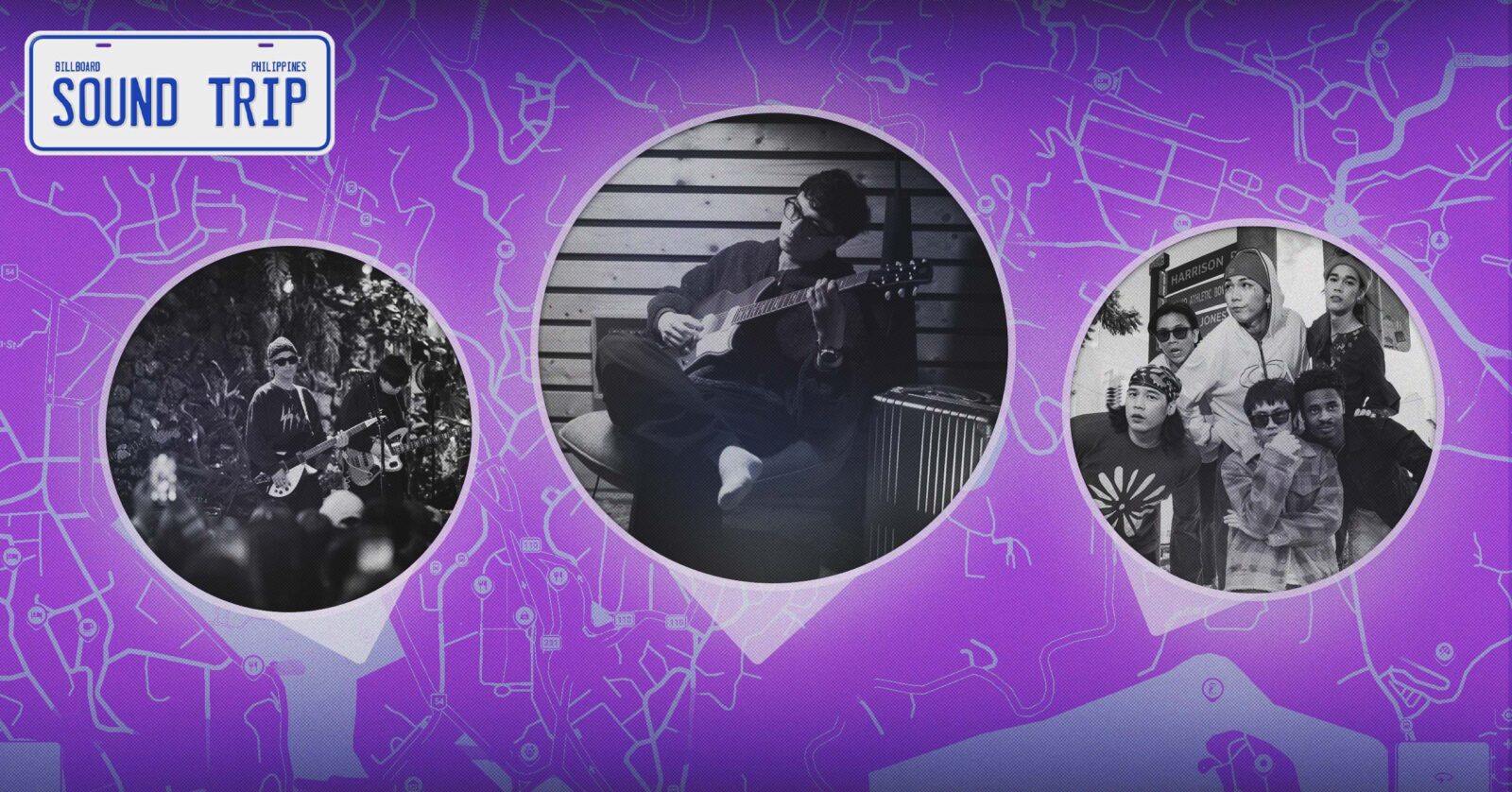
Buried deep into the City of Pines is a music scene as vibrant and lush as its greenery — one that’s powering our music scene nationwide.
As ironic as it is with the space’s cooler climate, Baguio City has become one of the Philippines’ hottest spots for music in the modern-day OPMOPMShort for Original Pilipino Music, the body of songs created by Filipino artists, spanning genres from ballads and rock to hip-hop and pop. OPM expresses Filipino identity and heritage, andGo to OPM Glossary scene. From live busking heard at every street corner to filled-up gig venues, the scene up North continues to thrive with its own distinct cultural identity and sound — one that blends genres of folk, blues, reggae, and the like.
Not only that, but some of the biggest acts to grace the Philippine charts also had their start in Baguio — among these are the record-breaking Cup of Joe, the hit-making Dilaw, and more. Additionally, some of the most exciting acts on the horizon have been emerging from this quaint town, like Amateurish, David La Sol, and the like.
In an exclusive interview with Billboard Philippines, an anonymous industry expert shares, “Baguio is really a hub of artists, so there’s no shortage of musicians.” She then explains that, while the scene has its own distinct art scene, the space has become somewhat of a melting pot of various cultures and sounds. As a middleground between provinces in the Cordilleras, the city of Baguio serves as a mecca for those who study or simply want to catch the city’s cold air — blending a collection of distinct Filipino sonic styles into one unified sound.
With a market saturated with all kinds of sound, you’d expect a spirit of cliquishness or competition, even. However, Dilaw’s lead vocalist and frontman, Dilaw Obrero, sees it as quite the opposite. He says, “Nung nagsisimula pa lang kami, masasabi kong maliit pero solid ‘yung eksena sa Baguio. Solid as in masaya saka mainit kahit malamig. Hindi siya ganito kalaki sa tulad nitong bumungad sa aming eksena sa baba, pero safe na safe din.”
(When we were first starting out, I would describe the scene as small but solid. It’s very solid, and it feels hot even when it’s literally cold. It wasn’t this big like the one that greeted us in the scene [in Manila], but it was still very much safe.)
With a pool of people as mixed as it is, music has become a common language that links the Baguio community together. An industry expert stresses that this language-sharing can sometimes take form in people from these different communities sharing their local music with each other. She explains, “In Ili Likha, which is Tatay Kidlat (Tahimik)’s artsy brainchild, there’s this area where there’s a traditional hut. Jams usually happen there where musicians just either do electronic stuff while someone plays the guitar or while someone plays the nose flute. Then we dance to it, and we almost always end up dancing in a circle, like a community dance.”
But as much as there’s a native sound to Baguio, the space has also birthed many of the biggest chart-toppers nationwide — we have artists like Cup of Joe and Dilaw to thank for that, and their production house: Nine Degrees North. As the birthplace of some of the nation’s biggest hits, the company is headed by none other than one of the Philippines’ top-selling producers at the moment, Shadiel Chan.
Tucked away in a quiet mountain lodge, up in the North, is an unassuming bed and breakfast which then turns into one of the nation’s most exciting gig spots — Cozy Cove. Here, we’ve witnessed some of music’s most viral moments as video-uploaded sets from each artist blow up on the Internet. In an exclusive interview with Billboard Philippines, Chan shares, “In Cozy Cove, we had no intentions to make a YouTube channel or like a production company. Because what it was to begin with was that artists would come up here, and we would record.”
Recently, the production house held its first-ever music festival with its regular acts like Cup of Joe, Hale, Maki, and many more, appropriately dubbed ‘The Cozy Cove Fest.’ Prior to the festival proper, Shad shares, “Right now we’re expecting around 400 people, actually, to come. Very, very small lang siya. The goal is to be able to make this Cozy Cove Fest and bring it outside Baguio next time. So, practice lang siya, to test it with a small audience.”
Maybe it’s because of the street that’s literally called “Session Road,” but Baguio City has borne witness to the liveliest busking scene in our humble archipelago. Local busker and up-and-coming musician ULAN shares his personal perspective behind the scenes, saying, “The community itself — the busking community in Baguio, or the artist community in general — they are very supportive, very into their craft. Napakaseryoso nila to the point na kapag gumagawa sila ng isang obra, it’s either in line sa kultura na meron dito sa Baguio City, na gusto nila talagang ipakita ang kultura dito.”
(They take it very seriously, to the point that when they create a piece of work, it’s often rooted in the culture that exists here in Baguio City, because they truly want to showcase and represent the culture of this place.)
But with how expansive this community is, there’s a mutual support shared among fellow buskers who all tough out the same independent scene together. Ulan says, “Mas appreciated lang siya (the busking scene) dito sa taas, kasi marami rin pong artists na nagsisimula dito. Marami pang mga nag-start pa lang or nag-start na, matagal na, pero di pa lang nakilala.”
(The busking scene is more appreciated up in Baguio, because there are many artists who also started out here. There are many artists who are just starting or have been around for a long time, but haven’t become well-known yet.)
Overall, the music coming from the city up North is definitely one to keep on your radar — whether in its established production houses or vibrant busking scene. There’s no shortage of musicians who come from this city that thrives on its pure passion and thirst for art and self-expression.
This story is part of Billboard Philippines’ Soundtrip, where we explore the sounds and scenes of the Philippines, one city at a time.
Frequently Asked Questions
Baguio City is the birthplace of chart-topping acts Cup of Joe and Dilaw, along with emerging artists like Amateurish and David La Sol.
Nine Degrees North is a Baguio-based production house headed by producer Shadiel Chan, credited with helping launch acts like Cup of Joe and Dilaw.
Cozy Cove is a mountain lodge and bed-and-breakfast in Baguio that has become a popular gig spot known for viral, video-uploaded artist sessions.
Cozy Cove Fest is the production house’s first music festival, featuring regular acts like Cup of Joe, Hale, and Maki, with about 400 attendees.
Baguio’s Session Road hosts a lively busking scene, described by local musician ULAN as a supportive community rooted in local culture.