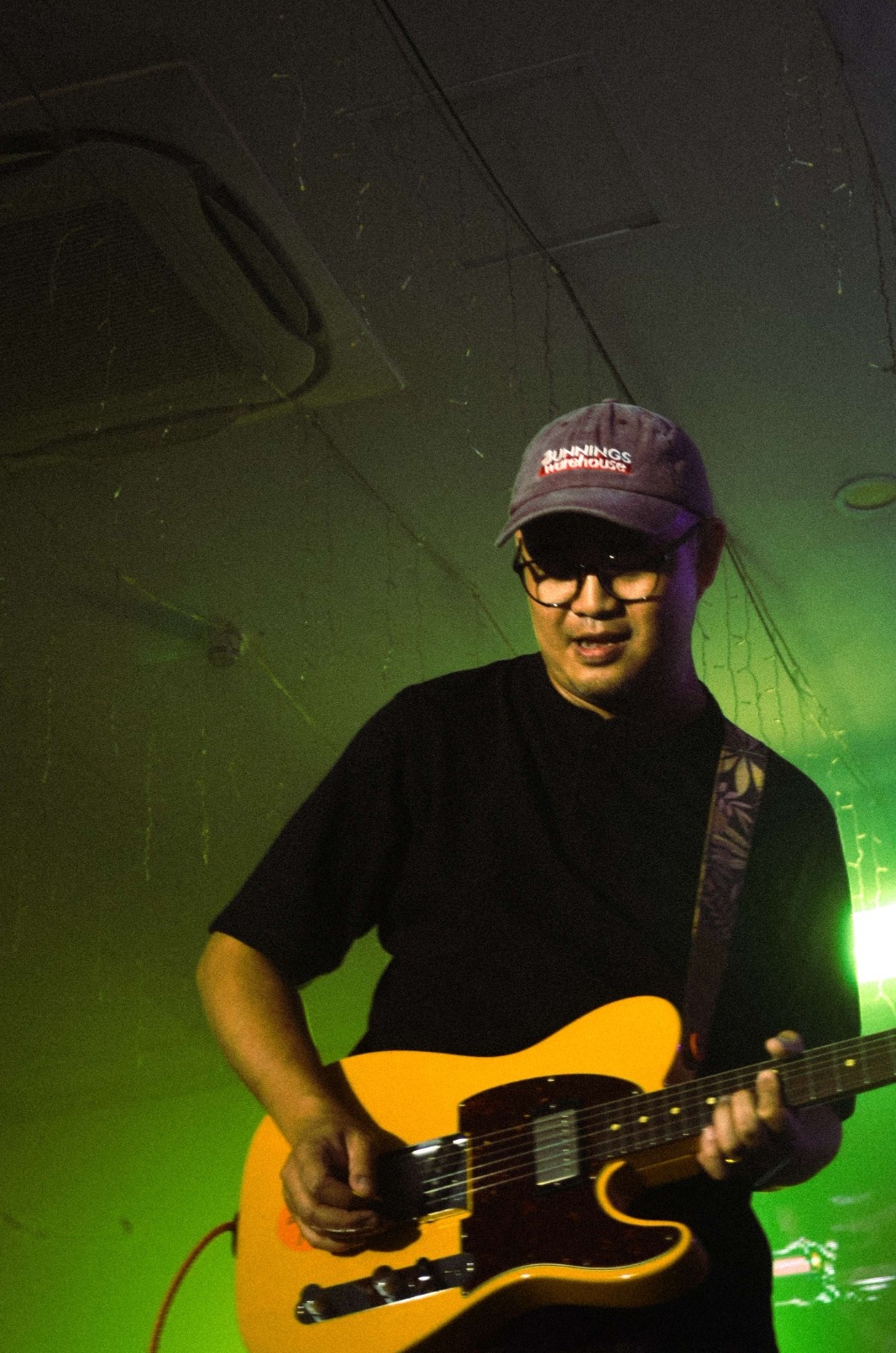
A Conversation With Pixies’ Joey Santiago: “We treat it like the best job in the world”
The Filipino-American lead guitarist of the Pixies talks to Billboard Philippines ahead of the alternative rock legends’ first-ever show in the country on May 10, 2026.




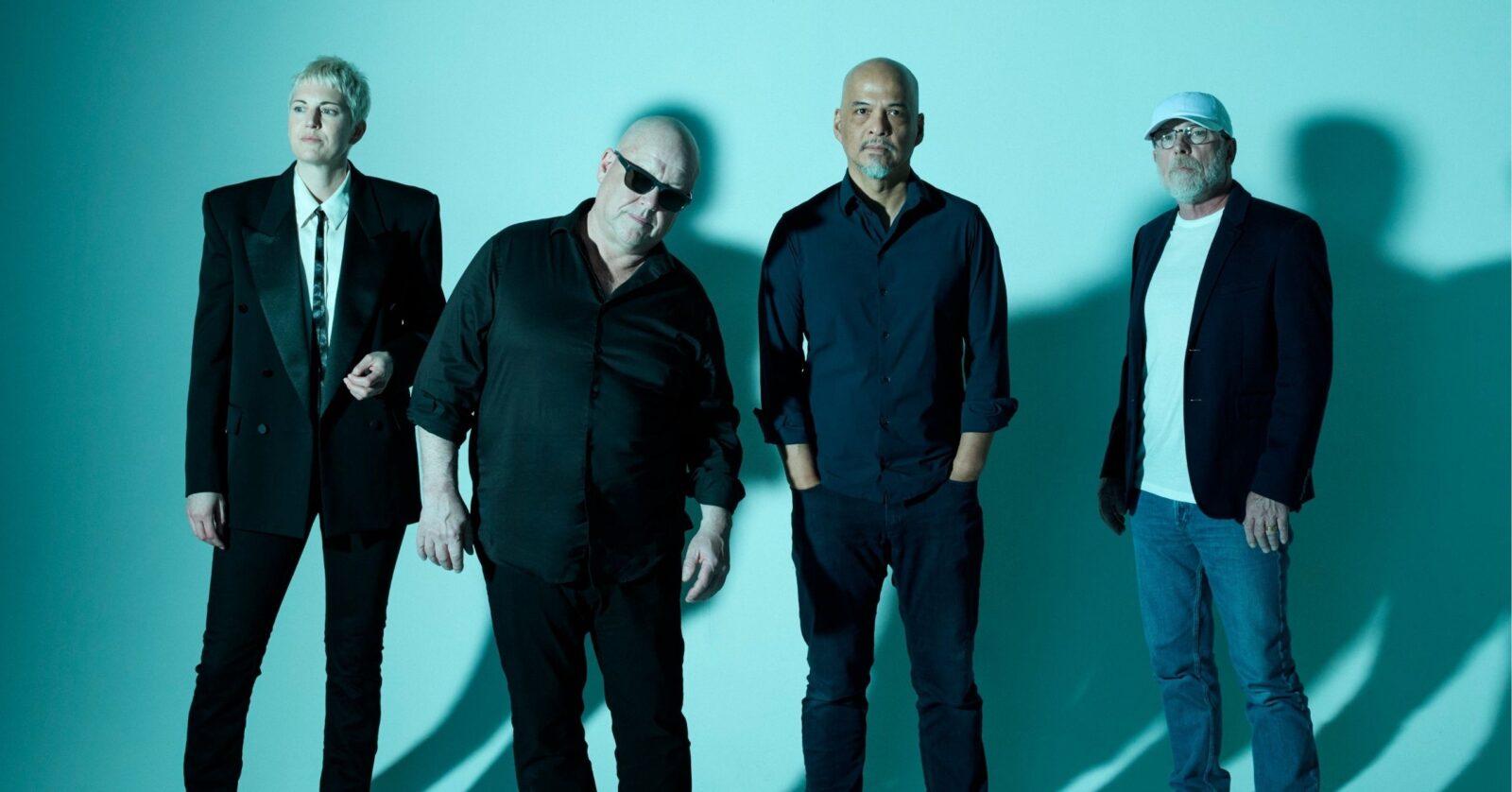
Pixies: Courtesy of Karpos Multimedia.
Pixies: Courtesy of Karpos Multimedia
Before grunge ruled the airwaves and “Alternative Nation” became a byword in the ‘90s, there was a strange little band of misfits from Boston called the Pixies. Fronted by screamer, rhythm guitarist, and main songwriter Black Francis (real name Charles Thompson IV, later known as Frank Black), the quartetQuartetA group of four musicians or vocalists, or a piece of music written for four performers. From string quartets to pop and rock bands, the format offers balance and flexibility,Go to Quartet Glossary mixed surf rock guitars, loud-quiet-loud dynamics, and surrealistic, science fiction-referencing lyrics in their songs. Not only was the music peculiar and quite out there, but the band members themselves (lead guitarist Joey Santiago, drummer David Lovering, and bassist Kim Deal) looked like regular people, if not a little nerdy — a far cry from the glammed-up, big-haired rockers of the late ‘80s.
As expected, the Pixies never reached platinum-level success, but their first four albums released under the renowned UK indie label 4AD — Surfer Rosa (1988), Doolittle (1989), Bossanova (1990), and Trompe Le Monde (1991) — have been hailed as classics, gaining new listeners every time a band of the moment, like Nirvana, Radiohead, or Modest Mouse, would mention Pixies as a major influence. Sadly, they never got their due in real time as the band broke up in 1993, when Francis famously announced on BBC Radio that the band was done before informing his bandmates via phone call and fax.
By the following decade, however, the Pixies were veritable legends, partly due to the inclusion of “Where Is My Mind” in the soundtrack of Fight Club, introducing the band to a new generation of fans. Demand for a reunion was high, and in 2004, the Pixies toured America and Europe, and appeared at that year’s Coachella Festival headlined by Radiohead and The Cure. The original lineup remained active as a live (and occasionally recording) unit until 2012, when Deal left the band.
Nonetheless, the Pixies soldiered on, replacing Deal with a succession of bassists before welcoming ex-Band of Skulls member Emma Richardson in 2024. They’ve also released five studio albums of new material since 2014, demonstrating the band’s drive to keep creating new music and expanding their legacy, which they continue to showcase through relentless touring and international festival appearances.
One other thing that the Pixies are famous for, at least in our country, is that lead guitarist Joey Santiago is pure Pinoy, born in Manila in 1965. This has made many Filipino fans wish for a Pixies show in the country for decades, and it will finally happen on May 10, 2026 at the Filinvest Tent in Alabang, presented by Karpos Multimedia. The concert will be part of the Pixies’ upcoming world tour commemorating the band’s 40th anniversary, so Billboard Philippines recently spoke with Santiago to discuss his musical influences, his relationship with playing the band’s decades-old songs live, and what he feels about finally getting to perform in his country of birth.
Billboard Philippines: I have not read a lot of interviews or articles on the subject, but your idiosyncratic guitar playing is both unorthodox and instantly recognizable. Who were your main influences in the early days of the Pixies?
Joey Santiago: God, it would be everyone. Everything that’s… every kind of music that I like. It didn’t really have to be guitars or anything; It’s just the sounds, and the weirder, the better for me. I was never really into the blues or anything like that. I was more into more like, weird stuff, you know? I even like avant-garde to classical music and all that stuff. But as far as guitar players, of course there’s [Jimi] Hendrix. I know he’s got a bluesy base, but he made great sonic sounds, you know, so that’s what I grew up with.
And, you know, the Beatles for the songs and for the way they do it, and it just filters through. I think it’s a combination of [all that]. When we started, I was quite young at it and it was my first time doing anything like that. So they captured it.
What are your favorite guitar moments in the Pixies’ catalog?
Guitar moments? You know, I like doing this silly solo on “Vamos” where I just go crazy on the guitar. And I also like some of the gentler solos, like on “Hey” and stuff like that. So it varies, you know? It’s good — I get to do whatever I want and be satisfied with it.
Did you have to adjust your style to fit Black Francis’ songwriting and playing?
No, it is what I got. That’s all I had to bring on the table for anyone.
For a band that’s on its fourth decade, the Pixies are still able to tour quite heavily and draw impressively large audiences. Why do you think the band remains a compelling live act?
I think [our music is] different enough. You know, it can’t really put us in any category. We got every song from “Here Comes Your Man” to “Tame” to like, just all these things. And the production on our records is pretty timeless. There weren’t any gimmicks with it. It’s just a four-piece band doing their thing.
What still excites you to go on stage every time?
Well, when I am not excited, I have to remind myself that the people are there that took the time out, planned it for a while. You know, I’m aware when those shows are sold out. So it’s “OK, we’re going to this place [that’s] sold out months ago.” People are really dying to see you, so you got to give it all; you got to just play the right notes. And that’s the first thing. And just play, you know?
From 2014’s Indie Cindy to 2024’s The Night The Zombies Came, the Pixies have officially put out more full-length albums than during what most people would call your “seminal” 4AD era. Was there pressure early on for the band to match the “magic” or immediacy of your earlier material, or did you just set out to do what you felt like doing at the time?
I think there might have been subconsciously, but we have to ignore that. And the more we do it, the more we’re more comfortable with it. But, you know, we keep striving to just get to that level when it was like… I want to get back there where it’s like people will [love the records]. And it will [happen] if people listen to it more; Indie Cindy happens to be a great record. All the [recent] records, it’ll just be one of those [instances] where people will look back at it in hindsight and go, “Sheesh, what were we thinking? They still had it.”
Well, that’s what happened with the first four records also, if you think about it.
Yeah, exactly. That’s what’s going to happen again, you know — it’ll come around.
While the band’s core audience may have grown older with you, I’m sure the shows get to draw younger fans who’ve just discovered your music by being cited as an influence by everyone from Radiohead to The Strokes and many others. How has your relationship with performing these 30- to 40-year-old songs changed over the years, especially with the advent of streaming?
That’s a good question. It hasn’t really changed. Like I said, when you’re on tour, it’s “OK, we got to go on [at] 9PM.” So the whole day you’re preparing to be at your peak at that time. There’s nothing really more to it than that than just, you know, we treat it like the best job in the world.
A question about your heritage can’t be avoided, especially now that the Pixies are finally playing in Manila for the first time ever. But instead of telling us what your favorite Filipino food is, what does this upcoming show mean to you personally? Aside from the fact that a lot of Filipino fans have waited decades for it, does it tick off a longtime item on your bucket list?
Yeah, I’ve been wanting to play there and we can’t. And you know, we’re such a lucky band that we could pretty much pick wherever we want to play. It was hard; you know, the logistics of going there has been kind of hard for us, but we’re doing it. And I am looking forward to playing there. My wife and I will be there. We’re going to go have a look around.
And my favorite food is kare-kare. (laughs)
Presented by Karpos, Pixies 40 In Manila happens on May 10, 2026 at the Filinvest Tent in Alabang, Muntinlupa City. Tickets are still available here.