
Linggo Ng Musikang Pilipino 2025 Reveals The State Of Filipino Music
In a jam-packed day of learning, industry leaders and creatives alike break down the realities of making music in today’s digital-first landscape.




Courtesy of OPM, photographed by Sara Abrigo
Courtesy of OPM, photographed by Sara Abrigo
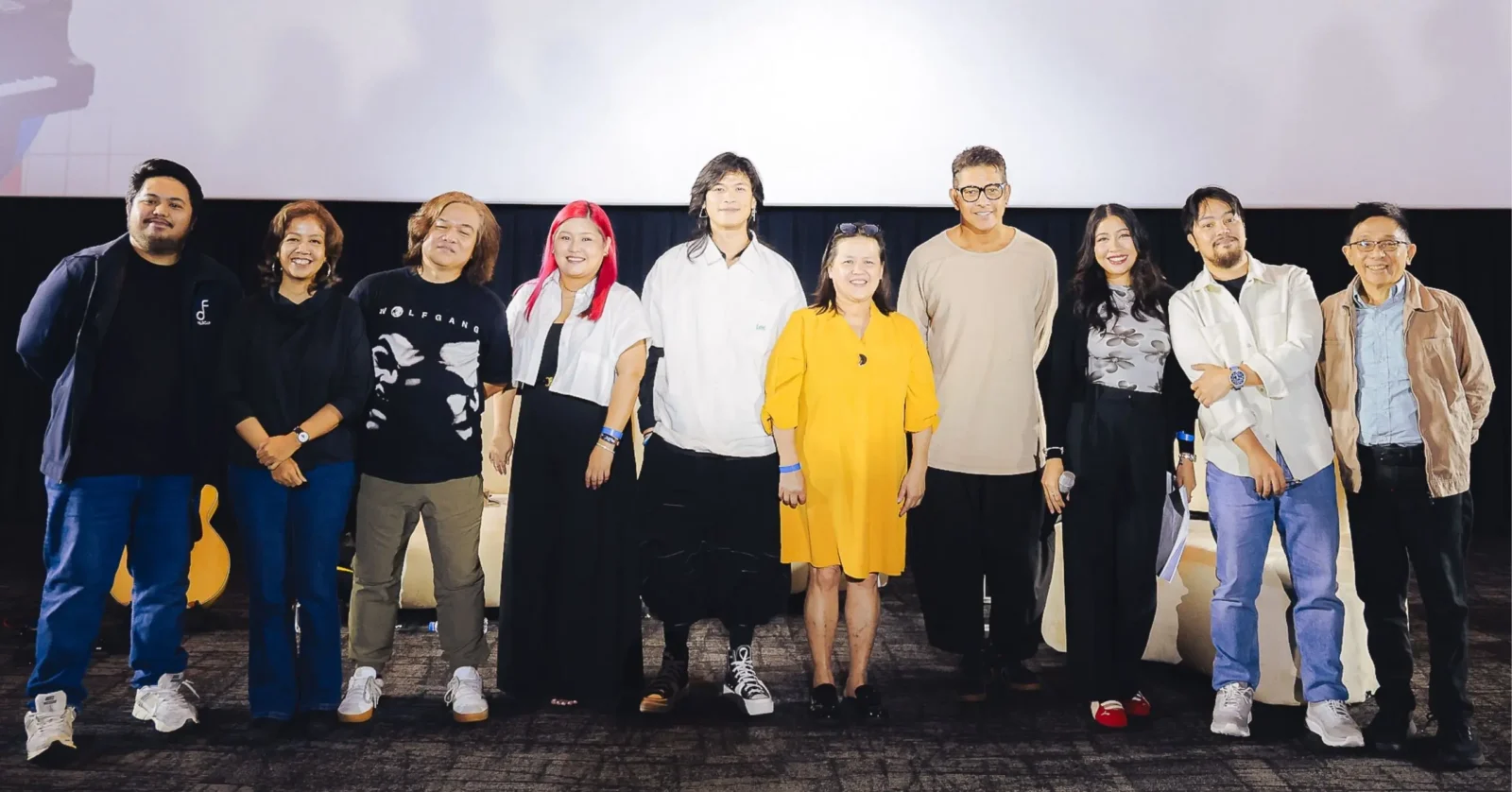
Last weekend marked this year’s Linggo ng Musikang Pilipino: Music Talks Series, featuring a compelling lineup of singer-songwriters and industry leaders. Organized by the Organisasyon ng mga Pilipinong Mang-Aawit (OPM) and Filipino Society of Composers, Authors and Publishers, Inc. (FILSCAP), the event took place at Greenhills Mall Cinema on July 26, 2025, and was hosted by Dione, with all three panels moderated by Trina Belamide. Discussions focused on songwriting, music production, and distribution – offering practical and creative insight into the state of Filipino music today.
Despite the rain, the theater filled with attendees eager to absorb knowledge from experts in the field. The sessions attracted both aspiring and established musicians, creating a space for reflection and growth in today’s rapidly evolving music environment.
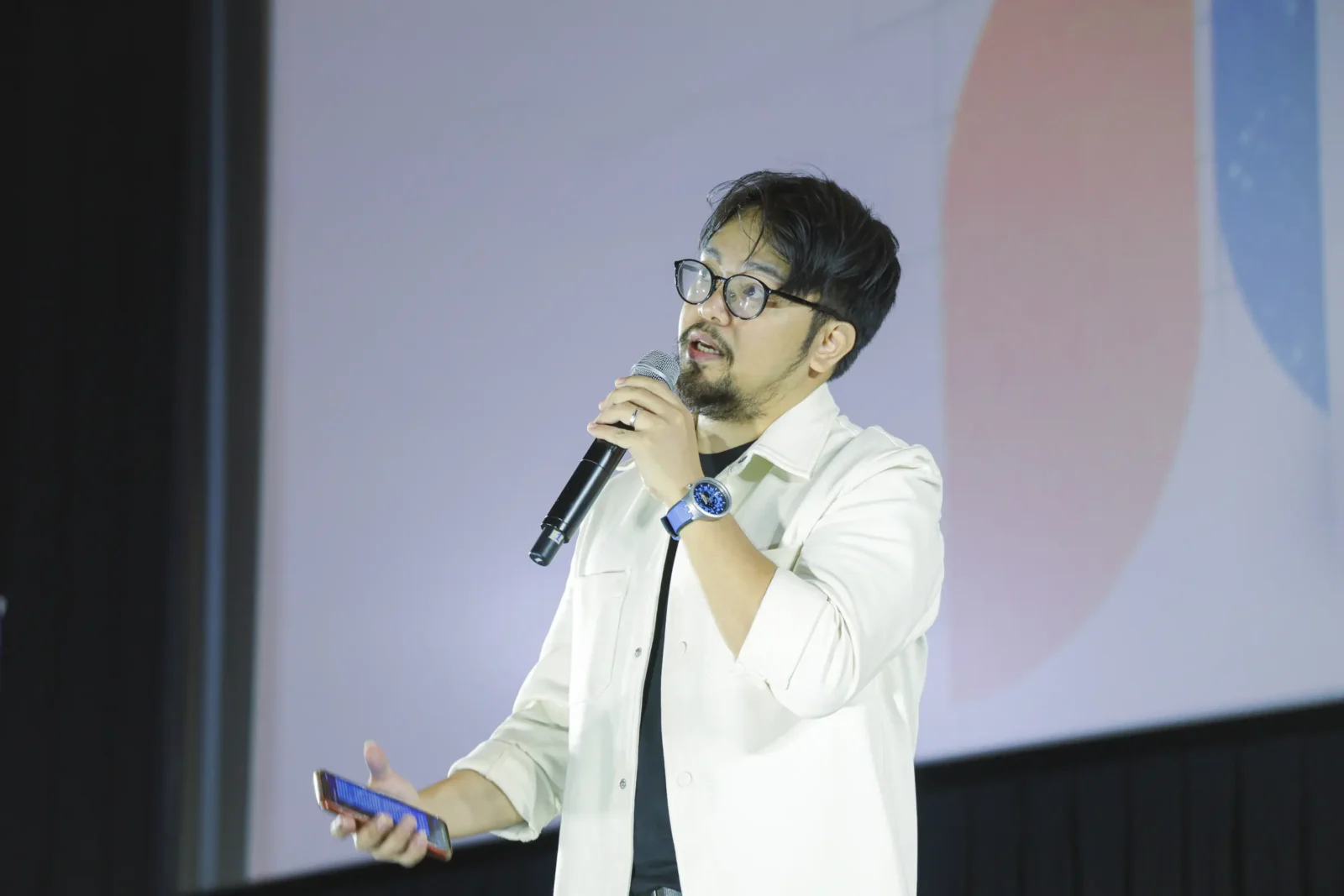
The learning sessions began with OPM executive director Gab Cabangon, who energized the crowd with a strong message about the potential of Filipino music – emphasizing that Filipino talent not only has what it takes to succeed globally, but truly deserves to be recognized on that stage.
Courtesy of OPM, photographed by Sara Abrigo
On Songwriting
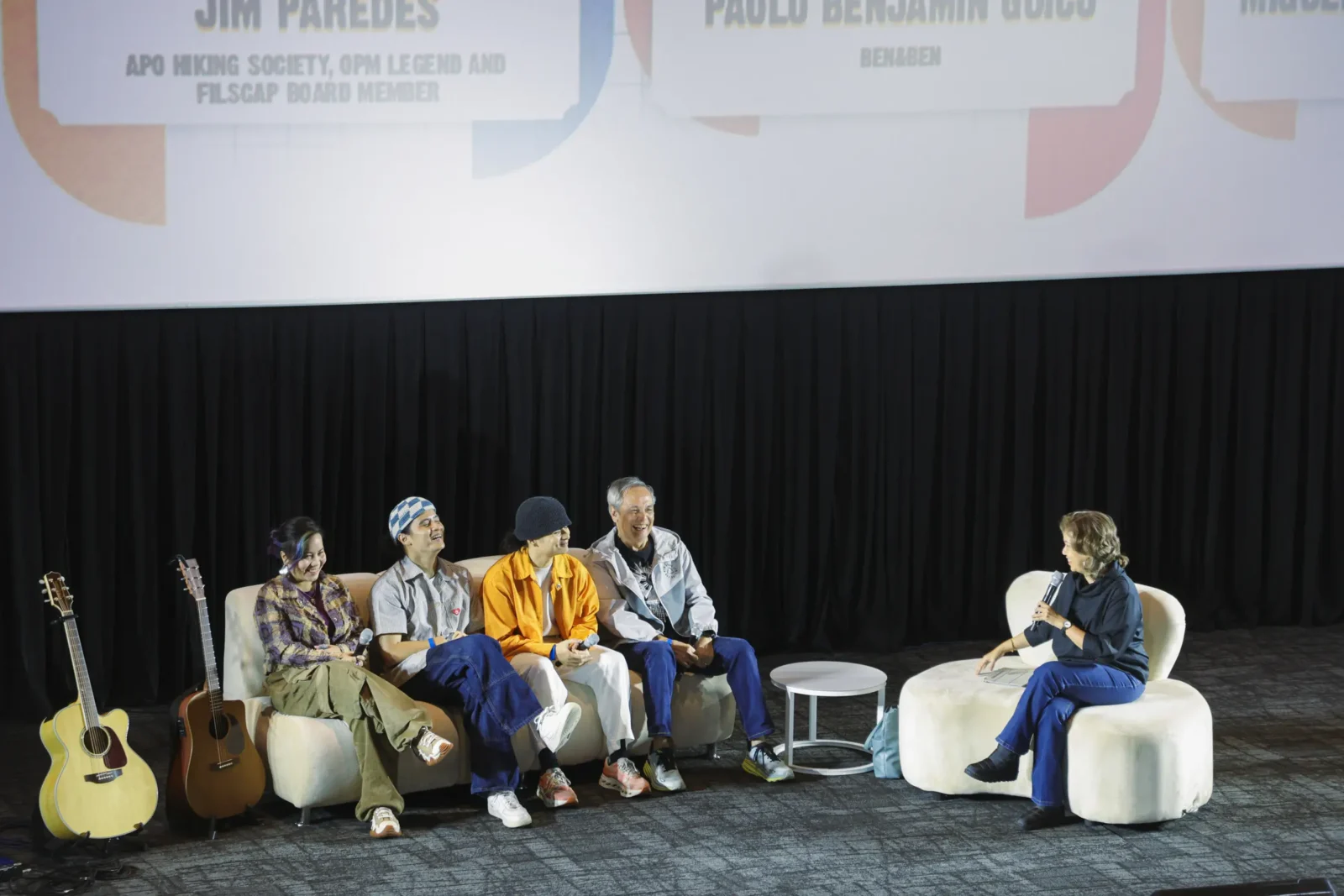
“One of the rules of life is to show up – if you don’t show up in front of your piano or guitar, nothing will happen,” said Jim Paredes, when speaking on his songwriting process. With a panel composed of Miguel and Paolo Benjamin of Ben&Ben, PhilPop Himig Handog Festival Champion Tiara Shaye, and Jim Paredes of Apo Hiking Society, the Linggo Ng Musikang Pilipino 2025 Music Talks opened with a discussion centered on songwriting and music ideation.
For these artists, songwriting is of second nature to them – an instinct that emerges almost by random, even from the smallest spark of inspiration. For Miguel and Paolo of Ben&Ben, these sparks of inspiration were described like a “radio in the head,” like a random melody or rhythmic pattern playing in their heads. From there, they would let these sparks bloom, creating without worrying about the end product but instead, the pair follow a simple saying; “Create like an artist but edit like a scientist.”
Tiara Shaye, on the other hand, having won the PhilPop Himig Handog Songwriting Festival earlier this year with her prize-winning anthem, “Wag Paglaruan,” spoke about the unique stakes that come with songwriting for competitions. With a prize at stake, it’s no longer just putting one’s pride on the line, but rather, letting one’s work and self be examined under unknown criteria in order to be pit against other artists – all in order to win a singular prize.
Overall, throughout this panel discussion, it was shared that songwriting isn’t just a practice of weaving chords and lyrics together – rather, it involves baring oneself to produce a song that one would be able to authentically resonate with as well.
Courtesy of OPM, photographed by Sara Abrigo
On Music Production
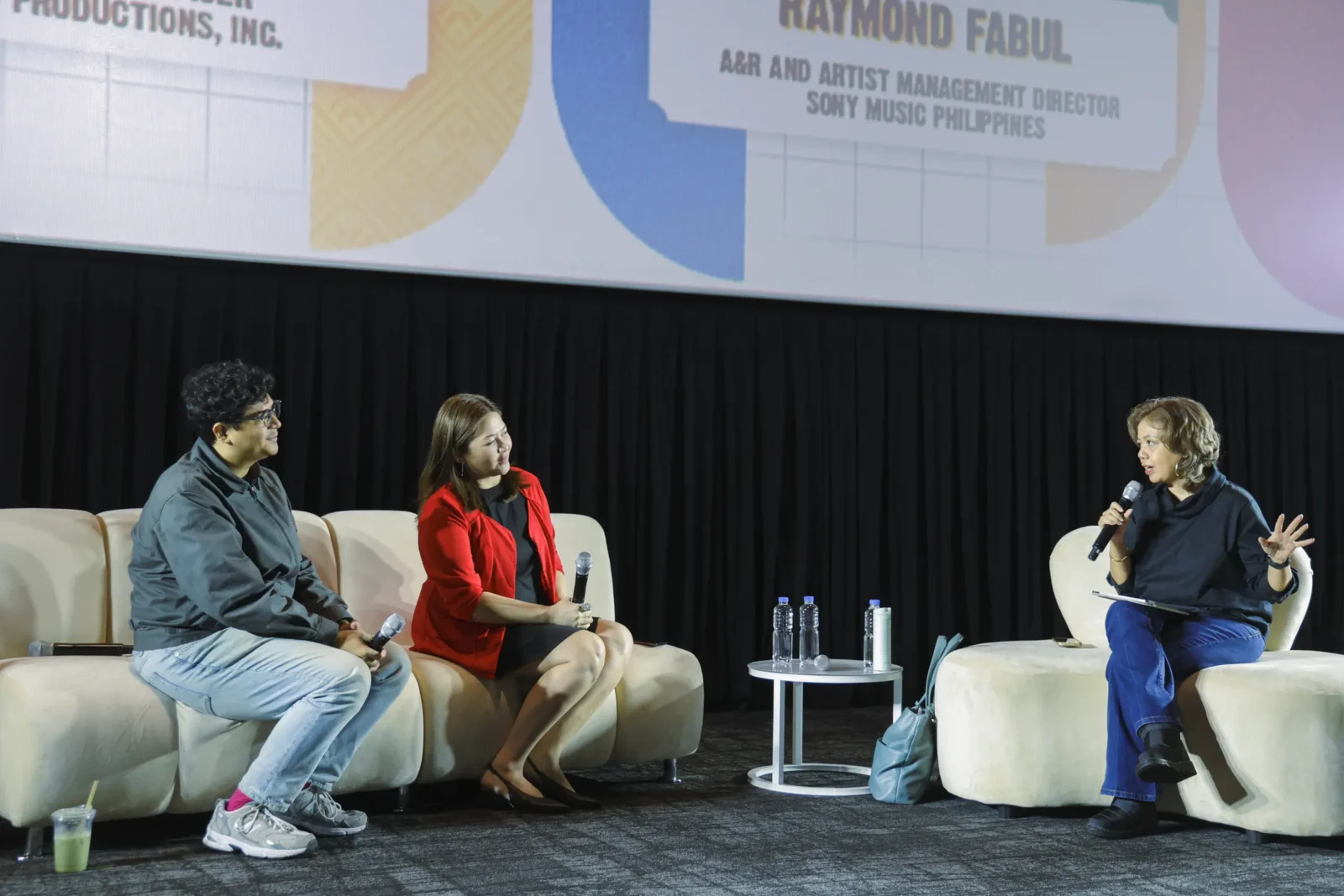
The state of Filipino music today is one that is stronger than ever, and it continues to grow not only in musicians but in music labels supporting these musicians. Looking at the production of music from the label standpoint, Jeli Mateo (CEO of Flip Music) and Raymund Fabul (A&R and Artist Management Director of Sony Music) shared their exclusive behind-the-scenes look into how companies are platforms that support and enrich artist development in the Philippines.
Being that Flip Music is a label largely run by a small population of independent artists (their latest launch being the rookie P-pop girl group VVINK), Jeli reveals that the fast consumption of media in the modern landscape affects even managerial decisions. In the past, labels had a larger hand at crafting their artists’ brand, from their identity to their work. Now, however, it’s important that even prior to presenting yourself to a company, one must already have a basic idea of who they’d want to present themselves as, and where they want to go.
Similarly, while Sony Music definitely boasts of one of the most grand artist and music catalogues in the country, Raymund Fabul emphasizes the importance of the creative hunger within their artist roster. “Beyond our company’s main business, we are working with people – we’re working with artists,” He notes. In that like, he placed gravity in the fact that hard work and dedication truly makes the artist, as even some of their more veteran artists work just as hard as when they started.
Rather than virality and hitmaking, these label heads saw the importance of uplifting OPM as a whole, whether that be through giving their artists the software to do so or through guiding them on each step.
Courtesy of OPM, photographed by Sara Abrigo
On Music Licensing and Distribution
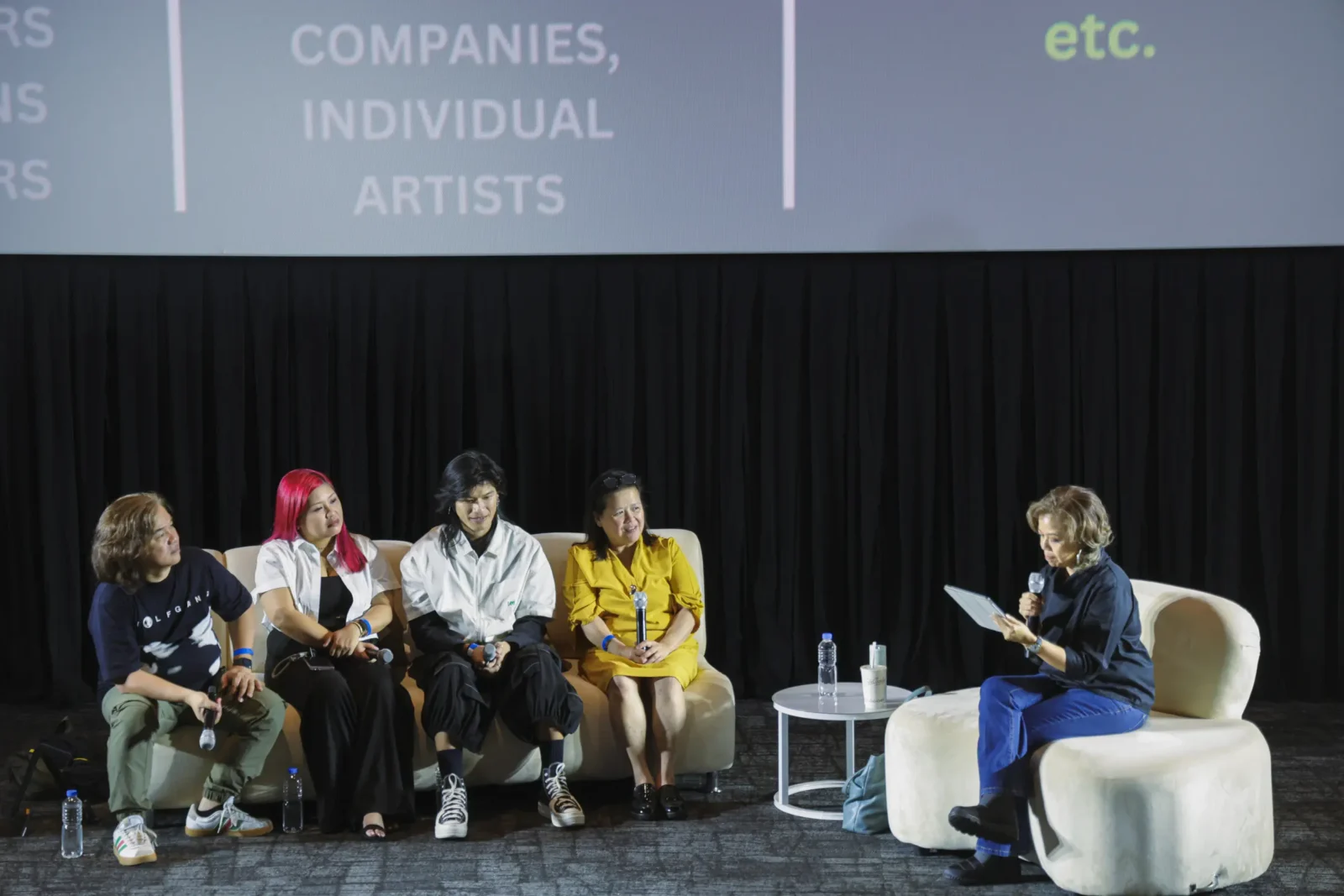
When music licensing and distribution in our local soundscape are the main means of protecting your craft, Mony Romana (Head of Label and Artist Solutions at Believe Philippines), Mich Maskariño (Licensing Manager of FILSCAP), Francis Anthony Buen (Acting GM and Head of Licensing at PRM) and Atty. Marivic Benedicto (Head of Music Publishing at ABS-CBN Film Productions, Inc.) become the righteous guards of intellectual property in our local music scene.
In their panel discussing the importance of licensing and copyright in the modern media landscape, these industry heads press on the importance of intellectual ownership and guarding one’s assets. Mich Maskariño explains copyright to be a bundle of rights that attach at the moment of creation, “Regardless of the quality or purpose of the song, the moment you make the song it’s protected by copyright.” On that note, Marivic explains that when an artist doesn’t have access to apply for ownership over their creation, the easiest means of safeguarding their ideas is to send their work to themselves through email for documentation.
On a similar note, when it came to the discussion of distributing one’s music effectively Mony Romana shares that “We’ve reached an age where distributing your music is the easiest thing to do.” With that in mind, it becomes almost essential that one distributes their music in a space where they can reach their specific niche or market – almost as a means of promotion and distribution in one. Francis Anthony Buen reverberates this thought, saying, “It’s important to understand your niche and the stakeholders.” He later adds, “There are many opportunities to champion your music.”
Courtesy of OPM, photographed by Sara Abrigo
At its heart, Music Talks Series of Linggo Ng Musikang Pilipino 2025 mapped out the current realities of Filipino music in a digital, hyper-connected world. From ideation to ownership, the panels reflected how artists today must be as sharp behind the scenes as they are in front of the mic. As the media landscape continues to shift, these conversations highlighted both the growing accessibility of music creation and the increasing need for artists to navigate their careers with clarity, protection, and purpose.