
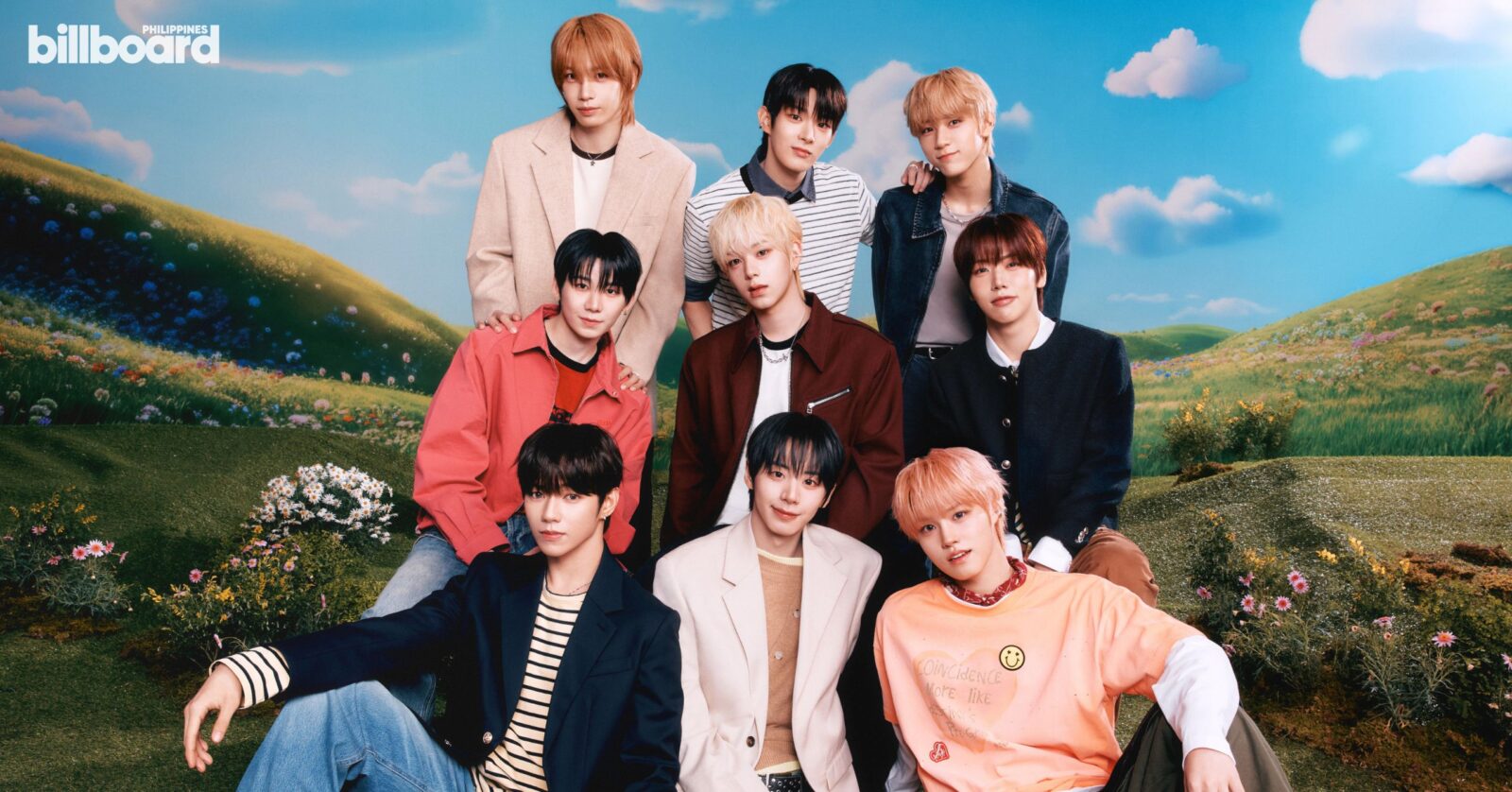
In this Billboard Philippines cover story, AHOF opens up about the sincerity behind their music and their rise from Universe League to the global stage.
Over the years, sincerity has found a way to deeply embed itself within the fabric of the global music industry. We have seen its evolution across an abundance of timeless folk tracks, anthemic pop hits, and confessional love songs, all of which exemplify its quiet yet enduring power to resonate with listeners. Although in a genre as polished and performance-driven as K-popK-PopA genre of South Korean popular music known for polished production, intricate choreography, and elaborate visuals, built around trainee systems and global fandoms. K-pop has a huge following in theGo to K-Pop Glossary — where precision, spectacle, and concept often take center stage — that kind of emotional transparency isn’t always the headline. And that’s where AHOF, the fast-rising K-pop group, comes into the picture, making it feel less like a rarity and more like a resurgence.
For in a landscape saturated with perfection, members Steven, Seo Jeong Woo, Cha Woong Ki, Zhang Shuaibo, Park Han, JL Gaspar, Park Ju Won, Chien Chih En, and Daisuke have carved out something far more elusive, which is authenticity that doesn’t just complement the music but equally defines it. Assembled under the high-stakes spotlight of the competition series Universe League, AHOF emerged as a group shaped by a shared ambition, visible growth, and an unfiltered hunger to be heard by as many people as possible.
That origin story, part survival and part self-discovery, drew the attention of millions from the get-go and has carried through every step of their journey thus far. And now, following the release of two massive EPs, multiple award wins, and numerous sold-out shows, the group has assimilated and begun to find their space within the ever-expanding K-pop scene –– utilizing the trait of sincerity as their signature mantra (and guiding force) as they continue their ascent on the global stage.
“I believe ‘sincerity’ is an indispensable, core keyword for AHOF’s music,” AHOF’s homegrown Filipino member JL tells Billboard Philippines. “To date, our music has always been a vessel for our own stories, and even on stage, we’ve consistently strived to show our authentic selves rather than a curated image,” adds the group’s leader, Steven. “And I think that genuine heart from all nine members is what really resonated with so many K-popK-PopA genre of South Korean popular music known for polished production, intricate choreography, and elaborate visuals, built around trainee systems and global fandoms. K-pop has a huge following in theGo to K-Pop Glossary fans.
With approximately two million followers across a variety of social media platforms (less than one year into their official debut, mind you), that level of resonance is arguably no joke. Online, it’s easy to find their fanbase of FOHA sharing praise towards the group’s motivational effect on them. But that same level of positive reinforcement also applies to the dynamic of AHOF’s members as well, given how they’ve found inspiration in one another.
“From our debut until now, the unchanging principle we’ve held is to tell our honest stories through our music and performances, and it’s helped us even get closer,” mentions Woong Ki. Recalling their first moments in the studio, he shares how their shared nerves and openness with one another fueled their passion for the craft. “When I first heard our debut track, I could naturally envision myself on stage with the members. It was overwhelming, yet it sparked a real ambition in me and the group to do even better. I think that was the moment it truly hit me that the nine of us were in this together,” he continues.
Since that moment, their chemistry translated itself into their debut mini-album, WHO WE ARE, which broke records as the best-selling debut release by a K-popK-PopA genre of South Korean popular music known for polished production, intricate choreography, and elaborate visuals, built around trainee systems and global fandoms. K-pop has a huge following in theGo to K-Pop Glossary boy group last year. Though beyond its chart-topping achievements, it has acted as the mirror that captures their growth as a unit, one that Shuaibo notes is reflective of their experiences. “We have a song called ‘Cosmic Underdog’ that captures our journey during Universe League,” he fondly states. “I believe the nine of us from back then have come together under the name ‘AHOF’ and have never stopped growing, and we are now moving toward becoming the ‘Greatest Group in the Universe.’”

AHOF: Photographed by Jeon Min Woo. Billboard Philippines. April 2026.
That growth is evident on their second mini-album, The Passage, which marked quite a significant departure from the dreamy pop-rock sonic elements of its predecessor. “If WHO WE ARE was an album that introduced who AHOF is, I see The Passage as the process of solidifying our distinct identity, which is why I spent a lot of time reflecting on the message we wanted to convey and the specific image we should present,” Daisuke shares.
“We also experimented with significant visual changes. For our previous album, we focused on music and an overall concept centered around a ‘refreshing yet nostalgic boyish’ image. However, in The Passage, we aimed to express the raw, rugged edges of youth,” adds Ju Won. “It took a great deal of reflection and effort to fully internalize and deliver such a profound message as our own. This process was our most significant challenge so far.”
Such changes hadn’t merely applied to their image, for it also bled its way into their work ethic and involvement with the creative process. “Since The Passage is our second musical offering, I really wanted to focus heavily on leveling up my technical skills. Through constant practice, seeing myself master each part piece by piece gave me a real sense of progress,” states Jeong Woo. “I feel this transformation aligns perfectly with ‘growing pains,’ which is the core keyword of The Passage.”
“Throughout the journey of these two albums, our attitude toward music has become much more proactive. As the members began participating directly in the creative process, we started feeding off each other’s positive energy, which naturally fueled our creative ambitions,” group leader Steven shares regarding how the group’s dynamic had evolved working on the record. “It was fascinating to watch sounds and lyrics that only existed in our heads transform into actual music. Experiencing how the joy of the work leads to even greater effort makes me feel like I’m truly leveling up as an artist.”
Still, with that many people in one studio, one would expect ideas to clash or even that some heads would butt. Yet that wasn’t the case for AHOF’s experience in bringing The Passage to life. As Jung Woo describes it, it was a surprising instance wherein everyone came together in unison to deliver the best output possible. “Rather than having conflicts over specific differences of opinion, I think we spent more time discussing how we could best tell the story of AHOF. Within the overarching narrative that flows from WHO WE ARE to The Passage, what we prioritized most was ultimately the solidarity of the nine members. I believe the time we spent deliberating and practicing together was the greatest force in shaping the direction AHOF is headed,” Jeong Woo added further.
For Ju Won, he explains how their creative flow is amplified by the strength of their group dynamics. “We understand better than anyone that our synergy is far more powerful when the nine of us are together. Even with an incredibly busy schedule, we make effort to put each other first, and by leaning on one another during difficult moments, our teamwork only grows stronger. This unwavering trust is the greatest driving force that leads us to give our best every single moment.”
That deepening sense of authorship has not only sharpened AHOF’s artistic identity, but it has also positioned them within a much broader conversation about what it means to “break out” in today’s global music landscape. In an industry that often equates virality with velocity, AHOF’s steady rise feels almost counterintuitive. Their momentum hasn’t been built on fleeting trends or algorithmic spikes, but on something far more enduring –– which is emotional continuity.
“All of the members have a strong ambition when it comes to the creative process. Beyond simply performing the songs given to us, we are constantly attempting to reflect our own thoughts and colors into the music,” Steven explains. “As that process builds up, I feel that AHOF’s musical direction is becoming even more distinct.”
Some would even say that such a distinction is precisely what has allowed them to transcend the typical trajectory of rookie K-popK-PopA genre of South Korean popular music known for polished production, intricate choreography, and elaborate visuals, built around trainee systems and global fandoms. K-pop has a huge following in theGo to K-Pop Glossary acts. While many groups spend their early years searching for a defining concept, AHOF seem to have arrived with one already in motion, evolving further the more involved that they get, even going beyond the usual aesthetics, focusing on their intent.
It’s a rare clarity that has enabled them to resonate far beyond their immediate fanbase, gradually expanding their reach across borders, cultures, and languages. Though perhaps that global pull is no accident. With members hailing from different parts of the world, AHOF’s very composition reflects the interconnected nature of modern pop. But rather than flattening those differences into a uniform identity, they’ve embraced them as a strength.
“AHOF is a group made up of members from diverse nationalities,” Daisuke notes. “I hope AHOF can serve as a bridge that transcends cultures and languages to connect people through music. We want to continue creating moments where we can understand and empathize with one another through our unique stories and sound.”
It’s an ambition that feels increasingly aligned with the direction of the global music industry itself — one that values not just accessibility, but also a genuine sense of relatability. And for AHOF, relatability doesn’t come from broad, generalized themes. It comes from specificity — from lived experiences, from vulnerability, and from a willingness to sit with emotions rather than gloss over them.

AHOF: Photographed by Jeon Min Woo. Billboard Philippines. April 2026.
“Personally, I feel that as the members grow, the messages we convey are becoming more deeply relatable,” Ju Won reflects. “In the past, we focused simply on infusing and expressing our own stories; lately, we’ve been reflecting more on how our stories can truly reach those who listen. I want AHOF’s future music to be filled with genuine comfort, empathy, and joy, rather than just artificial glamour.”
“With every album we prepare, the members’ involvement is noticeably increasing,” Han also shares. “I believe the biggest change resulting from this is the depth of our authenticity. Because we are infusing the music with the messages we want to convey and the emotions we’ve personally experienced, our immersion on stage also feels increasingly profound.”
That shift — moving from expression to connection — easily marks a pivotal step in their evolution. It signals a group that is no longer just documenting their journey, but actively considering the emotional impact of their work on others. And in the process, they’ve begun to carve out a space that feels both intimate and expansive at once.
For Jeong Woo, that impact is ultimately what defines success. “Our greatest goal is for many people to find healing and joy through AHOF’s music. I would ask for nothing more if our music could provide a small sense of comfort in someone’s daily life and offer them a boost of positive energy. Woong-ki even echoes this sentiment with quiet conviction: “Moving forward, we want to be a group that communicates through music that many people can relate to and find comfort in.”
Even as their ambitions grow, there’s a notable absence of ego in the way that AHOF speak about their future. Instead, their goals are framed around longevity, impact, and collective memory. “I want to hear people say that AHOF’s music is still great, even as time passes,” Shuaibo shares. “It would make me so happy if people revisited our music whenever and wherever they are, and if we were remembered as a cohesive team.”
Should there be one thread that ties all these aspirations together, it’s that of consistently, not in sound, but in spirit. “Since the music we’ve released so far is based on our actual experiences and emotions, I don’t think that direction will ever change,” JL affirms. “However, I believe the ways in which the nine of us express that sincerity will become much more diverse.”
It’s that promise of evolution without compromise that ultimately sets AHOF apart. In a genre often defined by reinvention, they’ve found a way to grow without losing sight of their signature core, allowing sincerity to act not as a limitation, but as an ever-expanding foundation.
Yet some would even say that “assimilation” might be too passive a word for what they’ve achieved thus far. Rather than blending in, AHOF have redefined the very image of what a breakout act can look and sound like, balancing the genre’s signature intensity as a superpower with a disarming emotional core — even proving that slowing down might be the boldest move of all.
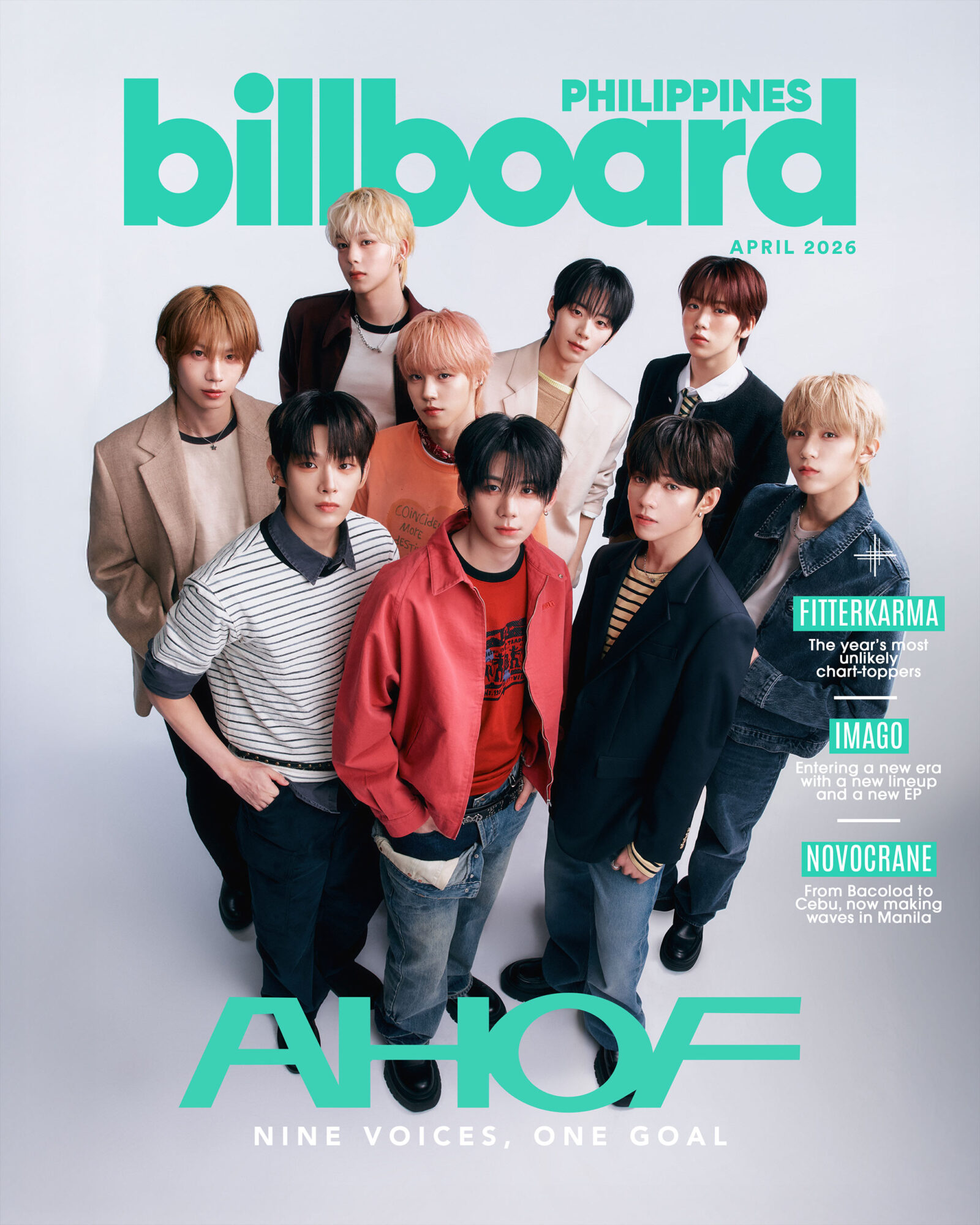
AHOF: Photographed by Jeon Min Woo. Billboard Philippines. April 2026.
Photographed by Jeon Min Woo. Hair & Make-Up by Moo Jin. Styling by Moon Seung Hee and Edlene Cabral. Production Lead: Monica Chang. Creative Lead: JayAr Villarojas. Executive Producer: Joyce A. Ramirez. Agency: PUBLICITYASIA. Management: F&F Entertainment. Special thanks to IAM Worldwide.
Written by Gabriel Saulog. Billboard Philippines. April 2026.
Frequently Asked Questions
AHOF’s debut mini-album, WHO WE ARE, broke records as the best-selling debut release by a K-pop boy group in its release year. The album introduced the group’s identity through dreamy pop-rock sonic elements.
AHOF’s second mini-album, The Passage, marked a departure from their debut sound, exploring “growing pains” as its core theme. Members described it as a deeper process of solidifying the group’s distinct identity and raw, youthful edge.
AHOF has amassed approximately two million followers across social media platforms in less than one year since their official debut. Their fanbase, known as FOHA, is known for sharing the group’s motivational impact online.
AHOF was formed through the competition series Universe League, which brought together members Steven, Seo Jeong Woo, Cha Woong Ki, Zhang Shuaibo, Park Han, JL Gaspar, Park Ju Won, Chien Chih En, and Daisuke.
Sincerity is AHOF’s core creative principle, with members emphasizing authentic storytelling over curated image. The group aims to bridge cultures through their diverse nationalities and connect listeners through emotionally relatable music.