Filipino Pride Amplified: The Queer Voices Of The New Generation
In the modern OPM landscape, which is as diverse and varied in terms of sound, direction, and musicality, today’s Filipino queer artists continue to bring their different flavors, expressions, identities, and perspectives to the center stage.
The term “Filipino Pride” has evolved into more than just an expression of nationalism and culture; it celebrates Filipino values, history, and the experience of being proudly Filipino across the globe. In a similar fashion, Pride has, for nearly six decades, been a powerful and empowering global movement that celebrates the LGBTQIA+ community — a deafening call for equal rights, visibility, and inclusion.
Through the modern lens of Filipino musicians, the local music landscape has broken barriers of sound, style, and representation. Today’s queer Filipinos artists are not only part of the empowering queer movement but also key figures in the OPMOPMShort for Original Pilipino Music, the body of songs created by Filipino artists, spanning genres from ballads and rock to hip-hop and pop. OPM expresses Filipino identity and heritage, andGo to OPM Glossary movement today — from chart-topping mainstays and beloved musical acts to viral and cultural impact-makers.
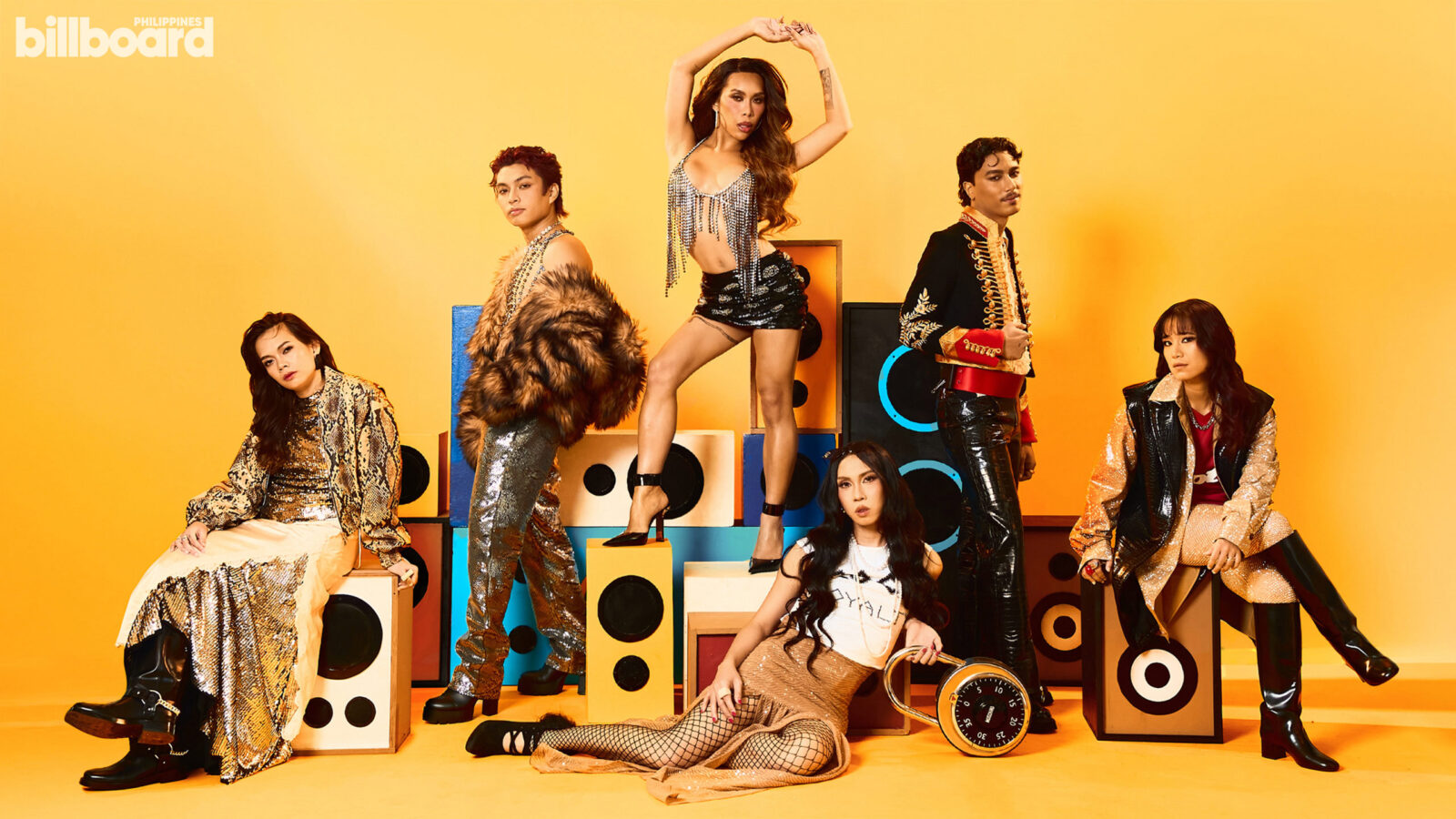
More than simply showcasing the fluidity and intricacy of the modern local music scene on the global stage, queer musicians Gian Bernardino of Cup of Joe, Pat Lasaten and Agnes Reoma of Ben&Ben, Jason Dhakal, Marina Summers, and Sassa Gurl share distinct yet similar journeys of embracing their identities, being seen and heard, and expressing their musicality and artistry that amplify what it means to celebrate Filipino Pride.
All Aboard The Freedom To Express
For Gian Bernardino, expressing his identity through his style is deeply rooted in authenticity, expressing himself more masculine at times, sometimes more androgynous. The vocalist for Cup of Joe, certified chart-toppers and Billboard Philippines‘ No. 1 Artist of 2025, sees his platform as important in contributing to more open conversations around identity, love, and self-expression.
“I think it’s because the very reason that our music and our art [are] being recognized or loved by many people is [that] we present ourselves as authentic as possible, as transparent as possible. And I think that’s the main reason why a lot of our audiences resonate with our art.”
“As someone who’s part of the LGBTQIA+ community, I believe it’s very important to be visible, especially [since] I’m representing someone I wasn’t able to see or witness when I was a child.”
— Gian Bernardino
Apart from his identity as a Filipino-Nepalese R&B singer, Jason Dhakal cites his queer identity as shaping his creative pursuits. “How I write music is just how I write about my life. My queerness is a part of my life, and my cute boyfriend and like, you know, all my friends. And it definitely shows in the music that I make because my life is inherently queer,” he says.
Reimagining OPMOPMShort for Original Pilipino Music, the body of songs created by Filipino artists, spanning genres from ballads and rock to hip-hop and pop. OPM expresses Filipino identity and heritage, andGo to OPM Glossary classics such as “Para Sa Akin” and “Awitin Mo, Isasayaw Ko” is one thing, but making it your own is another. For Dhakal, giving these classics a fresh new take through his personal lens as a queer artist growing up in Oman has never been just about reinvention, but also about connecting to his childhood love for these songs. “I wanted to do my own version of it in a way that feels honest to me.
As a drag queen, Marina Summers transcends expression through various avenues. Making history left and right, she has competed as a finalist on the second series of RuPaul’s Drag Race: UK vs the World — an experience where she felt the weight on her shoulders representing the Philippines and being the first Filipina to join an international franchise of the iconic reality competition television series. “It really did feel like it was bigger than me,” she explains.
Growing up queer in the Philippines, Summers’ upbringing has always shaped her. Experiences with bullying have always been present, but so have moments of leadership in school dance contests and inter-school competitions, as well as involvement in the performing arts. At an early age, she was given the chance to express herself through different media, and now she is sailing her own course as the captain of her own ship. In April 2026, Summers became the first trans woman to host the Miss Universe Philippines coronation ceremony.
“I feel like creating music was another way for me to do what I usually do in drag, lip-syncing in drag, sending out a message. But this time, with my own words, my own tune, it’s a different medium.”
— Marina Summers
Portraits of the Queer Artists As Filipinos
More than just celebrating music, the responsibility of queer artists in representation and inclusion is about embracing one’s art, which helps you navigate who you are becoming and fully realize your identity, as music can guide you in processing your emotions.
It’s the connection with people through music that brings the platform to life in the best way possible. “And for me, that is using your microphone as a vessel [for] raising the voices of those who aren’t being heard. I believe even if you go mainstream, that should not stop you from being transparent and unapologetic with who you are,” Bernardino shares.
In the 2010s, Ben&Ben entered the industry with their unique blend of indie folk and pop sounds that have captured the hearts and ears of many listeners across the country. For the band’s keyboardist Pat Lasaten and bassist Agnes Reoma, they have been given the space to not only showcase their talent as musicians, but also their identities as a couple.
For Reoma, citing the term “baby gay” — someone who is newly out of the closet or at the very start of their journey — there was an initial fear in telling the rest of the band. The band and the people around them slowly accepted them, little by little.
Meanwhile, claiming her space in the male-dominated Filipino hip-hopHip-HopA cultural movement and music genre that began in the Bronx in the 1970s, built on rapping, DJing, beatmaking, and sampling. Hip-hop has a strong Filipino scene, with artists writingGo to Hip-Hop Glossary scene, comedian, vlogger, and “National Bestie” Sassa Gurl has carved out her artistry as an empowered queer rapper. But for Sassa, her intention is not truly to create a space, but to create art that hasn’t been done by Filipino artists. Starting with the question of what if there’s a Filipino hip-hop male-sounding trans rapper.
Clearly, there is a burning excitement to see herself in the scene. “To me, parang the excitement [of] creating it is hindi ko alam kung anong mangyayari. Hindi ko alam kung ano ang magiging results. (It’s like the excitement of creating it is not knowing what will happen. I don’t know what the results will be.)
With her 2023 hit single “Maria Hiwaga,” Sassa has offered something for the LGBTQIA+ community through her perspective and experiences. “Nung nilabas ko na ‘yung kanta, I think marami naka-relate kasi naniniwala ako na ang dami rin pala ng mga bakla na umaaamats ng hip-hop music. At hindi lang talaga sila well-represented to the scene kasi nga, it’s a very heteronormative space,” Sassa shares.
(But when I released the song, I think a lot of people related to it because I believe there are also many gay people who are into hip-hopHip-HopA cultural movement and music genre that began in the Bronx in the 1970s, built on rapping, DJing, beatmaking, and sampling. Hip-hop has a strong Filipino scene, with artists writingGo to Hip-Hop Glossary music. They just aren’t well-represented in the scene because it’s a very heteronormative space.)
Creating hip-hopHip-HopA cultural movement and music genre that began in the Bronx in the 1970s, built on rapping, DJing, beatmaking, and sampling. Hip-hop has a strong Filipino scene, with artists writingGo to Hip-Hop Glossary music isn’t an entirely serious occasion for Sassa. As she has lightened up and made millions of Filipinos laugh, she herself has also entertained herself with her own art. “Marami akong mga statements on comedy na katotohanan, especially ‘yung politics ko. Also, ‘yung lived experience ko bilang isang bakla. ‘Yung lived experience ko sa high school na, alam mo ‘yun, pwede mong sabihin, dulot ‘yun ng mga struggles ko,” she says.
(A lot of my comedy statements are rooted in truth, especially my politics. Also, my lived experience as a gay person. My lived experience in high school that can be said was the cause of the struggles I went through.)
Now, with full creative independence on his shoulders, Dhakal, on the other hand, says there isn’t really any change, but rather a return to how he first started making music. Gone is the constant push-and-pull of thinking about making music that is commercial enough or being dictated by straight men on how he creates his art.
“Regardless of everything, I started making music because I enjoyed it. And it’s rewarded me because of that. So I just want to keep doing that format of just releasing what I enjoy. And if it works, it works. If it doesn’t, who cares? You know, I still love music.”
— Jason Dhakal
“I didn’t really get an easy time growing up queer. So, like, for the later years, for it to be so easy and smooth and nice and light, it’s like super nice. It means a lot. You know, I got to truly be myself. I got to have a two-bedroom apartment. I got to have my cat. I got to make music. You know, these things mean so much to me and have been given to me through your listening and through music,” Dhakal adds.
“I love both my queerness and being Filipino. But when they’re both together, do we have rights? Do we have these things that give us pride?” Dhakal asks. It’s the little things that truly move the needle and make members of the LGBTQIA+ community be seen as human beings.
The Path Toward Safer, More Harmonious Spaces
Towards a path toward brighter, safer, and more inclusive spaces in the local music scene and the entertainment industry at large, fostering environments where diversity is celebrated, and representation has always been a strong sentiment among many queer artists.
“I think every artist should learn to clap for others until it’s their turn […] I think inclusivity is what’s really important right now because some might be scared to enter the industry just because we continue to glorify the boxes that were made way before. And I believe it’s our duty to break those stereotypes,” Bernardino shares.
With queer and trans identities becoming more visible and celebrated in mainstream Filipino culture, including music, being given the same opportunities is a step forward toward greater recognition for talented queer performers and artists, pushing them further into the spotlight, according to Summers. The sheer magnitude of the little things does make a difference.
“I know it looks like it’s just another glamorous day, but I really wanted to send a message as a drag artist, musician, [who] can perform on one of the biggest stages of the country,” Summers shares.
But the power of community has never stayed silent. “Kasi hindi mo madi-discover kung sino ka ba talaga (Because you won’t be able to discover who you truly are) if you’re not surrounded by the right people,” Lasaten says. “The right people who love and accept you for who you are.”
The band’s beloved fandom, Liwanag, has always made things easier and safer for them, as they never really confirmed their relationship during the band’s early years.
“Okay lang pala for us to show who we are and, you know, not really hide or be apologetic about how we are.”
— Pat Lasaten
“I think at some point, you just stop pretending, or you just stop performing an elevated version of yourself, an elevated version of you that’s not really who you are,” Lasaten adds.
“I was closeted for years, and I didn’t know how to express, or I don’t know where to begin kung saan ‘yung journey kasi wala akong makitang (I couldn’t find a) model […] [Now], it’s just normal. Which is the goal, na parang maging normal naman talaga siya kasi (for it to be considered normal because), guys, this is normal. We’re normal,” Reoma explains.
The Sound of a Colorful Future
On leaving legacies behind not just as musicians but also as queer creatives, Lasaten emphasizes continuing to make art with friends, saying, “There’s so much beauty in collaboration and in keeping an open mind. As a queer person in this industry, just be yourself.” She also wants to be remembered as someone fearless.
Reoma hopes to see more women bravely bring their voices to the male-dominated music industry. “Sana mas marami pang (I hope there are more) queer and girls na nasa industry na ‘to (in this industry).”
Echoing the sentiment of being fearless, Bernardino shares that for those navigating their own identities, there is a constant struggle not to let fear take over. But in and of itself, there’s a whole community out there that opens its arms widely for your art waiting to be unleashed.
“We should not let fear get a hold of us because if you’re scared that your art will not be well-received, you’ll just be surprised that there’s a whole community waiting for that piece of art that you were so scared to do, […] that it’s exactly what this group of people need.”
— Gian Bernardino
On the other hand, Summers has inspired a generation of drag queens and queer Filipinos. It’s never wrong to dream big, “because dreaming big puts everything into perspective,” she says.
“I feel like dreaming big comes with working hard as well. Things don’t happen overnight. You have to constantly show up for yourself, show up for your craft. And eventually, when the time comes, it will be yours.”
— Marina Summers
For Sassa, celebrating Pride is no longer just a protest and a celebration. “It’s claiming. It’s reclaiming what’s ours. Dahil tapos na ang protesta. Hindi pa naman tapos ang protesta. Nakapagprotesta na tayo ng maraming beses. (Because the protest is over. But the protest isn’t over yet. We’ve already protested many times.) Parang feeling ko this time around, once we amplify, is we take the space na kailangan nating i-take (that we need to take). We get the prize that we deserve.”
“Ang queer movement naman at yung queer scene naman, hindi naman [ito] mabubuhay ng isang tao lang. Hindi siya mabubuhay ng isang artist lang. It has to be a village. So, it has to be a community.”
— Sassa Gurl
Using her platform to empower queer Filipino talent in her own right, Sassa has always been a fan of queer art. So many unwritten stories and unheard expressions haven’t been fully showcased in modern, mainstream Philippine media. “Kaya sobrang unfound gem ng maraming queer artists (That’s why so many queer artists are such hidden gems),” she explains.
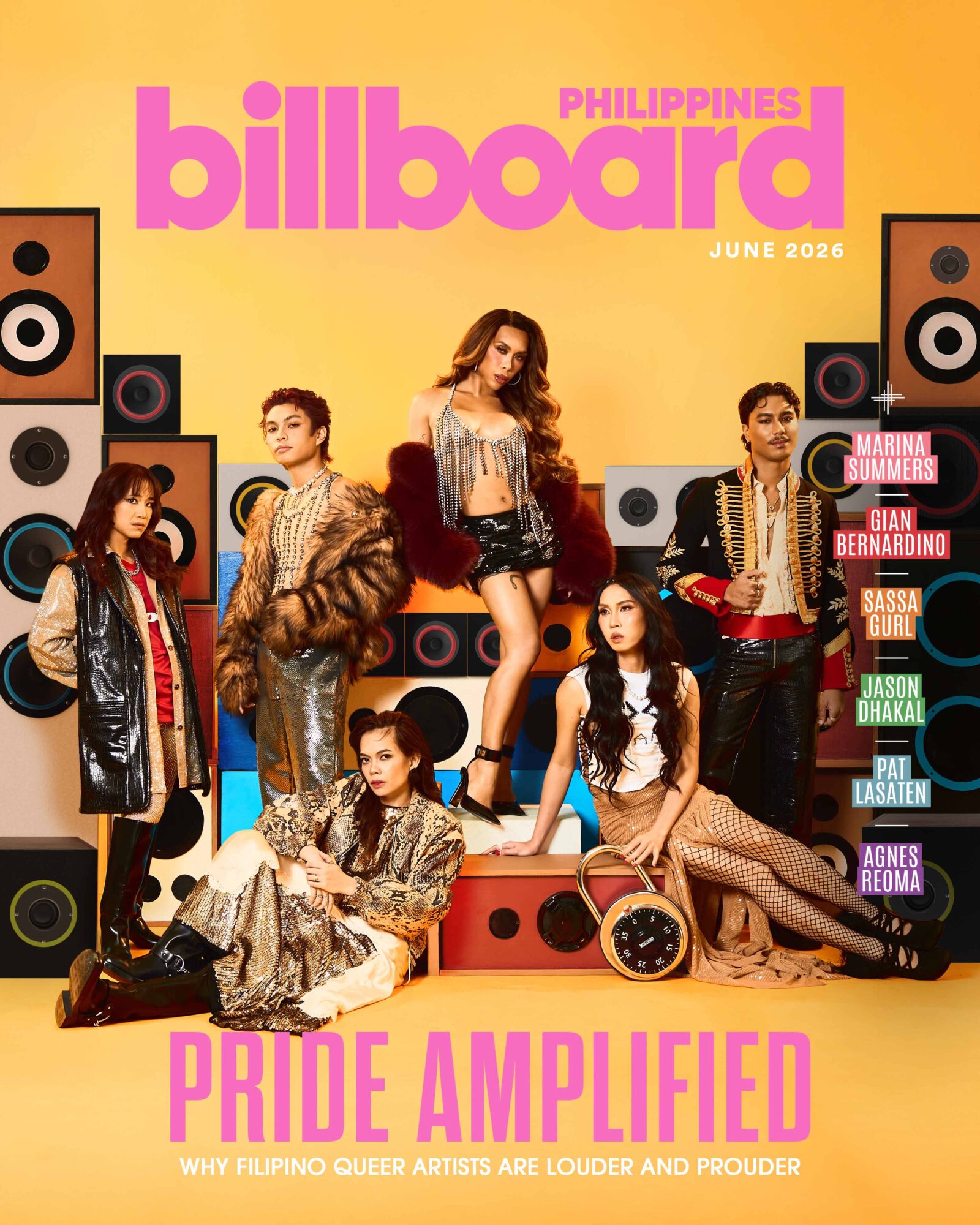
Photographed by Kieran Punay. Art and Fashion Direction by Gelo Quijencio. Styling by Ruru Christian of H&M. Makeup by Team Nix Institute of Beauty Services.
Makeup for Gian Bernardino: Nix Soriano. Hair for Gian Bernardino: Jessey Miranda. Makeup Associate: Ces De Guzman & Jazmeen Zapanta-Rebong. Makeup for Sassa Gurl: Alic Bernal Dumawing. Hair for Sassa Gurl: Ces De Guzman & Angel Columna. Makeup for Marina Summers: Zidjian Paul. Hair for Marina Summers: Lian Napao. Hair and Makeup for Jason Dhakal: Jazmeen Zapanta-Rebong. Makeup for Pat Lasaten: Leilani Bamba-Rizon. Hair: Juhana Bautista & Jeremie Gaurano Refran. Hair and Makeup for Agnes Reoma: Jeremie Gaurano Refran. Hair Assistant: Juhana Bautista.
Production Design by Arj Madarang. Production by Liezel Restauro. Special thanks to H&M Philippines.
Written by Ralph Regis. Billboard Philippines. June 2026.
Frequently Asked Questions
Billboard Philippines’ Pride 2026 feature covers six queer Filipino artists: Gian Bernardino of Cup of Joe, Ben&Ben’s Pat Lasaten and Agnes Reoma, Filipino-Nepalese R&B artist Jason Dhakal, drag queen and musician Marina Summers, and queer rapper and comedian Sassa Gurl.
Marina Summers became the first Filipina to compete on an international franchise of RuPaul’s Drag Race, appearing as a finalist on RuPaul’s Drag Race UK vs. the World. In April 2026, she also became the first trans woman to host the Miss Universe Philippines coronation ceremony.
Sassa Gurl is a queer trans rapper who has carved out a distinct space in the heteronormative Filipino hip-hop scene. Her 2023 single “Maria Hiwaga” connected with LGBTQIA+ fans who identified with hip-hop but felt underrepresented, combining comedy, lived experience, and political commentary in her music.
Pat Lasaten and Agnes Reoma, keyboardist and bassist of Ben&Ben, are a couple who came out gradually within the band and to their fandom. Ben&Ben’s fanbase, Liwanag, created space for them to express their identities authentically without the couple having to make a formal announcement in the band’s early years.
Jason Dhakal describes his queerness as inseparable from his songwriting — his music reflects his life, relationships, and identity as a Filipino-Nepalese queer artist who grew up in Oman. With full creative independence, he has returned to making music on his own terms, free from commercial and heteronormative pressures.