
Morissette On Rising From The Ashes With ‘EMBER’
Ahead of her highly anticipated EMBER concert, Asia’s Phoenix sits down for an exclusive interview with Billboard Philippines to talk about the upcoming show, her career as an independent artist, and what we can expect from the next fifteen years of her enduring career.




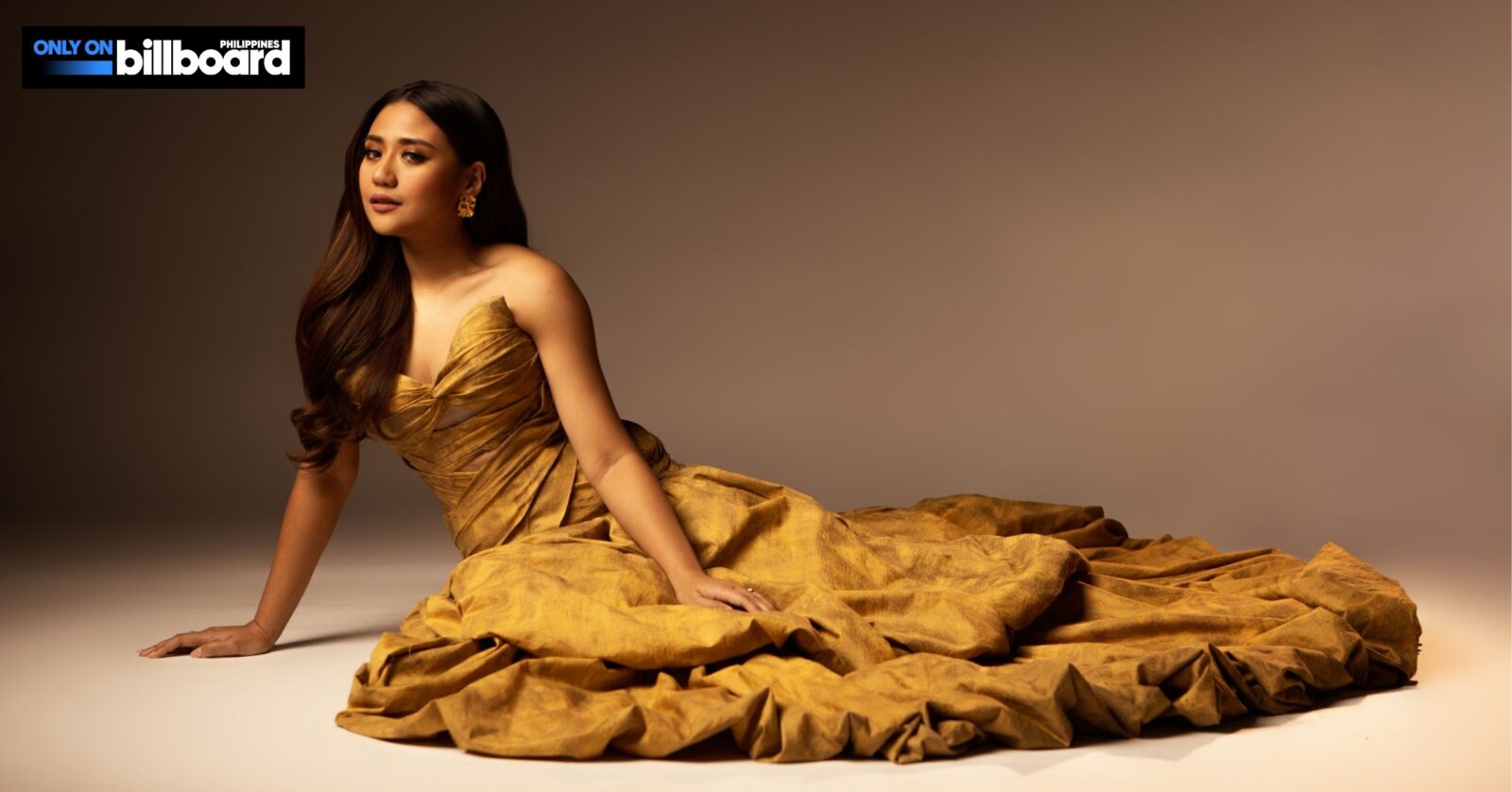
Photographed Excel Panlaque. Creative Direction by Nicole Almero.
Photographed Excel Panlaque. Creative Direction by Nicole Almero.
For fifteen years, Morissette has been changing the Philippine music industry in a myriad of ways.
Rising from her beginnings as a teenage talent competition standout to becoming one of the country’s most recognized vocal powerhouses, the 29-year-old has carved a space for herself within the scene, not just as a singer, but as a powerful force who has shaped the sound and direction of contemporary OPMOPMShort for Original Pilipino Music, the body of songs created by Filipino artists, spanning genres from ballads and rock to hip-hop and pop. OPM expresses Filipino identity and heritage, andGo to OPM Glossary. Having been dubbed early on in her career as “Asia’s Phoenix” for her soaring voice and emotional delivery, Morissette has since grown beyond such a title — proving over time that she is an artist of depth, vision, and resilience.
Her career has been defined by versatility — crossing stages from mainstream television and grand arenas to intimate live sessions and global performances and collaborations. Yet of all these achievements, what has marked this 15-year journey most would be her constant reinvention and courage to take creative control. Though beyond her personal endeavors, she also co-founded the independent label Underdog Music, a bold move which signaled not only her shift from performer to entrepreneur but also her advocacy to champion young and emerging voices, extending her influence beyond her own discographyDiscographyThe complete collection of an artist's recorded works, including albums, singles, EPs, and collaborations, usually arranged in order of release. A discography charts creative growth over time, and critics andGo to Discography Glossary into the future of Filipino music.
Fifteen years on, the landscape of OPMOPMShort for Original Pilipino Music, the body of songs created by Filipino artists, spanning genres from ballads and rock to hip-hop and pop. OPM expresses Filipino identity and heritage, andGo to OPM Glossary has changed dramatically — and so has Morissette. No longer is she just known as a “biritera” (one who excels at powerful, high-pitched vocals) beloved for her whistle notes, for her journey illustrates not just the evolution of one artist, but the transformation of an entire industry alongside her. And if her trajectory so far is any indication, Morissette is only just beginning to define what the next chapter of Philippine music will sound like.
Ahead of her highly anticipated anniversary concertAnniversary ConcertA show celebrating an artist's or group's career milestone, typically featuring greatest hits, special guests, and nostalgic staging. Anniversary concerts allow longtime fans to relive memories and recognize a legacy,Go to Anniversary Concert Glossary, EMBER, Morissette sits down for an exclusive interview with Billboard Philippines to talk about what fans and audiences can expect from the show’s production, her career as an independent artist, and what we can expect from the next fifteen years of her enduring career.

Photographed by Excel Panlaque. Creative Direction by Nicole Almero.
Billboard Philippines: EMBER marks your return to the Araneta Coliseum stage after seven years. How does preparing for this concert differ from your 2018 show, and what does this homecoming mean to you at this point in your career?
Morissette: Honestly, there’s so much going on for it. Siyempre (of course) I’m really excited It means so much to me, and I think I’m channelling a lot of myself in the show. Because not only am I performing, but I’m also co-producing it.
I’ve been working a lot on the visuals and conceptualization of the show, planning it out with my team, and talagang naeexcite ako kung paano namin ipapakita to (it really excites me how we can show this off) because so much love and effort have been put into this. It’s also such an honor that my collaborators are also coming in for this, and are really making the time to join me here.
We’ve been rehearsing a lot. And finding the time to work with everyone’s busy schedules is a challenge in itself, but it’s also very rewarding. We’ve honestly been rehearsing for the longest time, ever since early this year, even in advance of the concert’s official announcement. So we’ve really been preparing for this, and it’s really so much to think about.
It’s also a big undertaking for me because I’m doing the artistic direction for this, but for musical direction, we have Troy [Laureta], who is flying in from Los Angeles, and he’s just so amazingly talented that I feel so honored that he gets to be here with me for the show. We’ll also have my ASAP Family and the TFC family join as well. But really, to be returning to Araneta is different too, because we aren’t just focusing on the cover songs and the music that are popular amongst me and my fans.
Araneta is one of the biggest venues here, and we’ve been really thinking about how to maximize it and to really make use of it as a way of highlighting my music, and not just the covers I’ve popularized, but also with the original songs I’ve released over the past 15 years.
With that being said, how do you plan on balancing all of those tracks together for the concert’s setlist?
There are so many songs that I’ve interpreted over the years, and for that I’m very grateful, of course. But for Ember, I’m really excited to showcase all my other songs in one show, together with all these songs I’ve become known for, and the covers that people have come to know me for.
I really wanted to give my original songs a chance to shine, because there aren’t really a lot of opportunities for me to showcase those parts of my career. Every now and then, I’ll perform it in other concerts one by one, but I’m mostly performing the bigger songs that I’ve become known for. So to really combine and have all of it together in one show such as this, it’s already a success for me.
Also, I wanted the show to be a means of allowing my fans to really celebrate the various points of where they’ve discovered me and my music –– no matter what era it was. So to stage all these sides of myself and my career, I realized that there was no other setting that was more perfect for such an occasion.
As it is, the title EMBER feels symbolic — like a fire that continues to glow and ignite. How does this capture the current season of your artistry?
It’s the perfect term for where I am today. Like, I really think it captures the essence of who I am after all these years, and it’s the perfect title for such a show like this. I remember telling Dave [Lamar] when I first heard the full definition of the word “ember” that it was the perfect title for the concert. There was really no questioning it because of how much I realized it fit into this chapter of my life.
That’s amazing. And it really does tie it all together, considering that your title as Asia’s Phoenix really does correlate with the actual definition of such a word.
When we conceptualized how we were going to do the show, we decided to adapt it in various types of stages, such as the spark, bonfire, and ember stages. It makes so much sense because the spark captures where I was growing up, especially when I was younger and getting into the music industry. Then the fire/bonfire stage focuses on the raging, most busy part of my career, or what you could describe as the peak of it.
While I may not be at the “peak” of where I was in my career right now, being at the “ember” stage of my life, there is still that warmth that can allow me to really find my spark and embark on the next chapter of my life. Because those embers aren’t a sign that things are completely over, but they still have the potential to carry the fire wherever and whenever.
So in executing all those stages with the EMBER concert, I guess you could say it’s really set to take audiences on a journey of where I was and where I am right now through my music. I’m honestly still grateful that people know me for my voice. Whether or not the show gets sold out, I think the mere fact that we’re doing this show of this scale and level, wherein my team and I are putting in so much effort and our vision into it, is already a success in itself for me.
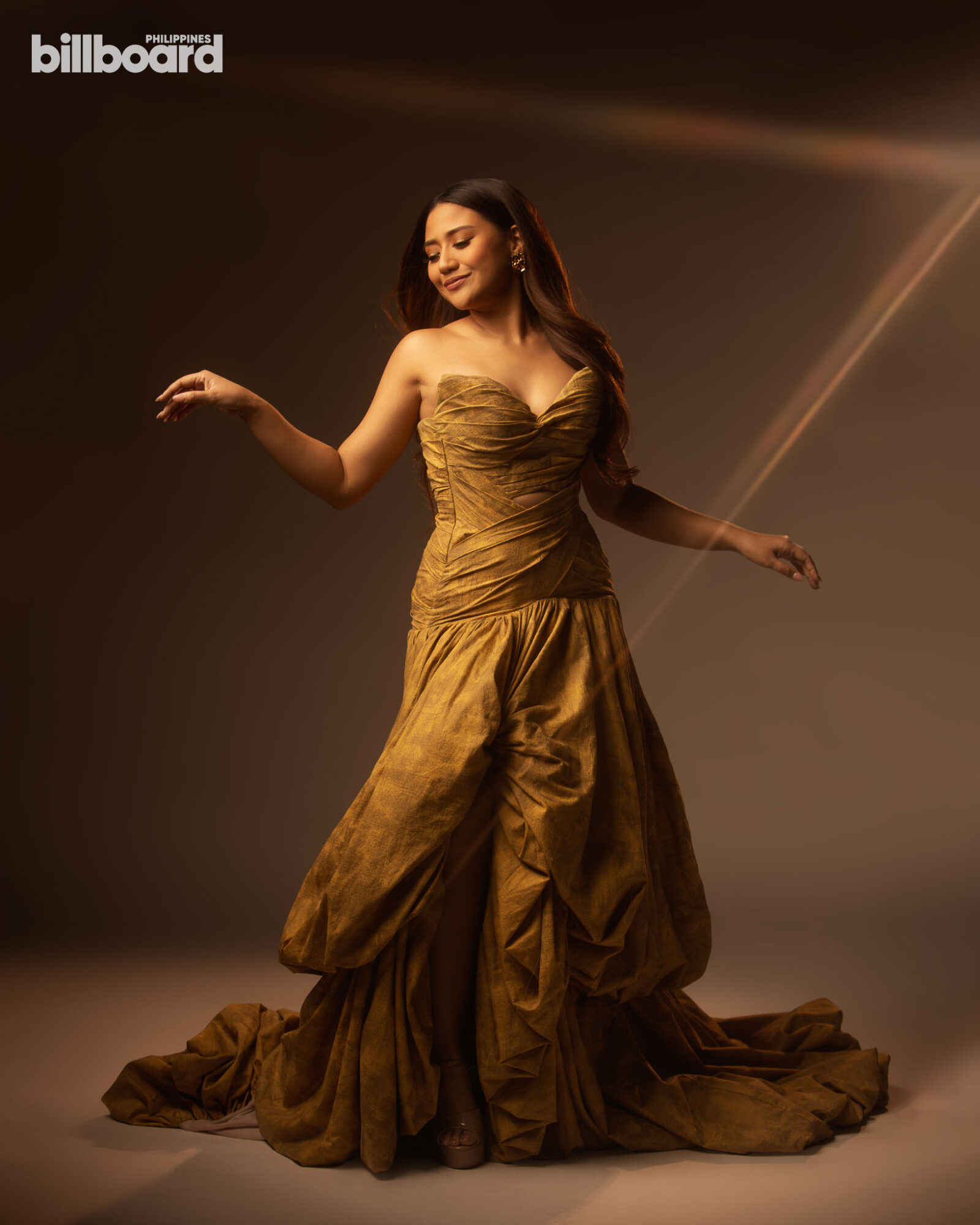
Photographed by Excel Panlaque. Creative Direction by Nicole Almero.
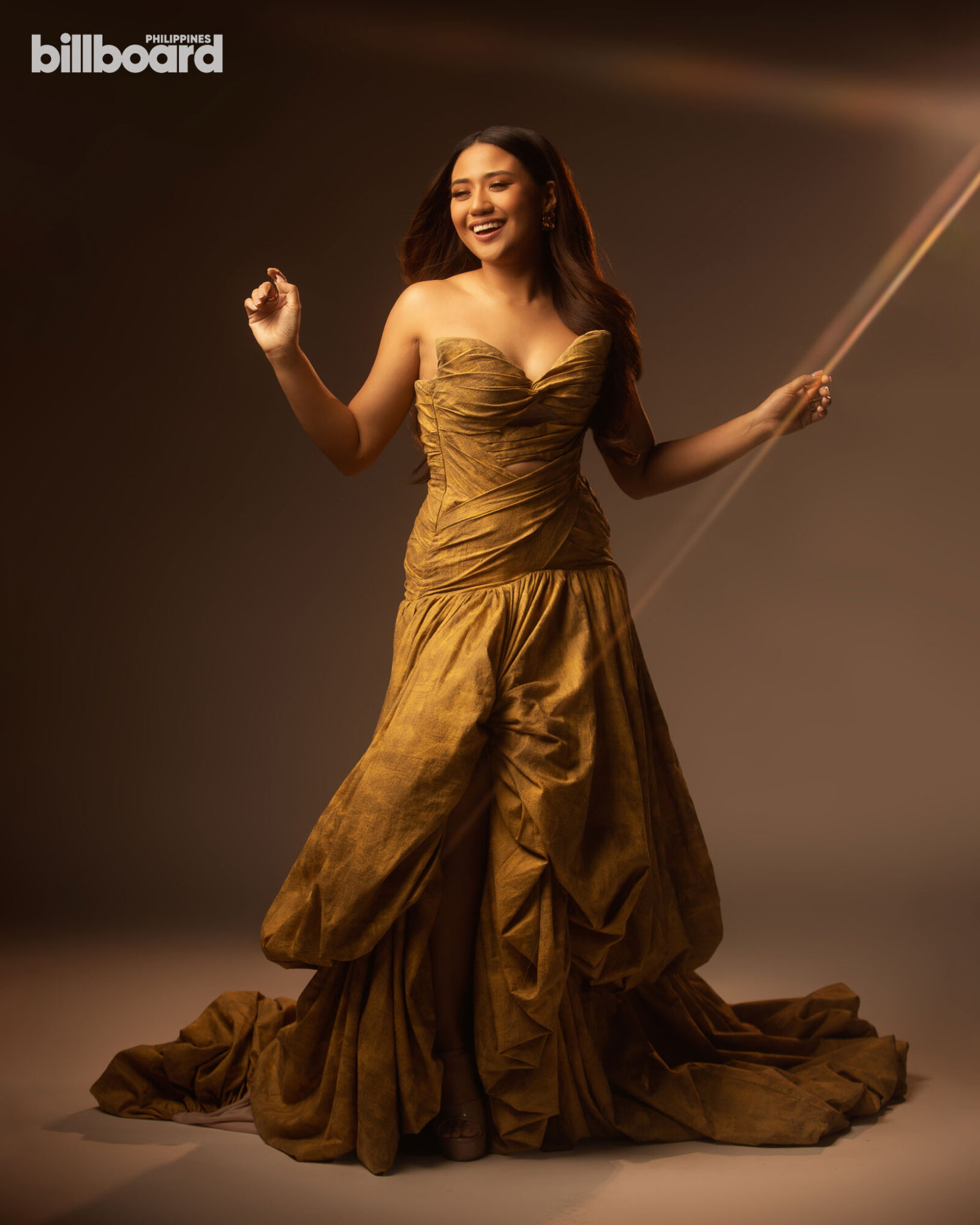
Photographed by Excel Panlaque. Creative Direction by Nicole Almero.
Now that we’re celebrating 15 years of your career with this show, looking back at your beginnings as a teenage powerhouse, how do you think your artistry has matured, both vocally and in how you choose and interpret material?
I’d like to think that I’ve grown in a lot of ways over these past few years.
I’ve also realized that I’m a very visual person, which is why I’m trying to incorporate that in EMBER, or even with how I see certain songs even before I get to sing them. So, as I visualize the story of how it goes in my head, it kind of allows me to really adjust how I get to interpret it through my performance
Siyempre (of course), my voice has matured from 15 years ago, but over the years, I’ve discovered so much more of all the colors in my voice, and finding all the ways in which i get to use it. And to really bring these songs to life with all of those colors and their hues is something that I feel so honored to do. It’s empowering in a way, and I think it allows me to do something different with every performance I get to do — even for EMBER.
As of late, you’ve been releasing a lot of great singles as an independent artist, with your Bisaya singles have been embraced by fans far and wide. What made you decide to release more songs in your mother tongue, and how has it shaped your identity as a Cebuana representing OPM on the global stage?
It’s something I’ve always dreamed of doing. I honestly just wish I had done it sooner.
I think there’s so much talent to be discovered within the Vis-Min region. And there is so much music to be discovered from artists South of Luzon. Being Bisaya, it’s also the music that I was surrounded by, and the music that I grew up with. It’s such an honor to be able to do it and reach so many other people with it.
I actually discovered Ferdinand Aragon because of your collaboration with him, “Ang Paghuwat,” which was released earlier last year.
I had such a great time working with him on that song! Ferdinand was actually introduced to me by Asia’s Songbird, si Tita Regine [Velasquez-Alcasid], and si Tito Ogie [Alcasid]. I remember that Ogie messaged me on Instagram one day and recommended his music to me, and from there, I really got to discover it.
Grabe din kasi ‘yung voice ni Ferdinand (Ferdinand’s voice is also so amazing). The rawness of it. And even the song too, kasi siya rin ‘yung nagsulat nun eh (because he was the one who originally wrote it). It really captured [the] nervousness of a groom waiting for his bride down the aisle. To just be a part of that song with him was already such an honor, so with my part, I made sure to really complement it in a way that really captured the essence of the song.
There really is so much talent in the Vis-Min region, ‘noh? Like there are so many Bisaya talents who are waiting to be discovered, and also a lot who have made it on the scene — even in the mainstream.
There are so many people from there, like JK [Juan Karlos], KZ [Tandingan], and so many more. Iba-iba rin ‘yung sounds nila (Their sounds are so different), and I think that really contributes to how rich the scene there is, and napaisip rin ako (it made me think) how it would be really nice to hear more of the voices from that area.
These days, it’s so surreal to see the top 10 of the charts filled with OPMOPMShort for Original Pilipino Music, the body of songs created by Filipino artists, spanning genres from ballads and rock to hip-hop and pop. OPM expresses Filipino identity and heritage, andGo to OPM Glossary, so it would be nice to also see Bisaya music enter the charts as well. Because who knows, if we can hear Ilocano, Ilonggo or even Chabacano music get even bigger with more support and recognition. Because Filipino music is also a lot more than the Tagalog language.
Hindi rin siya the same pag trina-translate mo (It’s really not the same if you translate it) from Tagalog to Bisaya, eh. [Because] rather than translating it, minsan kasi (sometimes) it’s better to hear something in its most authentic form. Sometimes the translated versions kasi [because], don’t really capture the same emotions and feelings that the original versions have, eh. Like iba talaga ‘yung experience (the experience is different)
when you’re listening to something and experiencing it in its original form, ‘di ba (right)?
Here in the Philippines, the genre of K-pop is also very popular already. And we’re so used to hearing music in languages we don’t understand, whether it’s in Korean, Spanish, or what. So why can’t we appreciate Bisaya and others as well? You don’t need to translate it, but rather focus on the feeling of it. Because if that comes across well, then it really shows how we experience life and the stories that we tell in our music.

Photographed by Excel Panlaque. Creative Direction by Nicole Almero.
Joining Underdog Music with your husband, Dave Lamar, was a bold move. What inspired you to take this leap toward independence, and how has it changed the way you approach your music?
When Dave and I started Underdog with Migs [Jimenez], we wanted to focus more on the artist and talent management aspects of it. But then as we continued with it, it eventually expanded into what it is today.
Every one of us comes from different backgrounds in the scene. Martti (Franca) was never signed with a major label, while Dave comes from the mainstream [side of the scene] and produces as well, while sina Migs and his brother are focused more on the business side of the industry. I think all of us coming together really gave us that advantage of being a full and comprehensive understanding of the music industry.
In a way, it’s as if you were starting anew with this new chapter of yours, because it’s almost like a start-up of its own, considering its origins.
I’d also like to think that I’m very lucky, and I’m also so grateful for the fact that I already had my supporters there with me as I entered that part of my life. So to have them really be there, supporting me and Underdog when it first started out, was also such a blessing.
We’re working with so many new names and young artists, and it’s really fulfilling to help out so many different talents in the same way that many of our legacy artists have done. Our legacy artists — like sina Tita Regine (Velasquez-Alcasid) and Tito Ogie (Alcasid) — are legacy artists because of how much they’ve helped and guided the next generation of artists, so in a way, it’s nice to be doing something similar for others too.
I feel like it’s also allowed me to work on so many different things and expand my knowledge of the industry. Though right now, I’m still very focused on the music and being a performer. Because music was always my first love. *laughs*
Recently though, you’ve ventured into acting, with your role in Song of the Fireflies earning you Best Actress honors. I’m curious, how did immersing yourself in film acting change your perspective as a performer?
Honestly, I just did what I could!
The movie was supposed to happen in 2019, then in 2020, but we all know the pandemic happened. We weren’t even sure if it was going to push through because we had a hard time because of budget cuts, but it all worked out in the end.
When the film was selected for the Manila International Film Festival, that was already a major win for us as the team behind the movie. But to see it not only win awards but touch so many people was also a dream come true.
It also marked your first-ever acting role. And I don’t think a lot of people could make such a splash with their first major film.
Taking on the role, I felt like I was an ate (older sister). *laughs* [I loved] working with the Loboc Children’s Choir mismo, as it was also super helpful because they allowed me to feel more comfortable and natural. It felt so natural to express myself in a very different way than I am used to, and there’s also a lot of collaboration involved, given that you’re working with other people along the way.
I feel like as a musician rin kasi [also], you’re also acting in a way with every performance that you do. Because you really have to feel and embrace the song as if may hugot ka [it’s coming from somewhere deep] in the moment, and siyempre that hugot (of course, that feeling) isn’t necessarily always there while you’re performing it, eh, ‘di ba (right)? *laughs* So that’s where acting comes in handy for us performers, and that was really my only experience with it beforehand.
Music is always going to be my first love and what I want to do, but I wouldn’t mind acting again in a film or maybe even on stage.
What did you discover about yourself during that process that perhaps singing alone hadn’t revealed?
It really showed me the power of storytelling. That there were so many ways in which I can express myself, and it gave me a deeper appreciation and understanding of the people behind the scenes, and even with the craft of acting.
I’ve come to realize that so many of these actors, talagang kinukuha nila ‘yung process nila sa loob eh (they really get their process from within themselves), from their chests, and to really get that out is just so impressive. Like now, I don’t understand how there are those actors and musicians who get to do it, especially with the long shoot days. Because it’s difficult to find time for them to really work on their music at the same time.
But also, just working on such a major set like that allowed me to appreciate the people that I get to work with, even with my band. Even with EMBER, as we’re preparing for the concert, seeing how my band is working to prepare for this — I’m just so in awe [of] them. And just so grateful too.
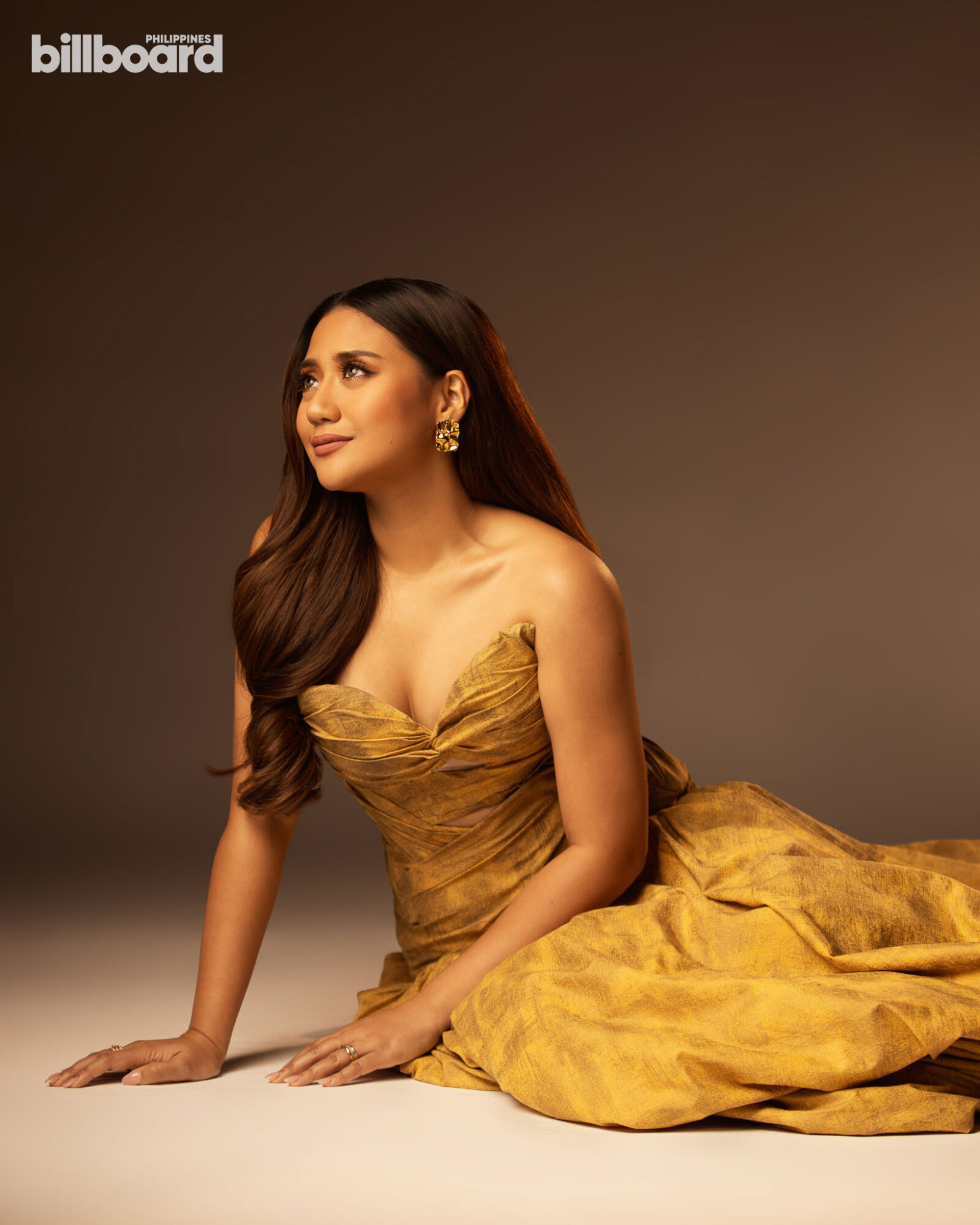
Photographed by Excel Panlaque. Creative Direction by Nicole Almero.

Photographed by Excel Panlaque. Creative Direction by Nicole Almero.
Though you’ve recently collaborated with December Avenue on “Ahon,” can we expect more original material soon — whether it’s in Bisaya, Tagalog, or English — especially now that you’re continuing to build your own catalog under Underdog?
For sure. But honestly, with EMBER, baka after ‘yung concert pa or maybe next year talaga (maybe it will come after the concert, or next year).
We have so much going on right now, especially as we’re preparing for this, and it really is so difficult to produce and prepare for such a major concert at the same time as recording a full album. We really planned to release the album before the end of the year, but honestly, hindi talaga kaya, eh (it couldn’t work out for us that way). *laughs*
Our team decided to just focus on the show, because parang [it’s like] we decided that we didn’t want to rush in finishing the album para lang makahabol ‘yung (just so we could be able to) release before the end of the year. Because you can’t rush a great product.
That’s so true. As they say, you can’t rush great art. It’s such a wise sentiment.
I learned that from Jay Durias, whom I first met around the same time that I met Dave in TV5. He was the musical director of the program at the time, so he was in charge of all the arrangements and whatnot, and because maraming pinapalitan last minute (there was a lot of last-minute revisions) for him there and then, so ayun. But what he taught me was really that ‘you can’t rush great art.’ And that’s something I’ve learned to carry in my career.
Could you give us a teaser of what we can expect from anything you’ve been working on?
Hmmm. Well, there is this song called “Kites and Balloons.” It’s set to be one of the songs on the album we’ve been working on! And this one in particular was produced by Dave as well.
I told Dave about this concept because I wanted something that talked about how two people can start off at very similar paths, but have a very different purpose and where they ended up. Because both kites and balloons have their strings and fly in the air, right? Pero the difference is, kites end up staying on the ground, and balloons are the ones that fly out in the air.
So I wanted this song to really tell a story of two people in love who have those different paths, and when I played this song to others, there was a part in the song where they could already tell the moment when they were going to break apart. Like, those who listened really noted that specific point in the song, and it wasn’t meant to be a bad thing — because sometimes when people go on different paths, it’s also a symbol of growth.
I can’t wait to hear that. Especially with how it provides such a unique perspective on the end of a relationship.
While I love ‘yung pagkahugot ng (the deep emotional aspects of) Filipino music, I would like to think that there is also so much more to explore within the parameters of themes like love and family when it comes to music. So when it comes to the narrative of the music I want to create, I’m definitely willing to explore more.
After 15 years, what principle or mantra continues to guide you through the highs and lows of this industry?
Trust where God takes you.
There will always be those moments where feeling mo, nahihirapan ka na, parang (you feel you’re having a hard time, like) “Okay, I can’t handle this anymore.” But something I’ve realized, is that sometimes when you’re on the brink of giving up, something happens. And I’ve noticed this, not even just for me, but I saw it with other people as well. I think that’s your reward for being with you. And continuing to trust that what’s God’s plan for you,
Something that I recently just understood was the whole concept of passion and purpose merging in my life. Because I’ve always had a passion for music, but I’ve also questioned, “What is my purpose for putting that out?” Like, what can I do more with the gift that I am given? But right now, I’m just taking it one step at a time — continuing to learn from my peers, from my colleagues, and that’s it.
I just want to keep going, because I really do enjoy what I’m doing. I feel like it’s different when it’s innate, especially if you really want it. Because wherever we are, we’re always going to experience stress. So just choose your stress, especially if you love what you’re doing.
Stress is always going to be everywhere, so I’ve adopted the mindset that I choose which stress to endure. It gives me a lot to learn from, which is why I feel like I’ve just been blessed. God has been putting so many incredible people in my life to be able to align with, I feel, is what His purpose is for me. So I don’t take that for granted.
I think it’s just amazing to see just how much gratitude you have for everything that you’ve been through in this industry because, of course, it is a lot. There’s been a lot of good, a lot of great things, but of course, there have also been a lot of challenges with it. You’ve really come out on the other side with all these learnings.
But for my final question, now that you’ve looked back on your past 15 years on the industry, where do you envision the next 15 years of Morissette? Both as an artist and as an individual, personally?
Oh my gosh, grabe ‘yun (It’s a lot). But honestly, it differs every single day. because sometimes I’m like, after this EMBER concert, I want to be chill. But then sometimes it’s like, after this EMBER concert, I’m gonna be making a ton of music.
It differs talaga (really). But one of the goals that I can share as of now, hopefully for the next 15 years of my career, I am going to be very blessed and have opportunities to get to perform even more outside of the country. And along the way, especially after the last 15 years, I’ve also met such incredible people and collaborators, artists, musicians, and just regular people. So hopefully in the next 15 years, I get to create or put out more original music — whether it be in Bisaya, for my hometown and my kababayan [countrymen], or even in Tagalog and English. I really just want to continue to put out more music — music that will be for anyone, really.
Of course, hopefully we’ll be able to bring Underdog Music to new heights as well. We have such incredible artists now, so I hope that we can allow them to represent the Philippine music industry even further, whether it’s here or even globally. It also really depends on what God wants me to do, but what I’ve told my husband is, wherever I’m going to be in the next 15 years, I just want to have peace. I just want to have his peace that this is where he wants me to be. I want to have that faith of just trusting, because sometimes, God’s plan is the best for us.
That’s why I can’t really predict where I will be in the future. So while I don’t know where I really am going to be in the next 15 years. I’m just gonna have to trust in the process. *laughs*
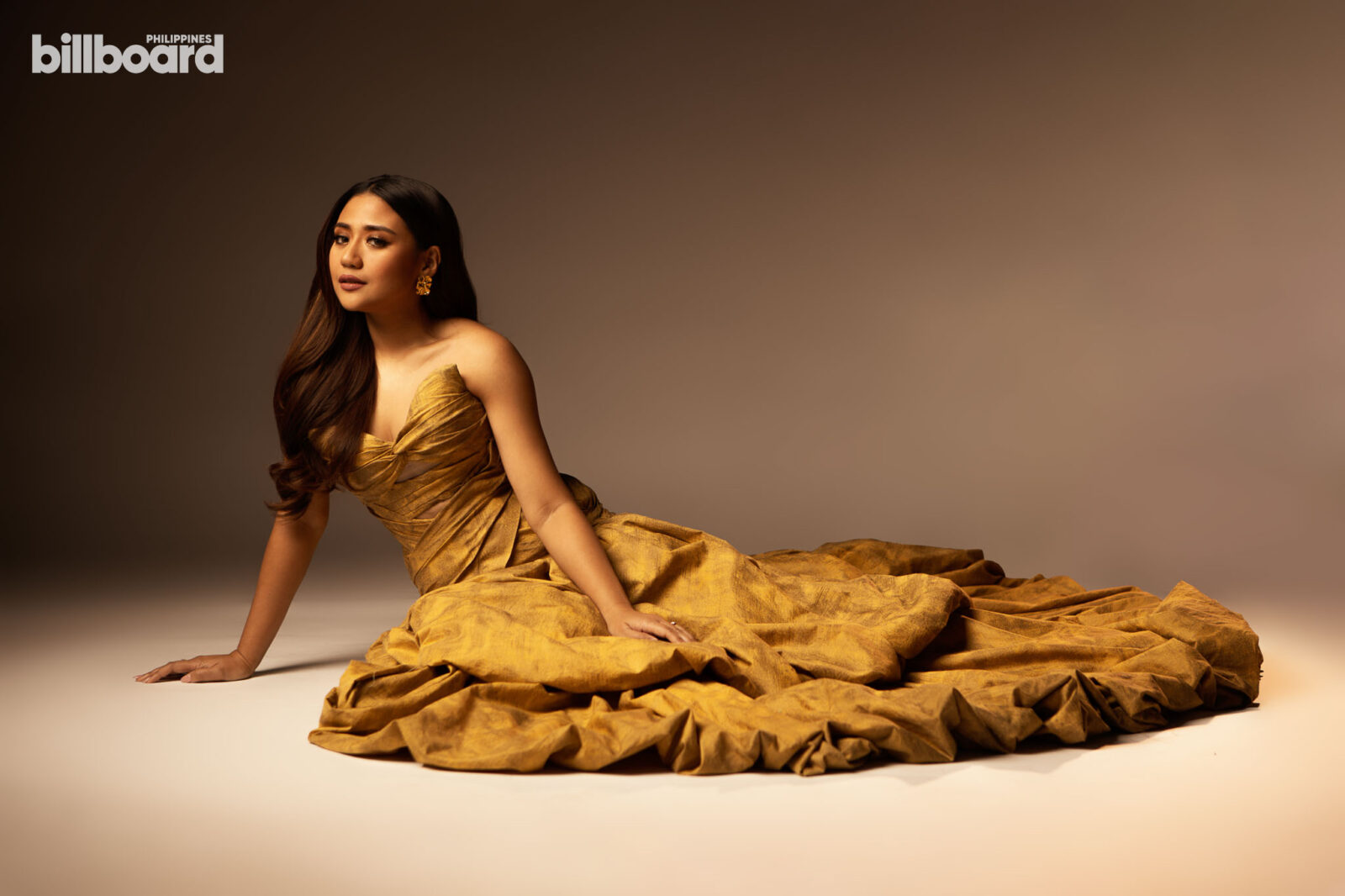
Photographed by Excel Panlaque. Creative Direction by Nicole Almero.
As we anticipate Morissette’s EMBER concert, revisit her entire discography below:
*This interview was edited for clarity and brevity.